Sign In

Hold on to the plan documents you get from your human resources department (if you're insured through work) or from the insurance company (if you buy insurance on your own). These documents are the ONLY trustworthy source of information on how your plan works.
Make sure you have the plan's Summary of Benefits and Coverage. (Here's what it looks like.) This is a standardized form that all plans must provide explaining the details of coverage. It's easier to read than the official plan documents. If you don't have one, ask your plan administrator for it. It's your legal right to do so.

A deductible is the amount of money you will have to pay out of pocket each year for health care before your insurance company starts paying its share. Deductibles can vary from nonexistent to more than $4,000 a year. In general, plans with lower premiums (such as Bronze plans) have higher deductibles, and vice versa.
What you need to know if you have a high one:
The insurance company will pay for certain services even before you have met the deductible.
All insurance plans (except a few that existed before the health law was signed in March of 2010), must pay in full for preventive health services no matter whether you have met the deductible or not. Here's a list of those services.
Some plans may cover services that carry a copay (a fixed dollar amount) from day one of the plan, even if you have not met the deductible. That means that even if you haven't had any other medical care, you might only have to pay a $25 copay for a doctor visit that costs $100. Consult your plan documents to find out whether your plan works this way. It can sometimes be hard to tell, even with the help of the standardized Summary of Benefits and Coverage. If you are not sure, contact the insurance company's customer service department and ask.
Once you have this information, try to use these pre-deductible services to get your care. For example, if you have a sore throat, go to a doctor's office, which charges a copay, rather than the emergency room, which you will likely have to pay for in full unless you have met your deductible.
Not all health providers charge the insurance company the same, so look up prices if you can.
Insurers negotiate prices with individual hospitals, medical practices, laboratories and other providers. Insurers often can bargain down prices more successfully with some providers than others. If you have not met your deductible, going to a lower-cost provider can save you hundreds or occasionally thousands of dollars.
Do not waste your time calling up the provider to ask the price. Providers can participate with dozens of plans and may have no way of knowing what yours pays them before you file the claim.
But the insurance company will know. Many health plans now enable members to look up some prices online. You must register at your insurer's website to use this service. If the health care procedure or service you are looking for is not listed on the website, call the insurer directly. Be aware, though, that some hospitals and doctors do not allow insurance companies to disclose their fees to plan members in advance.
Savings can be substantial. In a Connecticut city we looked at, a major insurer was paying nearly $3,600 more for an uncomplicated vaginal delivery at the most expensive hospital than at the cheapest one.
If the service you need doesn't involve a hospital stay (examples would be lab tests, X-rays, and walk-in surgery), you will almost always find a better price if you avoid going to the hospital for the service. CT scans and colonoscopies can be done at either kind of place but can cost more than five times as much at hospitals than at clinics or doctor's offices.
You can save on some drugs by NOT using your insurance
Several drugs that used to be available only with a prescription can now be bought over-the-counter, without a prescription for a much lower price. They include drugs for heartburn, insomnia, joint pain, migran headaches, seasonal allergies, and insomnia.
You can get some generic drugs for as little as $4 a prescription at Sam's Club, Target, and Walmart. That's probably less than your insurance copay.
Here are details on this advice and more tips on how to save money on prescription drugs.
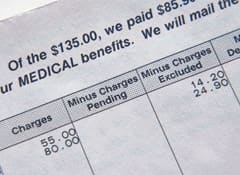
The most popular type of health plan, a Preferred Provider Organization (PPO), lets members use hospitals, doctors, and other providers that aren't in its network, but they must pay a larger share of the bill. If you don't understand how this works, you may be stuck with an unexpected bill of hundreds or even thousands of dollars that the insurance company won't pay.
If you are in an HMO, it probably won't cover ANY of the bill if you don't use a doctor or hospital in its network.
To avoid unwelcome surprises, here's our advice:
Stay in network if you can.
Network providers have agreed to accept the negotiated health-plan price as payment in full. Even if you haven't met your annual deductible, you'll still pay the in-network price. If you have met it, you will only owe the usual copay or coinsurance.
But if you go out of network, your health plan will only pay what it considers a "reasonable" price for the service—a price that it's up to the health plan to determine, which could well be a lot lower than what the provider decides to charge you. You'll owe the difference out of your own pocket.
For most health needs, including major procedures like open-heart surgery and joint replacements, your health plan will likely offer a choice of highly-qualified practitioners. Only consider going out of network if you are ill with an unusual condition or need a hard-to-find specialist to do an uncommon procedure.
Beware of going out of network accidentally
This commonly happens in two situations.
You can ask your surgeon ahead of tiime to work with doctors in your plan's network, but it doesn't always happen. And you may have no choice in an emergency room.
If this happens to you and the bill is too high, you might be able to get it reduced if you make enough noise. First, ask the doctor to discount the fee. If that fails, complain to the hospital, your insurer, your employer (especially if you work for a large company), and your state insurance department or state health insurance consumer advocate.
Settle on a price ahead of time for going out of network on purpose
First look in your Summary of Benefits and Coverage for how much of the cost you'll have to cover if you go out of your network. You might have to pay a higher deductible as well as a higher percentage of the cost, or co-insurance.
Then look up the "fair" price in your geographical area for your test, procedure, or operation on FairHealthConsumer.org or Healthcare Blue Book, two organizations that report the going prices for insured patients for a variety of procedures. Use those results as a basis for negotiating a price agreement with the out-of-network provider, and get it in writing. Healthcare Blue Book has a printable standard contract you can use for that purpose. Failure to agree on a price in advance could leave you liable for a very, very large balance bill.

A flexible-spending account (FSA) lets you set aside money tax-free from your paycheck to pay for medical expenses not covered by insurance, such as deductibles and co-payments, as well as dental care, eyeglasses and contact lenses, and some alternative treatments. It's only available if your employer offers it.
How FSAs work
Once a year, usually around December, you tell your employer how much money you want set aside from your paycheck to pay unreimbursed medical expenses for the following year. You can put in up to $2,500 per year.
You can use entire account right away once the year has started, even though the money is being deducted from your paychecks throughout the year. So if you have a qualified medical expense of $1,000 that's not covered by insurance but only $600 in your FSA, the expense can still be covered against future deposits.
FSAs also reduce your taxes because the money you have put into them is not subject to income tax.
The higher your tax bracket the greater the benefit. If you lose or quit your job, you lose any unspent FSA funds.
Some FSAs will give you a special debit card that you can use to pay eligible expenses. Or you may have to pay eligible expenses with your regular money and claim a reimbursement from the FSA afterwards.
Use it or lose it
You must spend the total amount you set aside every year or lose it. FSA funds don't carry over, and you won't be sent a check for the remaining balance at the end of the year. So don't put aside more than you think you can spend in a year. It's better to underestimate than overestimate.
You also lose unspent FSA funds if you lose or quit your job.
Keep careful records
To claim money from your FSA, you have to submit records to whoever administers the plan. (You'll be told this when you sign up.)
Start by making sure you understand which expenses are eligible. Your employer should be able to supply that information.
Hang on to evidence of these expenses since you'll have to submit it to claim money back from your FSA, even if you've paid with a debit card. These include receipts from the drugstore and other providers and the "explanation of benefit" forms you receive from your insurance plan.

 WASHING MACHINE REVIEWS
 GENERATOR REVIEWS
 Build & Buy Car Buying Service
Save thousands off MSRP with upfront dealer pricing information and a transparent car buying experience.
 Get Ratings on the go and compare
while you shop