Minivan

Minivan Buying Guide

Minivans are the vehicles most suited to carrying large families and cargo, with versatility, convenience, and comfort being hallmarks. Want to know how to buy the best minivan for you? This minivan buyer's guide will prepare you to choose the models that best fit your needs and budget.
Find a Minivan
Used
New


Make
Model Go
New Car Selector (beta)
Find the best Minivan for you, sorting by fuel economy, reliability, safety and more!
Minivan

Features

Below we highlight important features for you to consider when purchasing a minivans.

Engines and fuel economy

Minivans come with a six-cylinder engine, with few models allowing an upgrade to a larger engine. Fuel economy is similar within the segment, though some models benefit from more advanced powertrain technology.
 

Drive wheels

Today's minivans use front-wheel drive, which is more space efficient and provides better traction than rear-wheel drive in slippery conditions. The Toyota Sienna is the only minivan currently sold that offers an all-wheel drive option. That configuration's run-flat tires are a bit of a liability, though, as they degrade the ride and are expensive to replace. Traction-control, available on many minivans, provides extra grip in slippery conditions but it isn't as effective as all-wheel drive. For more information about drive systems, see our traction-debate report.
 

Towing

A typical minivan can tow 3,000 pounds or more, which is about the weight of a large (5x10 feet) box trailer loaded to capacity. That is more than what a typical sedan can tow, but well within the abilities of most midsized and large SUVs.
 

Access

Minivans typically have sliding doors on both sides for easy entry and exit. In many models, you can open one or both rear sliding doors with a button on the key fob or an interior switch. That is particularly useful for people carrying packages or small children to the vehicle. Some models offer power-operated rear hatches too. With a large, open interior, minivans allow for moving around the cabin when parked, making it easier to load passengers and tend to children. Some allow the center-row seats to slide forward/aft and even move to the side. Such flexibility can aid third-row access.
 

Seating

All minivan models accommodate seven or eight people, depending on the seating configuration. A seven-passenger model has captain's chairs rather than a bench seat in the second row. These are more comfortable than a bench, help to separate kids, and allow for easy passage to the third row. Chrysler and Dodge offer second-row captain's chairs that can fold away under the floor, but those seats are not as comfortable as those without that ability.
 

Cargo

The versatile seating configurations of a minivan mean that all of the space behind the front seats can be used as cargo space if needed. This is done with second- and third-row seats that are either removable or fold down into the floor. The most convenient type of third-row seat is one with a split design, so that one section can be folded down while allowing someone to sit in the other section. When comparing models, try removing and folding the various seats to see which designs are easier to lower, raise, and/or remove. (See our cargo capacity chart to compare the cargo area of different models.) Minivans also typically have wide rear openings and lower floors than SUVs, which make loading easier. They usually have maximum weight loads of 1,100 pounds or more, which is more than most SUVs have.
 

Safety features

All new minivans have standard dual front air bags, three-point safety belts in the outboard seating positions, and top-tether and LATCH child-seat attachments in the rear seats. Most models offer side air bags, antilock brakes, and head-protection bags, typically a side-curtain design that protects people in the front and second-row seats.

Other safety features to look for include electronic stability control (ESC), traction control, tire-pressure monitors, safety-belt pretensioners, occupant-sensing air-bag systems, and daytime running lights. See our Guide to safety features.

Rear backup alert systems, which warn the driver with an audible signal and visual graphic when the rear bumper is near a solid object, such as a parked car or a signpost, are becoming more common on minivans. These systems are marketed as parking aids and in testing, CR has found that they work well for this. But they aren't reliable enough for use as back-up safety systems that can detect a small child behind the vehicle. (See our report on vehicle blind spots, to compare the blind spot measurements for all tested models.)

Consumer Reports' safety ratings include assessments of crash-avoidance capabilities, as well as crash-test results. Our road test reports detail issues regarding child seat installation and the adequacy of front and rear head restraints.


Emerging safety technologies

The latest automotive safety advances include telematics systems that alert emergency personnel if an air bag deploys; lane-departure warning systems that sound an alert if you change lanes without signaling; rear-view cameras to prevent back-over accidents; and blind-spot warning systems that indicate vehicles driving in the blind spots to the side and rear of you. Automatic-braking systems are also spreading. These apply the brakes if you're approaching the car ahead too fast and ignore an audible warning that alerts you to the situation. (Learn more about car safety.)
 

Entertainment and convenience

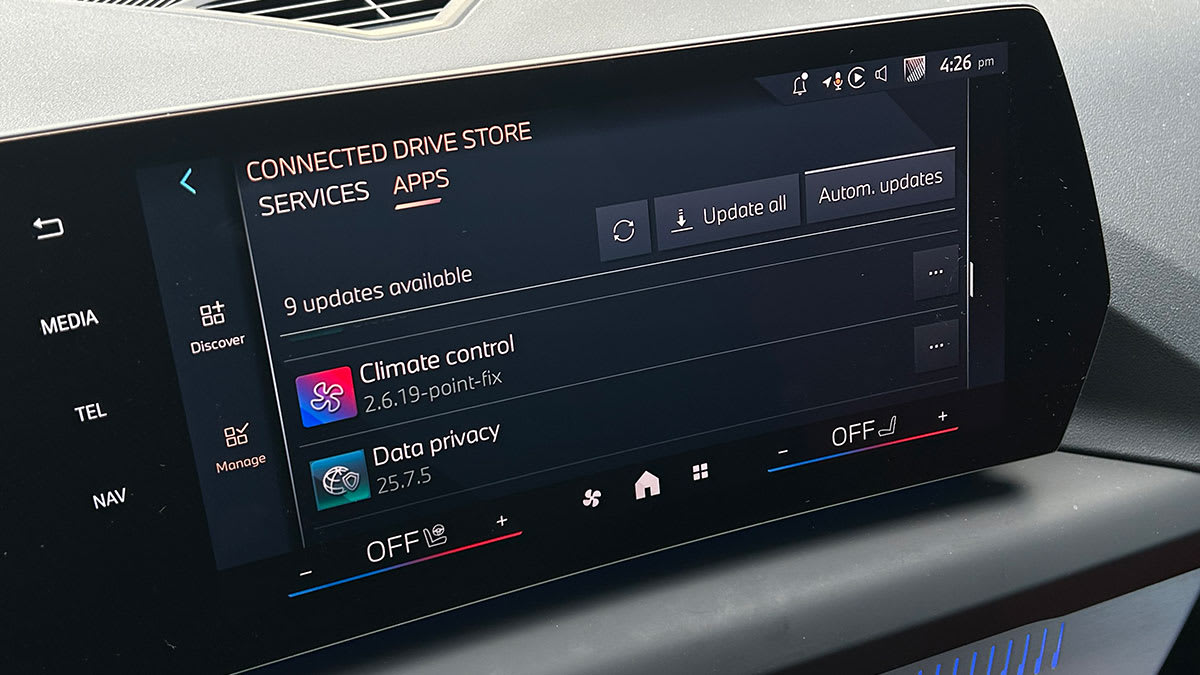
The latest mobile electronics enable cars to deliver the fidelity of home theater, along with cell-phone connectivity and navigation guidance. There is a wide range of infotainment features available from the factory, and more so available through the aftermarket. (See our guide to mobile electronics.)
 

Audio system

The standard car-audio package is a stereo radio tuner and in-dash CD player with speakers left and right and fore and aft. An upgraded system typically has higher-watt amplifier power output—so you can play music loudly while minimizing distortion—and more and better-quality speakers to enhance clarity and sound separation. Top-level systems add digital sound fields, noise-canceling, surround sound, and DVD-Audio playback.

Depending on the package, an audio upgrade can add many hundreds of dollars to a car's sticker price. Cars at every price level are adding a jack where you can plug in an MP3 device for playback through the car's audio system. Only stereos with a specific iPod connector, rather than a microplug port, will be able to control and recharge an iPod.


Satellite and HD radio

Subscription-only satellite radio offers broad channel selection, catering to a variety of musical and information interests, much like cable TV. Most vehicles offer satellite radio readiness in some audio systems.

HD Radio is a relatively new system that allows conventional (or terrestrial) AM and FM stations to broadcast their content over digital signals with higher fidelity. It also allows stations to add more programming via several additional channels that can be broadcast "alongside" a station's main frequency, for delivering traffic or weather information, or diverse music content.


Navigation systems and connectivity

In-car navigation systems can be a valued featured if you often drive in unfamiliar territory. They typically retail for about $2,000 when offered alone but are often bundled with other features, such as a back-up camera or a high-end audio system that can add another $1,000 or more. Built-in systems have large, clear screens that are in the center of the dashboard and have generally intuitive controls. They are integrated nicely into the car, and some use touch-screen displays that make it easy to enter destinations and navigate through menus. Some can also respond to voice commands, giving you the added safety of keeping your eyes on the road and hands on the wheel. For a fee, many systems can provide real-time traffic reports, which can alert you to congested traffic, accidents, or road construction. But portable units can offer most of the same abilities for much less money. (See Ratings and learn more about portable GPS navigation systems.)

Bluetooth connectivity is becoming more readily available, enabling wireless devices such as a cell phone to wirelessly communicate with the car's audio system. This allows convenient, hands-free phone operation.

Popularized by GM's OnStar, telematics systems use a combination of cellular telephone and Global Positioning System (GPS) technology to connect drivers with a call center staffed 24 hours a day and 7 days a week at the touch of a button. For a monthly or annual fee, such concierge services can provide directions or summon emergency aid based on your vehicle's location.