Features
Below we highlight important features for you to consider when purchasing a sedan.
Engines and fuel economy
For saving fuel, a four-cylinder engine is often the more practical choice over a V6. But not all engines perform equally.
Some V6s are thriftier than some Fours. Manual transmissions can be more fuel efficient than automatics, though the difference
is shrinking. Modern automatics with five, six, or even seven speeds can help fuel economy by letting a car cruise at lower
revs while also contributing to performance. Continuously variable transmissions (CVTs) also aim to save fuel. If you're budget-conscious,
look for a car that does not require premium fuel.
Newer technologies such as cylinder deactivation, where half the cylinders shut off when they're not needed, can squeeze out
slightly better mileage in highway driving. Gas/electric hybrid technology can save significant amounts of fuel, although
their higher initial cost might take years to recoup. Whatever expedients are applied to the engine, gearing, tires, and aerodynamics,
the bottom line is what happens on the road. That's where performance measures such as our on-road fuel-economy figures can
help. (Check our fuel-economy Ratings.)
Drive wheels
The vast majority of sedans today use front-wheel drive. The space efficiency from a front-drive design allows a car to have
a smaller engine compartment, leaving more room inside for passengers and cargo. It's also effective in slippery conditions
because there's more weight on the front wheels and they pull rather than push the car along the road. Rear-wheel drive is
used on high-performance and luxury sedans because of its contribution to good handling. The number of models available with
all-wheel drive is increasing, providing heightened foul-weather traction and extreme, track-ready grip for a few enthusiast-targeted
models. Our tests have shown that an all-wheel-drive car with all-season tires has better traction than a front- or rear-drive
car with winter tires. But AWD does little or nothing to aid stopping, it adds cost and weight, and it comes with a small
fuel-economy penalty.
Towing
Most sedans aren't designed for towing, especially heavy towing. Those that have a towing rating are usually limited to about
1,000 pounds. A few larger sedans can tow more than 3,000 pounds. Tow packages are typically available as a factory option
or as an aftermarket product.
Access
When comparing sedans, try entering and exiting from all four doors. A well-designed sedan should provide wide doors and enough
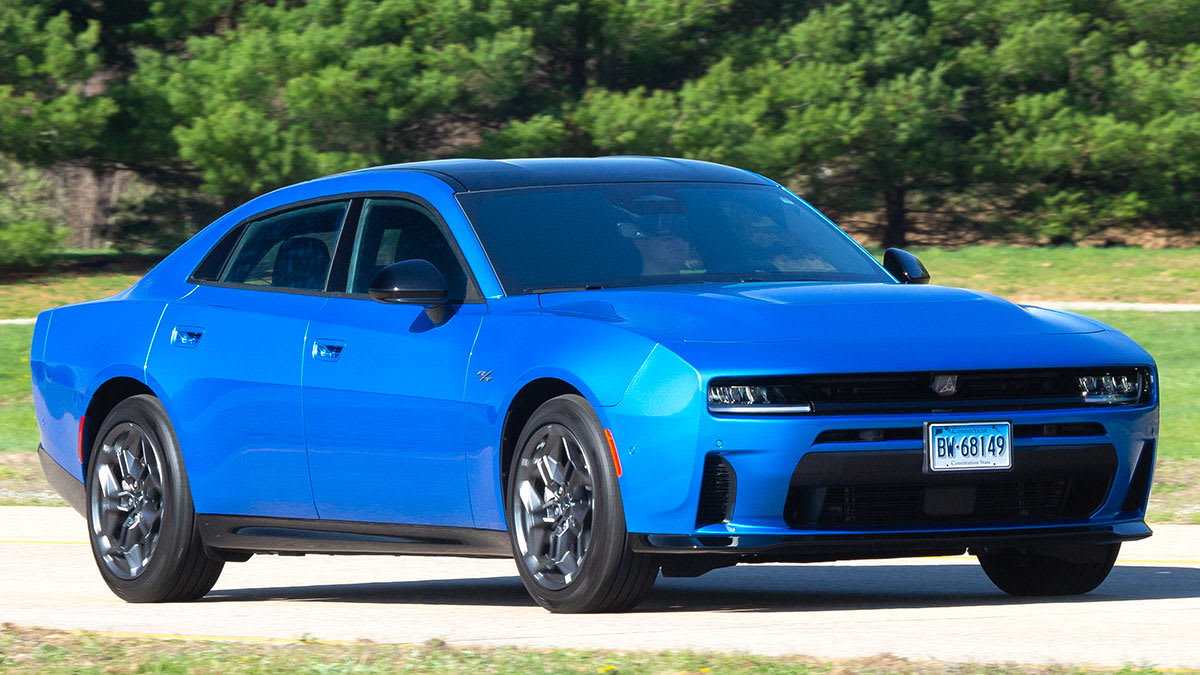
head room so that front and rear passengers can enter and exit easily without bumping their heads. Some sedans are styled
with low, sloping rear roof lines. Such coupe-like designs can degrade rear-seat accessibility, headroom, and the driver's
view aft.
Cargo
If you expect to ever carry long or bulky cargo, look for a fold-down rear seat with a tall, wide opening to the trunk behind.
Even a small pass-through port can be handy for long, slender items such as skis.
Safety features
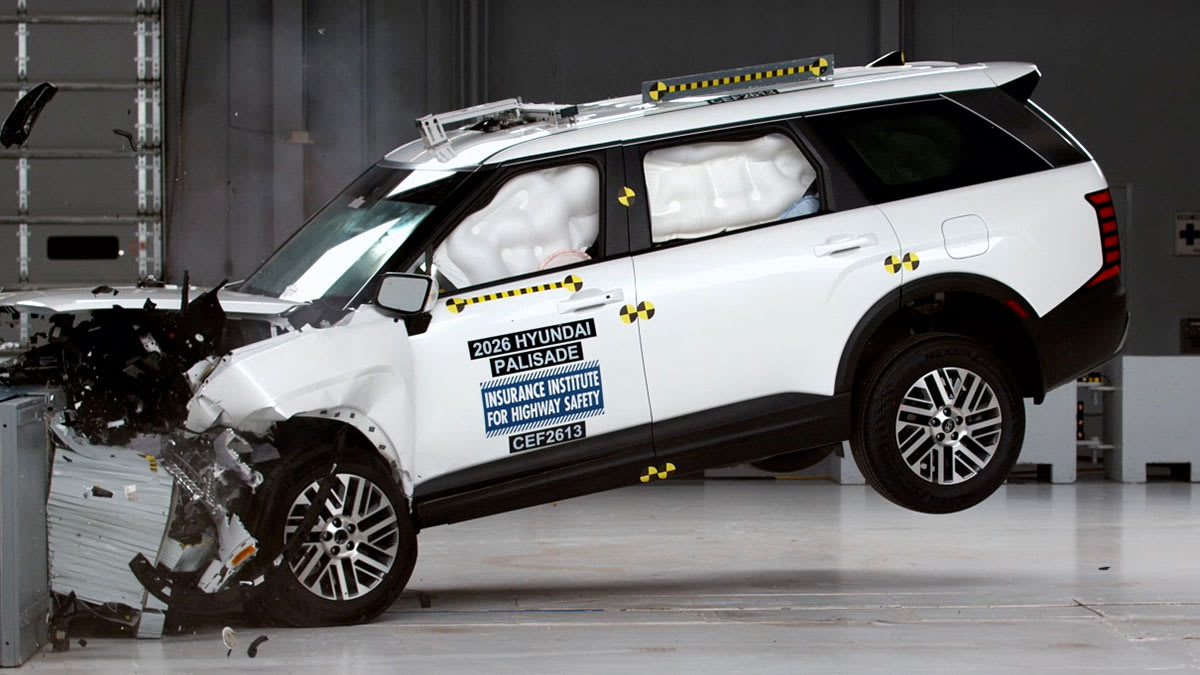
Sedans, especially midsized and larger ones, are considered to be among the safest vehicle type on the road. They provide
a good balance of maneuverability, protective structure, and available safety equipment. Not all models afford the same protection,
so it's important to check the overall safety rating. Consumer Reports' safety Ratings include assessments of crash-avoidance capabilities and crash-test results, based on tests performed by the federal government
and insurance industry. Further, our road tests detail issues regarding child-seat installation and the adequacy of front
and rear head restraints.
All new sedans have standard left and right front air bags, lap-and-shoulder belts in all outboard seating positions, and
top-tether and lower LATCH attachments in the rear seats. Chest-level side air bags are common for front-seat passengers,
as well. Head-protecting side air bags, usually in the form of a side curtain that covers front and rear side windows, are
increasingly common and we recommend them. Electronic stability control is a computer-controlled feature that automatically and selectively applies brakes to pull a
car out of a sideways slide. We highly recommend ESC in cars in which it's not standard. It can help to reduce the risk of
a rollover and other crash types. Already widespread, ESC becomes standard in all cars by the 2012 model year. Another feature,
traction control, can help you to get going on a slippery road but doesn't aid in a sideways skid. (Learn more about car safety.)
Emerging safety technologies
The latest automotive safety advances include telematics systems that alert emergency personnel if an air bag deploys, lane-departure
warning systems that sound an alert if you change lanes without signaling, rear-view cameras to prevent back-over accidents,
and blind-spot warning systems that indicate vehicles driving in the blind spots to the side and rear of you. Automatic-braking
systems are also spreading. These apply the brakes if you're approaching the car ahead too fast and ignore an audible warning
that alerts you to the situation.
Entertainment and convenience
The latest mobile electronics enable cars to deliver the fidelity of home theater, along with cell-phone connectivity and
navigation guidance. There is a wide range of information and entertainment features available from the factory, and more
available through the aftermarket. (See our guide to mobile electronics.)
Audio system
The standard car-audio package is a stereo radio tuner and in-dash CD player with speakers left and right and fore and aft.
An upgraded system typically has higher-watt amplifier power output—so you can play music loud while minimizing distortion—and
more and better-quality speakers to enhance clarity and sound separation. Top-level systems add digital sound fields, noise-canceling,
surround sound, and DVD-Audio playback. Depending on the package, an audio upgrade can add many hundreds of dollars to a car's sticker price. Cars at every price
level are adding a jack where you can plug in an MP3 device for playback through the car's audio system. Only stereos with
a specific iPod connector, rather than a micro plug port, will be able to control and recharge an iPod.
Satellite and HD radio
Subscription-only satellite radio offers broad channel selection, catering to a variety of musical and information interests,
much like cable TV. Most vehicles offer satellite radio readiness in some audio systems. HD Radio is a relatively new system that allows conventional (or terrestrial) AM and FM stations to broadcast their content
over digital signals with higher fidelity. It also allows stations to add more programming over several additional channels
that can be broadcast “alongside� a station's main frequency, for delivering traffic or weather information, or diverse
music content.
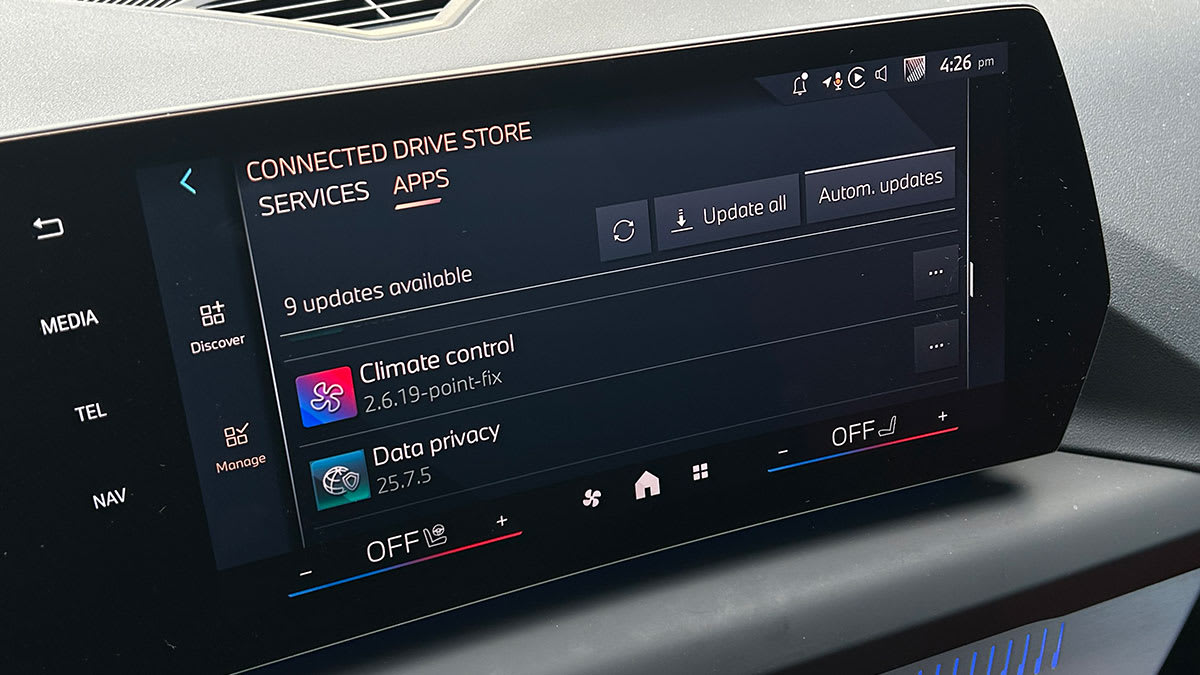
Navigation systems and connectivity
In-car navigation systems can be a valued featured if you often drive in unfamiliar territory. They typically retail for about
$2,000 when offered alone but are often bundled with other features, such as a backup camera or a high-end audio system that
can add another $1,000 or more. Built-in systems have large, clear screens that are in the center of the dashboard and have
generally intuitive controls. They are integrated nicely into the car, and some use touch-screen displays that make it easy
to put in destinations and navigate through menus. Some can also respond to voice commands, giving you the added safety of
keeping your eyes on the road and hands on the wheel. For a fee, many systems can provide real-time traffic reports, which
can alert you to congested traffic, accidents, or road construction. But portable units can offer most of the same abilities
for much less money. (See Ratings and learn more about portable GPS navigation systems.)
Bluetooth connectivity is becoming more readily available, enabling wireless devices such as a cell phone to wirelessly communicate
with the car's audio system. This allows convenient, hands-free phone operation. Popularized by GM's OnStar, telematics systems use a combination of cellular telephone and Global Positioning System (GPS)
technology to connect drivers with a call center staffed 24 hours a day, 7 days a week, at the touch of a button. For a monthly
or annual fee, such concierge services can provide directions or summon emergency aid based on your vehicle's location.