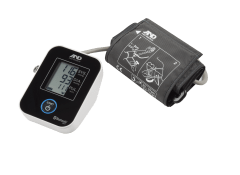
Heart-rate monitors

Heart-rate monitor buying guide

Last updated: April 2013

Find Ratings blob logo

Getting started

Getting started

Vigorous exercise might produce greater health benefits than moderate workouts. But working out too hard isn't a good idea. A heart-rate monitor can help make sure you reach your target heart rate, but stay in your safety zone. We tested 11 new models, ranging in price from $29 to $200, and found that all had excellent accuracy.

Our test included six chest-strap models, which you wear along with a device on your wrist or in on case a special iPhone app to see your heart rate; four wrist-only models, which you have to touch to get a reading; and one wrist model that provides a continuous heart-rate reading.

Our volunteers wore each monitor while resting and while walking on a treadmill at various intensities. To assess accuracy, we compared heart rates on the monitors with those measured by an electrocardiograph, a device similar to the kind doctors use. Staffers also took the monitors home with them, so we could see how easy they were to use outside of our labs.

All provided a consistently accurate heart-rate reading, but check out the section on types below to pick one that best suits your workout routine. For example, some are better for activities like biking. Swimmers should check with the monitor's website or the user manual. The manual for one model we tested says it's only "splash proof," while others say you can use the device while swimming as long as you don't press any of the buttons while you are in the water.

How to choose

Use the Ratings and choose by price, features, or workout.

How to find your target heart rate

Calculate your target heart-rate zone by subtracting your age from 220 to get your maximum heart rate, and then multiplying that number by 0.7 (for the lower end of your target range) and 0.85 (for the upper end). For a 55-year-old, for example, the maximum heart rate would be 165 beats per minute, and the range during exercise is 116 and 140 beats per minute. Those numbers are approximate; individual targets might vary.

Types

Chest-strap

All of these models are worn with a chest strap and wristwatch device except for one model (that connects via Bluetooth to your iPhone). Your heart rate is continuously displayed on either the wristwatch or the iPhone.

Pros:

They provide continuous heart-rate readings. They allow you to move freely, so they're good for pretty much any workout from basketball to Zumba. Panelists preferred chest-strap models to the wrist-only models that you have to touch to take a reading.

Cons:

You have to wet the chest strap at least initially to get a reading. One of the models sends your heart rate to your iPhone, which can be convenient, but some panelists worried about dropping their phone while working out.

Touch-type wristwatch

These wrist-only models require you to either touch the device on its rim or press a button to get a reading. You place them in the same spot as your watch.

Pros:

Models do not require a chest strap.

Cons:

Tough to use and distracting for certain workouts like running or cycling. You may have to wait several seconds to get a reading. You may have to wet your finger or the back of the watch with water or conductive gel, depending on the model, if you have trouble getting a reading.

Continuous reading wristwatch

These newer devices give continuous readings without a chest strap. The wristwatch device must be placed snugly above your wrist bone (or where you'd normally wear a watch) to get an accurate reading. Putting them in the right spot is crucial to get an accurate reading, since they are not connected to a chest strap.

Pros:

They provide continuous heart-rate readings without a chest strap and work well for any type of workout and they can be read more easily than touch watch models.

Cons:

Pricier than chest-strap and touch wristwatch models. The Mio lacked some basic features like a calorie counter.


Find Ratings blob logo

Heart-rate monitors Ratings

Subscribers can view and compare all Heart-rate monitors Ratings.

E-mail Newsletters

FREE e-mail Newsletters!
Choose from safety, health, cars, and more!
Already signed-up?
Manage your newsletters here too.

Health News

Q&A: Should I buy additional insurance policies by mail?

Q: I have health care coverage, but I get offers in the mail for accidental death and dismemberment policies and for additional hospital coverage, which would pay regardless of whether my regular...

How to read the new sunscreen labels

New sunscreen requirements from the Food and Drug Administration may make it easier for you to understand what you're buying. Before you shop for sunscreen, understand the terms you might find on...

How to childproof the 4 highest-risk areas of your yard

What dangers lurk in your backyard? Especially for young children, the risks range from the obvious (mowers and tractors) to the unexpected (poisonous plants). Here are the major danger zones--an...

Don't let mechanically tenderized beef ruin your Memorial Day

Some of hungry partygoers at your Memorial Day gathering this weekend might be crying out, Where's the beef!?! But from a food-safety perspective, a more salient question is, How well done is the...

Two good sunscreens for kids and pregnant women

Of the sunscreens in our new Ratings, two may be better choices for children and pregnant women. One is a Coppertone lotion, the other an Equate sunscreen sold in Walmart. Here's why they make go...

Connect

and safety with
subscribers and fans

Follow us on:

Mobile

Mobile Get Ratings on the go and compare
while you shop

Learn more
left arrow right arrow
See also:
See buying guide down arrow
13 rated down arrow
See buying guide down arrow