

Make the Price Right
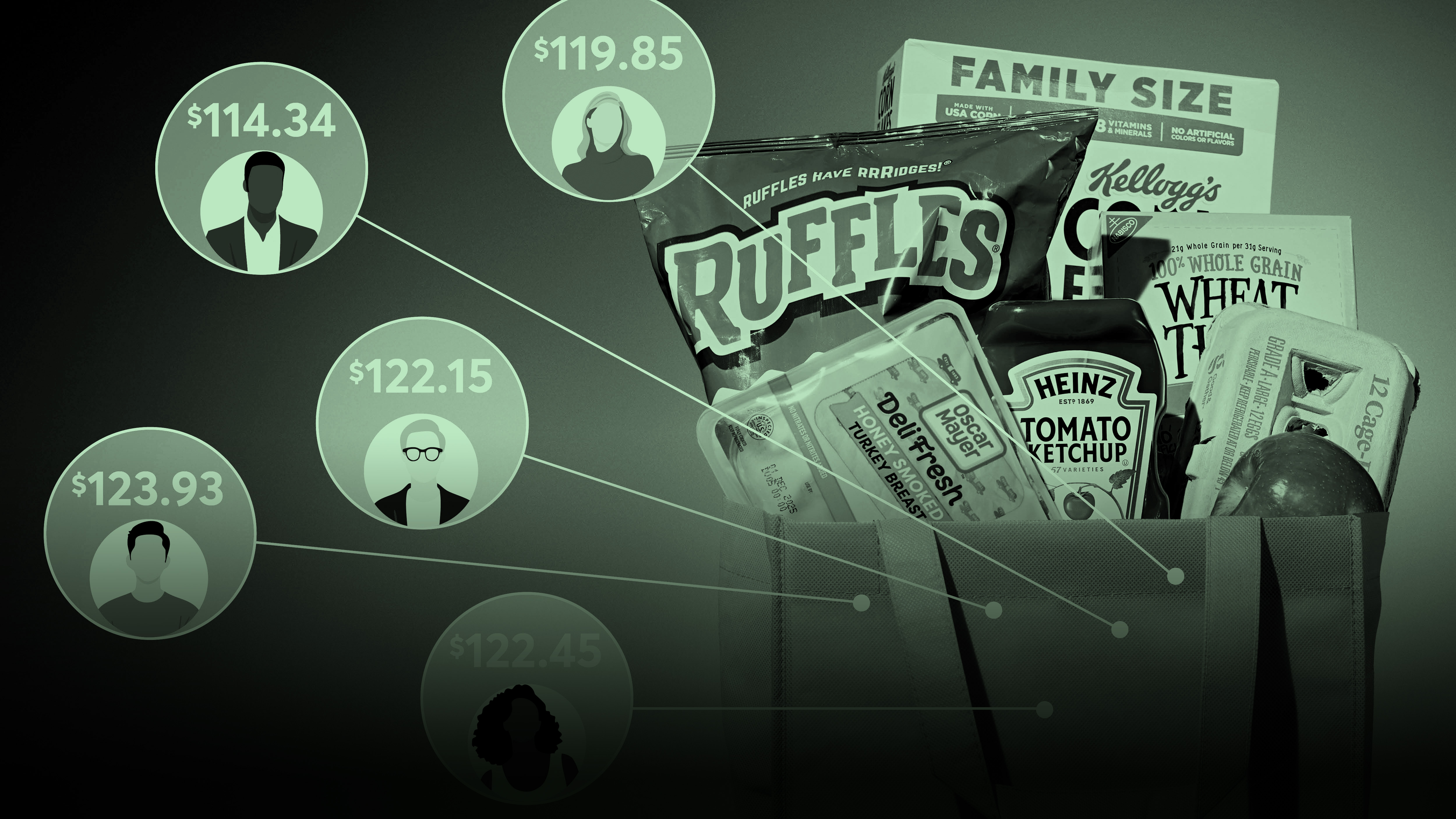
74% of grocery items checked had different prices for different shoppers
Same groceries. Same store. Same time. But different prices for different people.
CR conducted an investigation into Instacart’s AI-enabled pricing experiments with Groundwork Collaborative and More Perfect Union. CR’s campaigns and community engagement team recruited more than 400 volunteers nationwide to shop for items through our Community Reports program. We found that nearly three out of every four items checked were offered at multiple prices. Some people were quoted prices up to 23 percent higher than others for the same item.
After CR published the findings, Instacart announced it would stop this practice.
Our advocates brought the evidence to government officials, and we testified before lawmakers across the country. Three states passed laws aimed at companies’ use of personal data to set individualized prices, citing CR’s work. After we briefed the Federal Trade Commission, the agency proposed a national policy for personalized pricing, warning businesses that they could be violating consumer protection laws.
Working for Safer Food

1st law in the nation aimed at harmful ultraprocessed foods in schools
The nation’s first law to identify and phase out the most concerning ultraprocessed foods from public school meals was enacted in California. CR co-sponsored the law and helped build support for this landmark step for children’s health. Recent research has linked diets that include a lot of harmful ultraprocessed foods, such as sugar-sweetened drinks and packaged snacks, to serious health risks, including cancer, cardiovascular disease, and type 2 diabetes.
Our work for safer food in fiscal year 2026 included independent testing that exposed gaps in the safety of infant formula and protein powders. We found concerning levels of arsenic or lead in 26 of 49 infant formulas tested, while more than two-thirds of 23 protein powders and shakes contained more lead in one serving than CR’s experts say is safe to consume in a day. Our next tests of protein powders showed that safer products are possible. CR is pressing the Food and Drug Administration to adopt strong, enforceable standards so that consumers can count on safer choices across the market. CR also advocates for state-level legislation requiring rigorous testing and clear transparency for baby formula and protein supplements.
We also found some encouraging progress in baby food. After CR helped win a California law requiring manufacturers to regularly test for heavy metals and make the results public, our latest tests found that levels in baby foods have dropped. More work remains, but the improvement shows how independent evidence, transparency, and strong public protections can help make food safer.
Pushing for Energy Affordability
$31 billion
in rate increases sought by utilities nationwide
Electric bills are rising fast. Utilities across the country sought nearly $31 billion in electric and gas rate increases in 2025, more than twice the previous year’s total. Meanwhile, the rapid expansion of AI data centers is driving demand for costly new power plants and grid infrastructure, raising the risk that households will be stuck paying for Big Tech’s growth.
CR reported on what’s driving these increases, explained how state regulators can protect consumers, and exposed the risks of utility deals that shift data-center costs onto the public. More than 38,000 consumers have signed our petition, calling on state leaders and utility regulators to reject excessive rate hikes, make data centers pay their fair share, and prioritize lower-cost solutions that reduce waste and bills.
CR brought the same consumer-first focus to another growing household expense: homeowners insurance. Fast Company named CR one of the most innovative nonprofits of 2026 for our work helping families navigate a volatile and increasingly unaffordable insurance market.
Helping Keep Our Kids Safe

2 new national safety standards
Water beads are tiny gel balls made of superabsorbent materials that can grow as large as a golf ball when exposed to water or other liquids. These beads, which were often marketed as toys, can cause life-threatening intestinal blockages if swallowed or severe injuries if inserted into an ear or nose.
Infant neck floats are offered as a way to keep a baby or toddler’s head afloat while they play in the water, but our experts identified them as inherently dangerous products that pose drowning and severe injury risks.
Now new national safety rules establish mandatory protections for water beads marketed as toys and for infant neck floats. The standards require safer designs, stronger performance and testing requirements, and clearer warnings to reduce the risks of internal injuries, poisoning, and drowning.
CR helped drive these changes by investigating the risks, warning families, pressing major retailers to stop selling water beads marketed to kids, and urging the Consumer Product Safety Commission to adopt strong standards. The new rules give regulators the tools to keep unsafe products out of stores and homes nationwide.
Advocating for AI Reforms
1st
framework defining what consumers are owed from AI-powered financial products
For the last two years, CR has investigated how AI, algorithms, and consumer data can shape the prices and discounts people see. A shopper can be left wondering whether a price is fair, a discount is real, or if someone else got a better deal. We’ve also examined how scammers use AI to clone familiar voices to try to fool us and steal our money.
While AI does deliver some benefits to consumers, people need protections against its unfair and deceptive uses. CR unveiled the Consumer Finance AI Standard, a first-of-its-kind framework for fairness, transparency, accountability, and consumer control when AI is used in financial products and services. The framework answers the question: what does the use of AI in any product owe consumers?
And with our support, California enacted the AI Transparency Act, requiring large online platforms to help consumers determine whether content was created or altered by AI. The law will help people assess what they encounter online and guard against deepfakes, fraud, and misinformation.
Raising the Bar for Safer Products

4 major online retailers put to the test for baby product safety
CR examined the experience of shopping online for baby products on Amazon, Target, Temu, and Walmart, and we found some gaps in safety information and protections against risky products.
After CR shared its findings, Amazon updated pacifier listings to include mandatory strangulation warnings and added better sizing information and a flammability safety page for children’s pajamas.
Temu launched a more accessible Product Safety Alerts and Recalls center, personalized recall notices, and a prohibited products list. It also began requiring bisphenol A (BPA) testing and verification documents for pacifiers and enhanced safety disclosures for crib and pacifier listings. Both companies removed unsafe listings identified by CR and committed to additional changes.
Protecting Your Privacy
3
more states ban the sale of precise location data
Where you go can reveal some of the most intimate details of your life, including where you work, worship, seek medical care, or attend a political event. Your connected devices can collect a detailed record of those movements. Personal profiles compiled and sold by data brokers can expose consumers to fraud, identity theft, scams, and harassment.
With CR’s input, Connecticut, Oregon, and Virginia enacted bans on the sale of precise location data during the fiscal year. Together with Maryland, which passed a law in 2024, these four states now prohibit covered businesses from selling this deeply personal information. CR created a model bill to help states address this issue.
And California enacted the first-in-the-nation Opt Me Out Act, supported by CR, which will require web browsers to offer one simple setting that signals to websites not to sell or share a consumer’s personal information.