send to a friend printable version
Buying advice Air conditioners
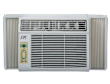
Low prices and high efficiency make individual room air conditioners an inexpensive alternative to central air for cooling one or two rooms

Room air conditioners now cost as little as $100 and often include relatively precise controls with digital temperature readouts instead of the vague "warmer" and "cooler" settings of old.

Added efficiency is also trickling down the price scale. All models we tested meet the 9.7 Energy Efficiency Rating (EER) now required for air conditioners below 8,000 British thermal units per hour (Btu/hr.) and 9.8 EER for those with 8,000 to 13,999 Btu/hr. Most also meet or exceed the 10.7 EER needed to qualify for the federal Energy Star designation--a voluntary program that helps identify models at least 10 percent more efficient than the minimum allowed.


WHAT'S AVAILABLE

Fedders, Frigidaire, GE, Haier, Kenmore (Sears), and LG are the leading brands of room air conditioners. You'll find cooling capacities that range from 5,000 British thermal units per hour (Btu/hr.) to more than 30,000 Btu/hr., though most are small and midsized models from 5,000 to 9,000 Btu/hr. You'll also find large models (9,800 to 12,500 Btu/hr.).

Price range: about $100 to $600 for small to midsized models based mostly on cooling capacity, and $200 to $700 for larger models.


HOW TO CHOOSE

Here are some tips that can help you choose an appropriately sized air conditioner that combines performance, efficiency, and value:

Determine how much cooling you need. A general rule is that 5,000 to 6,000 Btu/hr. models cool rooms 100 to 300 square feet; 7,000 to 8,200 Btu/hr. models cool rooms 250 to 550 square feet; and 9,800 to 12,500 Btu/hr. models cool rooms 350 to 950 square feet. Room construction, climate, and other factors also affect your choice.

Consider window location. Does the air conditioner need to blow air to the left or right to direct air to the room's center for uniform cooling? Most models do a better job directing air in one direction or the other, in part because of the design of their internal fan. Our Ratings show which models are more directionally biased than others.

Look for third-party certification. When assessing EER, look for a certification sticker from the Association of Home Appliance Manufacturers (AHAM) or the Canadian Standards Association (CSA). An energy-efficient unit will not only help the environment but may also qualify for rebates in some areas; see the Energy Star Web site, at www.energystar.gov, for details.

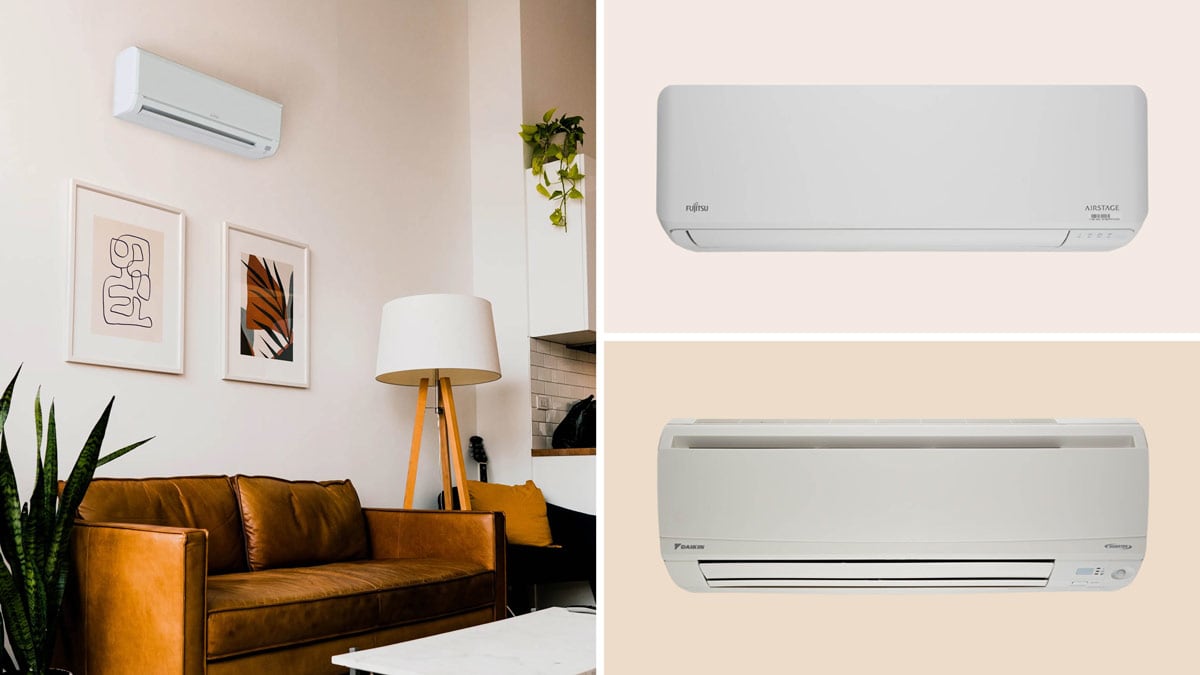
Don't buy features you don't need. Low-profile models take up less space in your window and can direct air up, not just side-to-side, but tend to be pricier.

Clean it periodically. With any model, clean the filter biweekly or as needed. Where possible, hose off the back of the unit if debris has clogged cooling coils.

See our latest Ratings of air conditioners and related information (available to subscribers).