In this report
Overview
FORUMS
CAR FORUMS
Get advice, give advice on car buying, car care, and tires.


Guide to safety features

Last reviewed: April 2011
VIDEO:


Don't overlook safety features when comparing different models. Antilock brakes and electronic stability control, for instance, are effective and well worth the money. Remember, though, that the most important thing you can do to protect your life is to buckle your seatbelt. Safety belts save lives on their own, but many of the more advanced safety features, such as seatbelt pretensioners and air bags, only work or work best for people who are buckled up to start with.

Here's a rundown of some of the more important safety gear.

Air bags  |  Antilock brakes (ABS)  |
Traction control  |  Safety-belt features  |
Electronic stability control  |  LATCH (Lower Anchors and Tethers for Children)  |
Lane departure warning  |   Adaptive cruise control  |   Blind-spot warning  |
Pedestrian safety  |   Active head restraints  |   Backup camera  |   Tire-pressure monitor  |
Telematics

Air bags

Front air bags are now standard on all new vehicles. Crash sensors connected to an onboard computer detect a frontal collision and trigger the bags. The bags inflate in a few milliseconds—the blink of an eye—then immediately start deflating.

While air bags have saved thousands of lives, they also have the potential to cause injury or even death, especially to children or to occupants who aren't using a seatbelt. Children under 12 should be seated in the rear in an appropriate restraint system. Since 1997, automakers have reduced the bags' deployment force and have developed new control systems that respond more appropriately to crash severity.

Adaptive, or dual-stage front air bags are standard on virtually all current cars. Most of these adaptive systems can detect whether or not the seat belt is fastened, as well as the severity of a crash. In a low-level collision, the system inflates the front air bags less aggressively—with 70 to 80 percent of the force of a single-stage air bag. In a higher-speed collision they inflate with full force, providing firmer protection. Many systems now use sensors that detect the presence and weight of the person in the passenger seat and deactivate or adjust the deployment of the air bag accordingly. The best air-bag systems can detect the presence, height, and seat position for the driver and front passenger, and deactivate or de-power front air bags as appropriate to minimize the chance of injury to out-of-position occupants or children.

Chest-level side-impact air bags for front-seat passengers are also nearly universal, and some automakers offer side bags for rear-seat passengers as well. When they first arrived, side air bags were fairly small cushions that popped out of the door trim or the side of the seatback. They helped protect the torso, but weren't as effective in protecting the head. Nearly all new models use additional head-protection air bags that usually deploy downward from above the side windows. These side-curtain bags, the most common type, spread across both front and rear side windows to prevent occupants from hitting their heads and to shield them from flying debris. A curtain bag can also keep people from being ejected during a rollover or a high-speed side crash. The better head-protection systems deploy the side-curtain bags if the system detects that the vehicle is beginning to roll over. (For more information on crash testing and Ratings, see our Crash test 101 report). (back to top)

Antilock brakes (ABS)

Before antilock brakes came along, it was all too easy to lock up the wheels (stop them turning) during hard braking, particularly on slippery surfaces. When the wheels lock up, the vehicle tends to keep plowing ahead in whatever direction it was going. You can't steer, and locked wheels can cause a vehicle to slide sideways. ABS prevents this from happening. Antilock brakes use wheel-speed sensors at each wheel and a computer that coordinates the braking action, rapidly pulsing the brakes on and off when you hit the pedal hard. By preventing lock-up, ABS allows the driver to retain steering control while braking, so that the car can be maneuvered around an obstacle, if necessary. (back to top)

Traction control

This electronically controlled system limits wheel spin during acceleration so that the drive wheels have maximum traction. It's particularly useful when starting off in wet or icy conditions. Some traction-control systems operate only at low speeds, while others work at all speeds.

Most low-speed traction-control systems use the car's antilock brake system. If the system detects wheelspin while accelerating on a slippery surface, it momentarily applies the brakes to the slipping wheel. This stops the slipping and automatically routes power to the opposite drive wheel. All-speed traction control uses a combination of ABS and powertrain control. In slick conditions and at higher speeds, a system of sensors and computers may upshift the transmission, throttle back the engine, and apply the brakes—or a combination of these—to prevent wheelspin. (back to top)

Safety-belt features

While the seatbelt is arguably the single most important piece of safety equipment, enhanced belt features are helping seatbelts do their job more effectively.

Adjustable upper anchors for the shoulder belts can make a meaningful safety difference. Adjustable anchors help position the belt across the chest instead of the neck to prevent neck injuries. They also can help keep the belt from pulling down on a tall person's shoulder, making it more comfortable and encouraging its use.

Seatbelt pretensioners instantly retract the belts to take up slack during a frontal impact. This also helps position occupants properly to take full advantage of a deploying airbag. Force limiters, a companion feature to pretensioners, manage the force that the shoulder belt builds up on the occupant's chest. After the pretensioners tighten it, force limiters let the belt pay back out a little. (back to top)

LATCH (Lower Anchors and Tethers for Children)

All vehicles are now required to have the LATCH system. The system features built-in lower anchors and top-tether attachment points allowing LATCH-compatible child safety seats to be installed without using the vehicle's safety-belt system. The LATCH system helps child-seat installation by reducing incompatibilities that safety-belt installation may present. But we've found a number of cars and trucks whose LATCH system is tough to use correctly, so try before you buy a new child seat. (back to top)

Pre-collision systems

Lane departure warning

This alerts you if your car drives out of its lane without the turn signals activated. Using a camera or lasers to monitor lane markets, the LDW may sound a chime, blink a dashboard telltale, and/or vibrate the steering wheel or seat depending on the system. High-tech versions can also intervene via ESC to help prevent you from sideswiping another car. (back to top)

Adaptive cruise control

Adaptive cruise uses lasers or radar to keep a constant distance between you and the car ahead, automatically maintaining a safe following distance. (back to top)

Blind-spot warning

Using radar or cameras, this system illuminates a light or icon in or adjacent to the outside mirrors to warn that another vehicle is lurking in the lane beside, possibly hidden in your car's blind spot. Also effective are outside mirrors with a small convex section for a wide-angle rearward view. (back to top)

Pedestrian safety

Volvo's optional pedestrian detection system uses radar and cameras to detect people in front of the car and can automatically activate the car's brakes at speeds below 12 mph if the driver fails to react in time. (back to top)

Active head restraints

Active head restraints move up and toward the back of the head to mitigate whiplash injury in a rear crash. (back to top)

Backup camera

Mostly used as a parking aid providing a bumper-level view aft, a backup camera can also assist with spotting a child or pedestrian concealed in the blind zone immediately behind the vehicle. See our blind spot measurements on vehicles. (back to top)

Electronic stability control (ESC)

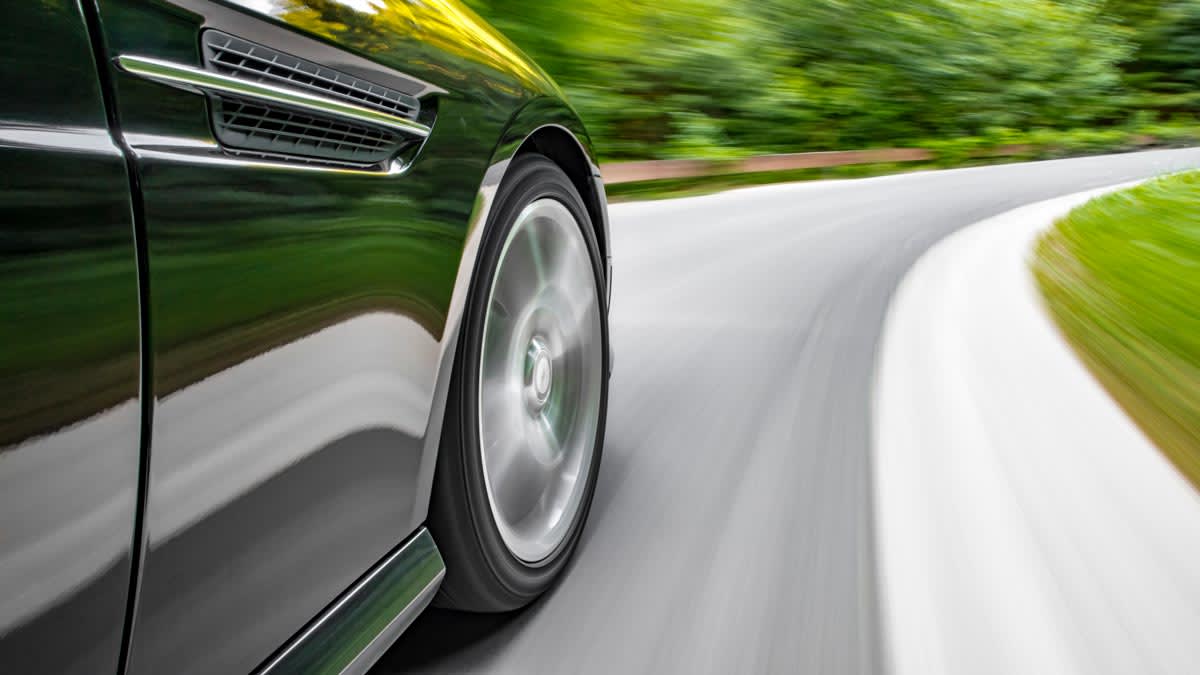
Electronic stability control (ESC) takes electronic traction control a step further. This system helps keep the vehicle on its intended path during a turn, to avoid sliding or skidding. It uses a computer linked to a series of sensors—detecting wheel speed, steering angle, sideways motion and yaw (spin). If the car starts to drift, the stability-control system momentarily brakes one or more wheels and, depending on the system, reduces engine pull to keep the car back on course.

ESC is especially helpful in providing an extra measure of control in slippery conditions and accident-avoidance situations. With tall, top-heavy vehicles like sport-utilities and pickups, it can also help keep a vehicle from getting into a situation where it could roll over.

Electronic stability control started on luxury cars but has migrated to nearly every other vehicle, including all SUVs. However, automakers each tend to have a proprietary name for their stability control systems (see the accompanying table). To help consumers identify the system in a vehicle's features list, the Society of Automotive Engineers has asked that all manufacturers use electronic stability control or ESC, as common terminology when referring to their stability-control systems. Consumer Reports supports this move because it will help consumers know what they are buying. If in doubt whether a car has it, find out before you buy. (back to top)

Deciphering stability control

Stability control helps keep a vehicle from skidding sideways. Automakers give their systems a confusing array of names, including the ones listed below:

Make Stability-Control System Name
Acura Vehicle Stability Assist (VSA)
Audi Electronic Stability Program (ESP)
BMW Dynamic Stability Control (DSC)
Buick StabiliTrak
Cadillac StabiliTrak
Chevrolet Active Handling (cars); StabiliTrak (SUVs)
Chrysler Electronic Stability Program (ESP)
Dodge Electronic Stability Program (ESP)
Ford AdvanceTrac
GMC StabiliTrak
Honda Vehicle Stability Assist (VSA)
Hummer StabiliTrak
Hyundai Electronic Stability Program (ESP)
Infiniti Vehicle Dynamic Control (VDC)
Jaguar Dynamic Stability Control (DSC)
Jeep Electronic Stability Program (ESP)
Kia Electronic Stability Program (ESP)
Land Rover Dynamic Stability Control (DSC)
Lexus Vehicle Stability Control (VSC)
Lincoln AdvanceTrac
Mazda Dynamic Stability Control (DSC)
Mercedes-Benz Electronic Stability Program (ESP)
Mercury AdvanceTrac
Mini Dynamic Stability Control (DSC)
Mitsubishi Mitsubishi Active Skid and Traction Control System (M-ASTC)
Nissan Vehicle Dynamic Control (VDC)
Pontiac StabiliTrak
Porsche Porsche Stability Management (PSM)
Saab Electronic Stability Program (ESP)
Saturn StabiliTrak
Scion Vehicle Stability Control (VSC)
Subaru Vehicle Dynamics Control (VDC)
Suzuki Electronic Stability Program (ESP)
Toyota Vehicle Stability Control (VSC)
Volkswagen Electronic Stability Program (ESP)
Volvo Dynamic Stability Traction Control (DSTC)

Consumer Reports' auto experts highly recommend stability control where it's offered. But it does have its limits: You can't just speed into a curve and expect the system to bail you out. Taking any corner too fast could compromise the system's ability to keep the vehicle on course.

The National Highway Traffic Safety Administration will require ESC to be phased in as standard equipment by the 2012 model year.

Tire-pressure monitor

Underinflated tires can hurt handling and fuel economy, as well as cause premature wear—or a possible blowout—of the tire. Yet a tire can lose air so slowly that many drivers don't realize it's happening. A government regulation requires all vehicles made after October 31, 2006 to have a low-tire-pressure warning system. The type of tire-pressure monitor we favor measures tire pressure directly. A competing technology, and one the government has approved, gauges air loss indirectly by using sensors to count wheel revolutions. We don't think those systems are sensitive enough. In any case, we suggest regularly checking your tires with a conventional tire-pressure gauge. (back to top)

Telematics

Combining cellular telephone and Global Positioning Satellite (GPS) technology, several major automakers are offering an automated service that provides a high level of security and convenience. GM was the first with its OnStar service, followed later by Mercedes-Benz's TeleAid, BMW Assist, Volvo OnCall, and Lexus Link. All use the same technology and offer basically the same services. In operation, with the touch of a button the driver can communicate with a central dispatch center, where the location of the vehicle can be tracked on a computer monitor to provide route directions or emergency aid. If a vehicle air bag deploys, the system automatically notifies the dispatch center, locates the vehicle, and sends emergency aid if the driver does not respond to an inquiry. A phone call to the dispatch center can find a "lost" car in a parking lot by beeping the horn, or unlock the doors if the keys have been locked inside or misplaced. OnStar is available on all GM cars and trucks, as well as on Saab, Acura, Audi, and other makes. TeleAid is offered only on Mercedes-Benz models. Additional systems include BMW’s Assist and Volvo’s Oncall. The cost of the system is built into the price of most vehicles, but a monthly service fee is usually required. (back to top)

Posted: February 2006 — Last reviewed: April 2011