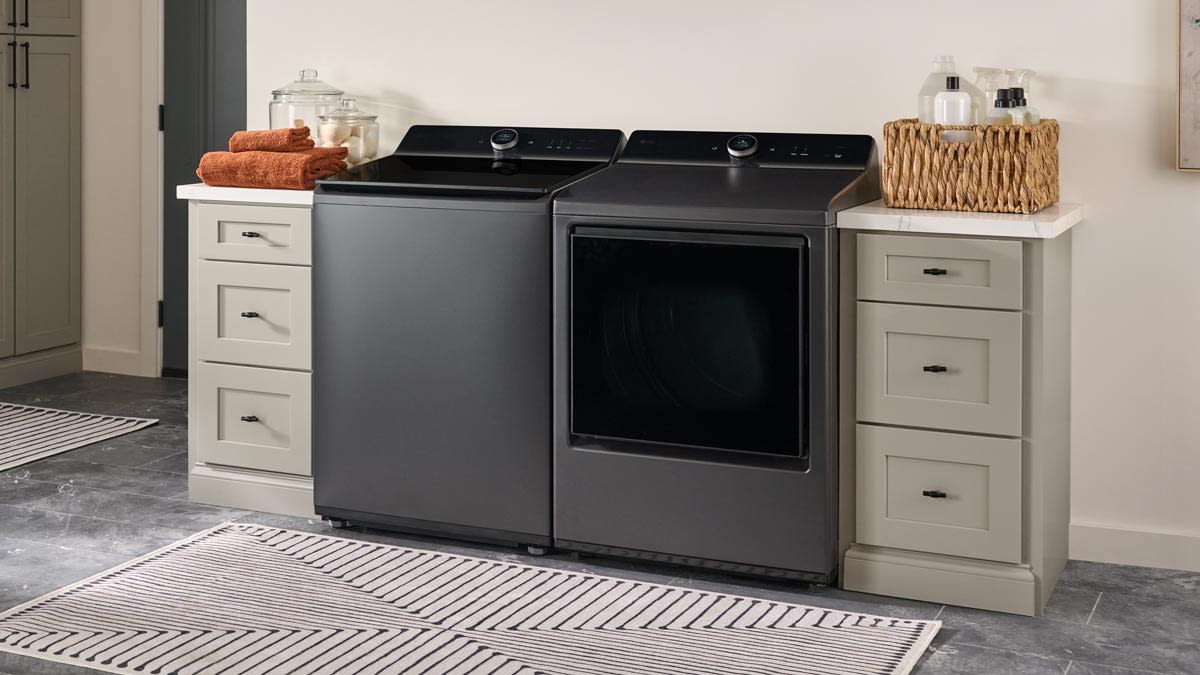
Clothes dryers

Clothes dryer buying guide

Last updated: July 2012

Getting started

Don't assume you should replace your dryer if you buy a new washer. But if you're in the market for a new one, you'll find some refinements. The biggest is a moisture sensor, which automatically stops the machine when the laundry is dry. Most of the dryers tested by Consumer Reports are both capable and quiet.

While washers have become more efficient in the past decade, dryers haven't changed much. Clothes dryers are relatively simple: Their major differences are how they heat the air (using gas or electricity) and how they're programmed to shut off once the load is dry (thermostat or moisture sensor).

Consumer Reports has found that dryers with a moisture sensor tend to recognize when laundry is dry more quickly than machines that use a traditional thermostat. Because they don't subject clothing to unnecessary heat, moisture-sensor models are easier on fabrics. And since they shut themselves off when laundry is dry, they use less energy. Sensors are now offered on many dryers, including some relatively low-priced ones. Thermostat-only dryers are generally the most basic models. This clothes dryer guide will help you choose.

How to choose

Gas and electric dryers perform comparably, our years of testing show. Gas dryers cost about $50 to $150 more than comparable electric models, but the likely savings in fuel costs should more than make up the difference in the long run. An electric dryer requires a 240-volt outlet, a gas dryer needs a gas hookup and a 120-volt outlet. If you have both, don't rule out the gas model simply because it costs more. (Consumer Reports now tests only electric dryers, which account for about 80 percent of the models sold, but equivalent gas models are listed in the Ratings, which are available to subscribers.)

Insist on a moisture sensor

Overdrying can damage or shrink fabrics, and moisture sensors can minimize that possibility. Sensors are on most of the dryers we've tested. Whether a specific model has a sensor or thermostat might not be obvious from labeling or controls. Check the literature, visit the manufacturer's website, or pick a highly rated dryer that we've tested.

Don't get hung up on capacity

Manufacturers describe dryer capacity (as they do washer capacity) with terms such as extra large, super, and super plus. The differences aren't meaningful for everyday use. Most full-sized dryers can hold a typical wash load. If you want to dry big, bulky items, choose a model judged excellent for capacity in our Ratings.

Start in the middle

When using an automatic setting (which we generally recommend) rather than a timed one, set the control to the midpoint and raise or lower it as needed. Using the "more dry" setting routinely can overdry clothes and waste energy. Use the "less dry" setting to leave clothing damp for ironing. Don't worry about knowing when an automatic cycle is done: If you don't hear the buzzer, an optional extended-tumble setting without heat prevents wrinkles if you don't remove clothes immediately.

Don't pay for unnecessary extras

Higher-priced dryers might offer a dozen or so choices, including specialty cycles such as "speed dry" (15 minutes of high heat, for example). These can usually be replicated with standard settings. A choice of heat level, timed and auto-dry, and a few fabric types (regular/cotton and permanent press/delicate) is usually plenty. Touchpads look impressive and might allow you to save custom settings but don't improve performance. Nor do stainless-steel tubs, unlike in washers.

Get a quiet dryer for living areas

If your dryer will be near the kitchen or a bedroom, look for a model judged very good or excellent for noise. Also pick models that let you silence end-of-cycle signals.

Types

Dryers are pretty basic and differ mostly in size and features. Your space constraints will probably dictate the types of clothes dryers you can consider.

Full-sized dryers

Most full-sized dryers are 27 to 29 inches wide. Manufacturers often describe them with superlatives such as "extra large," "super," and "super-plus," but don't get hung up on capacity. Most full-sized models can manage a typical wash load--about 6 to 7½ cubic feet. If you want to dry comforters and other bulky items, check our Ratings for models that scored excellent for capacity.

Full-sized dryers are the most practical type for most homeowners. Front-mounted controls on some let you stack a front-loading dryer atop a front-loading washer, though shorter people might have to stretch to reach the controls or empty the drum.

Space-saving dryers

These compact models are typically 24 inches wide or less.

Pros:

These might be a good choice for apartment dwellers and singles. You can stack some front-loading compact dryers atop a front-loading washer.

Cons:

Compacts have half the drum capacity of full-sized models, about 3½ cubic feet. Their small opening makes them more difficult to load and unload than a full-sized dryer.

Washer-dryer laundry centers

These combine the dryer and washer in one unit. They may be full-sized or compact, gas or electric.

Pros:

Performance is generally equal to that of a full-sized machine.

Cons:

The dryer component, though full-sized, typically holds less than a stand-alone full-sized dryer.

Features


Look for the clothes dryer features that increase convenience and improve performance and efficiency, and avoid the pricey extras.

Moisture sensor

This device is more accurate than a thermostat in determining when laundry is dry. Moisture-sensor dryers are easier on fabrics because they don't subject your laundry to unnecessary heat. And the dryers use less energy by shutting themselves off as soon as laundry is dry.

Auto-dry cycles

Full-sized machines often offer three or more cycles, which shut off the unit when the clothes reach the desired dryness. Each cycle may have a complete-dry setting, a less-dry setting for damp ironing, and gradations in between. A separate temperature control in most dryers lets you choose lower heat for delicate fabrics. These features increase flexibility.

Extended tumble

This setting keeps tumbling the clothes after they're dry. Some models tumble without heat; others cycle on and off. It reduces wrinkling if you aren't able to remove clothing immediately after it's dry.

Top-mounted lint filter

It might be easier to clean than one inside the drum. Many models have a warning light that reminds you to clean the filter. A clogged filter reduces efficiency and could be a fire hazard.

Drum rack

Attached inside the drum, it keeps items from tumbling. It's especially useful for sneakers and other solid objects.

Drop-down vs. side-opening front door

Choose according to personal preference. As you're removing laundry from the dryer, a drop-down door can serve as a convenient shelf for folding. But reaching items inside might be easier with a side-opening door.

Electronic controls and menus

Many models have electronic dials that allow you to select fabric and push buttons for selecting other settings such as temperature and level of dryness. Whether a dryer has electronic controls or not, the controls should be legible, logically arranged, and easy to operate.

Steam setting

A growing number of dryers include a steam setting that promises to reduce wrinkles, remove odors, or both. Our tests have found mixed results, however, with better odor removal than conventional models but visibly wrinkled shirts.

Vent-blockage indicator

The vent-blockage indicator is designed to sense when a vent is blocked. Lint-filled dryer ducts increase drying time and energy costs, problems this feature addresses, according to manufacturers. Makers do not call the indicator a safety feature, even though lint-filled ducts can cause dryer fires. Our tests found the indicators were too inconsistent to count on.

Brands

Frigidaire  |  GE  |  Kenmore  |  LG  |  Maytag  |  Samsung  |  Whirlpool

The top four brands—GE, Kenmore (Sears), Maytag, and Whirlpool—account for the majority of dryer sales, although there are some new players in the market. Use this information to compare clothes dryers by brand.

Frigidaire

Frigidaire dryers are known for their generally good value for the price. The company makes electric and gas products and also sells models that are stackable with the washer. Frigidaire dryers range in price from $300 to $900.

GE

This century-old brand offers dryers under both the GE and GE Profile lines. GE is an industry leader in laundry centers. GE's latest models provide an exterior drying rack, allowing you to hang clothes to dry, a permanent rack within the dryer, and reverse tumble. Prices range from $320 to $1,000.

Kenmore

This brand, sold at Sears, is known for its reliability and offers a wide choice of models. The Kenmore brand also offers a number of different dryer lines that match its washing machines: Kenmore, Elite, HE5, HE5 Steam, Oasis, and HE2. Some Kenmore dryers use steam to freshen up clothing or remove wrinkles. Prices for the dryers range from $350 with sensor to $1,300.

LG

This company is known for its TrueSteam dryers and the designer colors available for its models. Some models have a steam generator intended to eliminate wrinkles. Prices for LG dryers range from $700 to $1,200.

Maytag

This Whirlpool-owned brand is positioned as a durable brand but priced a bit lower than Whirlpool-branded products. The company makes electric and gas products and also sells models that are stackable with the washer. Prices for Maytag dryers range from $350 to $900.

Samsung

Over the past three years Samsung has introduced a full line of laundry products, with prices ranging from $750 to $1,350. The company has been broadening its dryer line.

Whirlpool

This brand, known for innovation, markets itself as the brand that cares about the family and the environment. It offers a wide range of choices in lines that include Whirlpool, Duet, Duet Sport, Duet Steam, Cabrio, Cabrio Steam. Some Whirlpool dryers use steam to freshen up clothing or remove wrinkles. Prices for Whirlpool dryers range from $350 to $1,300.


Find Ratings blob logo

Clothes dryers Ratings

Subscribers can view and compare all Clothes dryers Ratings.

E-mail Newsletters

FREE e-mail Newsletters!
Choose from safety, health, cars, and more!
Already signed-up?
Manage your newsletters here too.

Appliance News

'30 Rock' ends with a big idea: Transparent dishwashers

At the end of last night's "30 Rock" finale, ex-network exec Jack Donaghy is about to set sail around the world when he has a brainstorm: "Clear dishwashers! You can see what's going on inside! I...

A top-notch blender could be your Super Bowl party MVP

Scrambling to plan the menu for a last-minute Super Bowl party? A blender could handle a lot of the meal prep, from pre-game pass-arounds to the post-game desserts. But it has to be the right mac...

Food safety tips to prevent sidelining your Super Bowl guests

No matter what team you're cheering for, the Super Bowl is a long game, typically four hours not counting the pre- and post-portions. That's twice as long as it takes for bacteria to start multip...

Ad watchdog asks Lemi Shine to clean up its claims

Envirocon Technologies says its Lemi Shine dishwasher detergent additive is "the only thing that works" at removing hard water spots and film from dishes. Not so fast, says the National Advertisi...

Don't let grilling fumbles ruin your Super Bowl party

Super Bowl Sunday always has some drama—sibling rivalries, halftime wardrobe malfunctions, a nail biting finish—and then there's the food. Feeding a crowd takes some planning, and gri...

Connect

and safety with
subscribers and fans

Follow us on:

Mobile

Mobile Get Ratings on the go and compare
while you shop

Learn more
left arrow right arrow
See also:
See buying guide down arrow