The redesign year indicates that the car is either introduced for the first time or an existing model has been
significantly re-engineered. The more extensive or complicated the redesign, the higher the risk of reliability problems.
2024 Model Redesign Year
The redesign year indicates that the car is either introduced for the first time or an existing model has been
significantly re-engineered. The more extensive or complicated the redesign, the higher the risk of reliability problems.
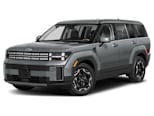
The midsized Santa Fe features a striking interior with a small third-row seat.
The standard 2.5-liter turbocharged four-cylinder is mated to an eight-speed automatic, while the hybrid model uses a 1.6-liter turbocharged four-cylinder with electric drive mated to a six-speed automatic.
The standard engine delivers quick acceleration but is compromised by some low-speed hiccups; the hybrid version is smoother and significantly more fuel-efficient, although acceleration is slightly slower.
Both versions have responsive handling, a comfortable ride, and a quiet cabin.
The dash features a large, curved screen that integrates the displays for the driver's instrument screen and the infotainment system.
The cargo area is generous, and the rear hatch opening is wide.
Road test score is a composite based on more than 50 tests and evaluations at our 327-acre test facility in
Colchester, Conn., on cars that Consumer Reports has purchased. Among the many tests are assessments of emergency-handling, braking capabilities,
fuel economy, ride, seat comfort, headlights, and controls.
Road Test Score
Road test score is a composite based on more than 50 tests and evaluations at our 327-acre test facility in
Colchester, Conn., on cars that Consumer Reports has purchased. Among the many tests are assessments of emergency-handling, braking capabilities,
fuel economy, ride, seat comfort, headlights, and controls.
Predicted Reliability
Our extensive survey data, combined with our technical knowledge, allows us to expertly predict the reliability of new and redesigned models.
Predicted Reliability
Our extensive survey data, combined with our technical knowledge, allows us to expertly predict the reliability of new and redesigned models.
Predicted Owner Satisfaction
Our extensive survey data, combined with our technical knowledge, allows us to expertly predict the owner satisfaction of new and redesigned models.
Predicted Owner Satisfaction
Our extensive survey data, combined with our technical knowledge, allows us to expertly predict the owner satisfaction of new and redesigned models.
Base MSRP Range
$35,050 - $49,400
Destination Charge: $1600
Destination Charge
This charge covers the cost of transporting a vehicle from a carmaker’s U.S. factory or port of entry to its dealerships. Destination charges are typically not negotiable. Occasionally some select model trims will have a slightly higher fee than others.
Destination Charge
This charge covers the cost of transporting a vehicle from a carmaker’s U.S. factory or port of entry to its dealerships. Destination charges are typically not negotiable. Occasionally some select model trims will have a slightly higher fee than others.
Destination Charge
This charge covers the cost of transporting a vehicle from a carmaker’s U.S. factory or port of entry to its dealerships. Destination charges are typically not negotiable. Occasionally some select model trims will have a slightly higher fee than others.
Road test score is a composite based on more than 50 tests and evaluations at our 327-acre test facility in
Colchester, Conn., on cars that Consumer Reports has purchased. Among the many tests are assessments of emergency-handling, braking capabilities,
fuel economy, ride, seat comfort, headlights, and controls.
Road Test Score
Road test score is a composite based on more than 50 tests and evaluations at our 327-acre test facility in
Colchester, Conn., on cars that Consumer Reports has purchased. Among the many tests are assessments of emergency-handling, braking capabilities,
fuel economy, ride, seat comfort, headlights, and controls.
Predicted Reliability
Our extensive survey data, combined with our technical knowledge, allows us to expertly predict the reliability of new and redesigned models.
Predicted Reliability
Our extensive survey data, combined with our technical knowledge, allows us to expertly predict the reliability of new and redesigned models.
Predicted Owner Satisfaction
Our extensive survey data, combined with our technical knowledge, allows us to expertly predict the owner satisfaction of new and redesigned models.
Predicted Owner Satisfaction
Our extensive survey data, combined with our technical knowledge, allows us to expertly predict the owner satisfaction of new and redesigned models.
Road test score is a composite based on more than 50 tests and evaluations at our 327-acre test facility in
Colchester, Conn., on cars that Consumer Reports has purchased. Among the many tests are assessments of emergency-handling, braking capabilities,
fuel economy, ride, seat comfort, headlights, and controls.
Road Test Score
Road test score is a composite based on more than 50 tests and evaluations at our 327-acre test facility in
Colchester, Conn., on cars that Consumer Reports has purchased. Among the many tests are assessments of emergency-handling, braking capabilities,
fuel economy, ride, seat comfort, headlights, and controls.
/ 100
Predicted Reliability
Our extensive survey data, combined with our technical knowledge, allows us to expertly predict the reliability of new and redesigned models.
Predicted Reliability
Our extensive survey data, combined with our technical knowledge, allows us to expertly predict the reliability of new and redesigned models.
/ 100
Predicted Owner Satisfaction
Our extensive survey data, combined with our technical knowledge, allows us to expertly predict the owner satisfaction of new and redesigned models.
Predicted Owner Satisfaction
Our extensive survey data, combined with our technical knowledge, allows us to expertly predict the owner satisfaction of new and redesigned models.
The redesign year indicates that the car is either introduced for the first time or an existing model has been
significantly re-engineered. The more extensive or complicated the redesign, the higher the risk of reliability problems.
2024 Model Redesign Year
The redesign year indicates that the car is either introduced for the first time or an existing model has been
significantly re-engineered. The more extensive or complicated the redesign, the higher the risk of reliability problems.
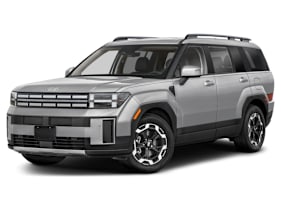
The midsized Hyundai Santa Fe SUV is redesigned for the 2024 model year, giving it a boxy look and a striking interior.
Increased dimensions bring improved interior space for rear passengers, a standard small third-row seat, and a larger rear hatch opening.
Two carryover powertrains are offered: a 2.5-liter turbocharged four-cylinder engine with an eight-speed automatic transmission and a 1.6-liter turbocharged four-cylinder hybrid with a six-speed automatic.
The plug-in hybrid option has been dropped.
Front- and all-wheel drive will be available.
The dash features a large, curved display screen that integrates the dual 12.3-inch displays for the digital driver's instrument screen and the infotainment system.
One nice feature is that the cubby under the armrest is double hinged so it can be opened either from the front or the rear.
The redesign year indicates that the car is either introduced for the first time or an existing model has been
significantly re-engineered. The more extensive or complicated the redesign, the higher the risk of reliability problems.
2021 Model Redesign Year
The redesign year indicates that the car is either introduced for the first time or an existing model has been
significantly re-engineered. The more extensive or complicated the redesign, the higher the risk of reliability problems.
The midsized Santa Fe underwent an extensive freshening for 2021 with new engines, interior changes and the availability of a hybrid version.
The Santa Fe fits above the Tucson and below the larger, three-row Palisade.
The standard 191-hp, 2.5-liter four-cylinder is a bit weak and noisy.
The optional 2.5-liter turbo is much more powerful but is mated to a dual-clutch automatic that has some low-speed vibrations.
A hybrid version comes with a 1.6-liter turbo engine and got 30 mpg overall in our tests.
We think it's the best version to get.
It also rides more comfortably than the non-hybrid Santa Fe.
The cabin is roomy with a generous rear seat and cargo space.
The interior is stylish but the center console is a sea of buttons, and the push-button gear selector is tricky to use without looking.
FCW and AEB with pedestrian detection are standard. BSW and RCTW are standard on all trims starting with the 2022 models.
A 261-hp plug-in hybrid with 30 miles of electric range and a new, rugged exterior styling XRT trim are new for 2022.
The redesign year indicates that the car is either introduced for the first time or an existing model has been
significantly re-engineered. The more extensive or complicated the redesign, the higher the risk of reliability problems.
2019 Model Redesign Year
The redesign year indicates that the car is either introduced for the first time or an existing model has been
significantly re-engineered. The more extensive or complicated the redesign, the higher the risk of reliability problems.
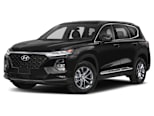
The redesigned five-passenger Santa Fe is a compelling choice priced close to some top-trim compact SUVs.
It's available with a 2.4-liter, four-cylinder engine or a more powerful 2.0-liter turbo four-cylinder.
The turbo returned just 21 mpg overall in our tests and suffers from an uneven power delivery, either hesitating or abruptly launching the SUV forward.
We think the 2.4-liter is a better choice.
The Hyundai has composed handling and responsive steering, but the ride skews firm.
Only mild engine noise penetrates the otherwise quiet cabin.
The controls are clear and easy to master, particularly the quick-to-respond infotainment system.
There is plenty of head- and legroom, and the seats are comfortable and supportive.
Rear-seat room is very generous.
Standard safety systems include forward collision warning, automatic emergency braking, and blind spot warning.
The redesign year indicates that the car is either introduced for the first time or an existing model has been
significantly re-engineered. The more extensive or complicated the redesign, the higher the risk of reliability problems.
2013 Model Redesign Year
The redesign year indicates that the car is either introduced for the first time or an existing model has been
significantly re-engineered. The more extensive or complicated the redesign, the higher the risk of reliability problems.
A major redesign took place in 2013, resulting in the emergence of two versions of the Hyundai crossover SUV.
The smaller Santa Fe Sport is a two-row model, while the standard Santa Fe offers three rows of seats.
Though handling is sound in both versions, calling them sporty is a bit of a stretch.
On the other hand, ride quality is comfortable and settled.
The well-finished and roomy cabin offers many standard features, although a rearview camera is optional.
The full-size Santa Fe also comes in for criticism regarding its tiny and difficult to access third-row seat.
Blind spot monitoring was added as an option for 2014 models.
The redesign year indicates that the car is either introduced for the first time or an existing model has been
significantly re-engineered. The more extensive or complicated the redesign, the higher the risk of reliability problems.
2007 Model Redesign Year
The redesign year indicates that the car is either introduced for the first time or an existing model has been
significantly re-engineered. The more extensive or complicated the redesign, the higher the risk of reliability problems.
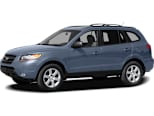
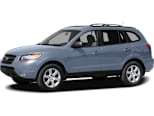
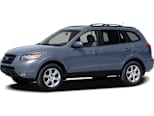
With this version of the Hyundai SUV, the interior is now spacious enough to accommodate a third-row seat (although it's a bit cramped and difficult to access).
Still, this development, along with excellent fit and finish, makes for a more refined and versatile package.
For its class, the Santa Fe also has responsive handling, which is delivered along with a firm but comfortable ride.
A 2010 redesign freshened things up a bit, but didn't really push the envelope.
While this iteration of the Santa Fe remains quite well rounded and competent, we wouldn't call it a world-beater.
The redesign year indicates that the car is either introduced for the first time or an existing model has been
significantly re-engineered. The more extensive or complicated the redesign, the higher the risk of reliability problems.
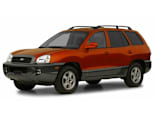
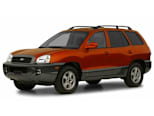
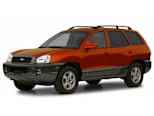
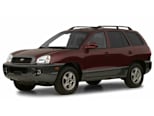
2001 Model Redesign Year
The redesign year indicates that the car is either introduced for the first time or an existing model has been
significantly re-engineered. The more extensive or complicated the redesign, the higher the risk of reliability problems.
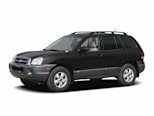
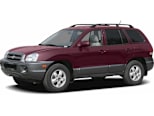
The redesigned 2007 Santa Fe was a big improvement over the original, and included standard ESC.
It had a standard 2.7-liter V6 and a new 242-hp 3.3-liter V6.
Well-equipped and pleasant, the car-based SUV rides comfortably and quietly.
It also offers its occupants the benefits of a refined powertrain and a nicely finished cabin.
However, while handling is secure, the Santa Fe is not particularly agile.
The Santa Fe's size further hampers its performance.
The SUV's weight inhibits acceleration and taxes fuel economy.
Further, its size leads you to believe the interior is more spacious than it actually is.
Finally, a tip-up in government rollover tests gives us pause when it comes to considering this version of the Santa Fe.
You will get digital access to reviews and ratings for over 8,500 products and services
to help you make better choices for life’s big moments and the everyday ones in between.
If you feel you have received this message in error, please view our customer care
FAQs or access your
account information here.