How to Load a Dishwasher
Knowing how to load a dishwasher correctly ensures every dish comes out spotless, clean, and ready to use


It’s probably one of the most hot-button issues in any household with a dishwasher: how to load the dishwasher and whether your way is the “correct” way. That’s because even if you’ve been using a dishwasher your whole life, you—or your housemate—might still harbor doubts about whether you’re positioning your dishes for maximum cleaning.
Here at Consumer Reports, we take dishwasher loading pretty seriously. For our performance tests, we load each dishwasher with 10 place settings of white ceramic dishes with baked-on food, then run it on the normal cycle (or its equivalent). When the cycle is complete, we use a photo-imaging machine to determine precisely how clean each dish is.
Dishwashers that make our list of recommended models deliver sparkling results every time. But even the best of the bunch won’t get the job done if they’re loaded improperly. So here is our advice on how to load your dishwasher, as well as common mistakes to avoid.
If you need help choosing the best dishwasher for your kitchen, you can check out our dishwasher buying guide. Or consult our ratings of more than 130 dishwashers to see which models perform best in our tests.
How to Load Your Dishwasher
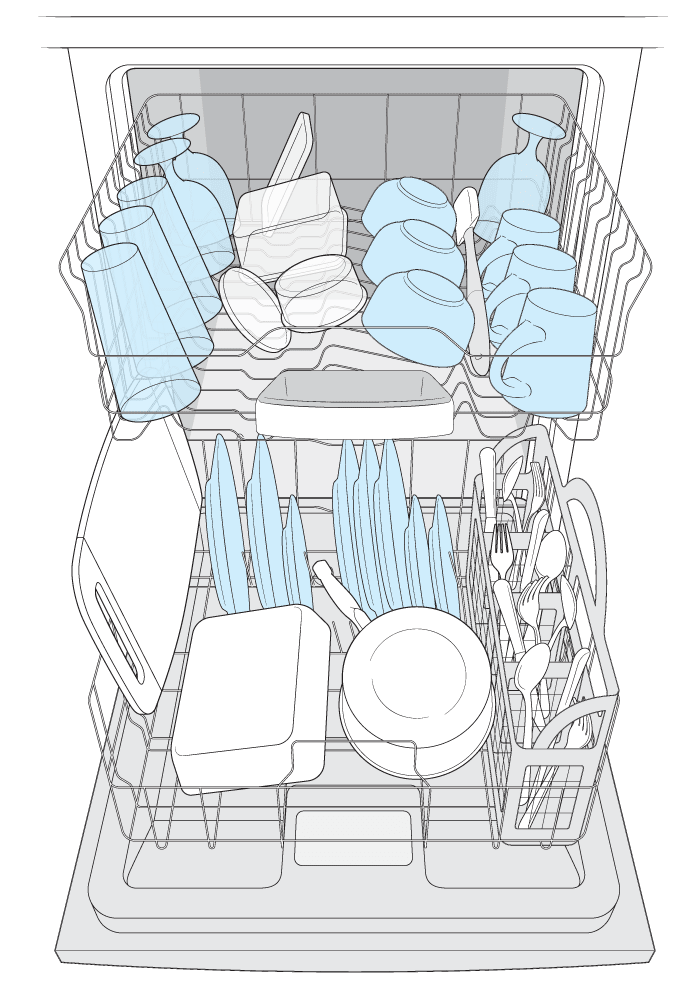
Check your owner’s manual for special loading instructions, but the following tips should help most dishwashers deliver optimum results. Most older dishwashers have only a standard upper rack and lower rack, but many newer ones come with a third rack on top for flatware and small items.
Common Dishwasher Loading Mistakes
One of the biggest mistakes people make when using their dishwasher is prerinsing their dishes. Prerinsing isn’t necessary with modern dishwashers because they have sensors that adjust the wash cycle based on how dirty the dishes are. Rinsing can also negatively affect the machine’s performance because it removes the buildup on the dishes that detergent enzymes “cling to” to do their job, says Miele’s Sappok.
However, you should scrape off any large chunks of remaining food debris, bones, and shells from your dishes and throw them in the garbage before you load the dishes into the dishwasher. If you don’t, the debris will cover the tub and reduce the flow of water into your dishwasher’s fine filter, which in turn will affect the appliance’s wash performance, says Marty Olsen, lab manager of quality engineering at LG Electronics.
Overfilling your dishwasher is also a common mistake. If you load your plates or bowls too closely together or pile items on top of one another, the wash water may not reach all the surfaces of your dishes, Olsen says.
And make sure when you’re loading items into the dishwasher, they are placed at an angle and aren’t blocking any spray arms, Moore says. Otherwise, that would prevent water from effectively reaching and cleaning your dishes.
 BEST TIME TO BUY:


