Sign In

Nonsteroidal anti-inflammatory drugs (NSAIDs) are the most frequently used medicines to treat osteoarthritis—the most common form of arthritis—and to treat mild and moderate pain. But these medications can cause serious side effects, including stomach ulcers, gastrointestinal bleeding, kidney failure, heart attacks, and strokes. Except for low-dose aspirin and naproxen, NSAIDs might not be appropriate for people at risk of heart disease or stroke. Don't take them for long periods of time without consulting a doctor.

Taking effectiveness, safety, and cost into account, we've selected the following as Consumer Reports Best Buy Drugs:
Naproxen may be a better choice for people who have higher risk of heart attacks or strokes, since the available evidence indicates it does not increase the risk of these conditions as much as other NSAIDs.
If you take aspirin or other blood thinners, are at risk of bleeding, or have a history of prior bleeding or ulcers, talk to your doctor before starting an NSAID. Celecoxib (Celebrex and generic) may be an alternative in some situations. Celecoxib is no more effective at relieving pain than ibuprofen or naproxen.
For localized arthritis pain, a topical NSAID lotion or gel applied to the skin can be as effective as tablets or capsules. But it is not clear from studies if these topicals cause fewer serious side effects compared to NSAIDs tablets or capsules. Also, topicals can be more expensive.
Our advice:
Share what works for you below.
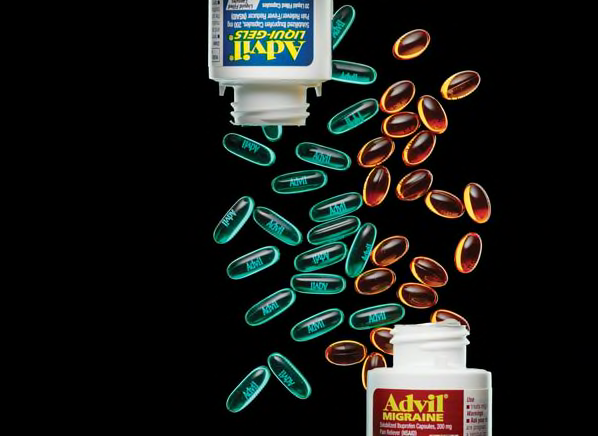
NSAIDs are one of the most commonly used classes of medications, and often taken to treat mild and moderate pain from osteoarthritis, which involves breakdown of cartilage in the joints that can lead to pain, stiffness, and immobility. The drugs don't cure the disease, but they can help relieve its symptoms.
About 27 million adults in the U.S. have osteoarthritis, according to the National Institute of Arthritis and Musculoskeletal and Skin Diseases. It's more common in older people, with up to a third of adults 65 and older suffering from the condition. Being obese also increases the risk of arthritis.
Although studies show that NSAIDs are effective pain relievers, they have serious risks. Most NSAIDs increase the risk of bleeding and ulcers in the stomach, particularly when used at high doses for long periods, and most increase the risk of heart attacks and strokes.
NSAIDs also have other risks, such as increasing blood pressure, causing fluid retention, and reducing kidney function.
When applied to the population as a whole, the number of NSAID-related harms and deaths are substantial. The Arthritis, Rheumatism, and Aging Medical Information System estimates that adverse effects due to NSAIDs may be responsible for more than 100,000 hospitalizations and more than 16,000 deaths in the U.S. each year.
However, when used only periodically at low doses to relieve aches, pains, or soreness, there's no evidence that NSAIDs pose any significant stomach risk.
These drugs, often found on drugstore shelves and can be purchased without a prescription are also used to treat back aches, bursitis, dental procedures, headaches, muscle spasms, menstrual cramps, sprains, and tendinitis, headaches, migraines, menstrual pain, and muscle soreness.
NSAIDs are available as tablets or capsules, as well as gel, drops, and patches (topical) that can be applied directly to the painful areas of the body.
List of Available NSAIDs |
||
Generic name |
Brand name(s) |
Available as a generic? |
Prescription and non-prescription |
||
Acetylsalicylic acid |
Aspirin, Bayer, Bufferin |
Yes |
Ibuprofen |
Advil, Motrin |
Yes |
Naproxen |
Aleve, Anaprox, Naprosyn, Naprelan |
Yes (No generic version of Naprelan) |
Celecoxib |
Celebrex |
Yes |
Diclofenac |
Cataflam, Zipsor, Voltaren XR |
Yes |
Diflunisal |
Generic only |
Yes |
Etodolac |
Generic only |
Yes |
Fenoprofen |
Nalfon |
Yes (600 mg strength) |
Flurbiprofen |
Ansaid |
Yes |
Indomethacin |
Generic only |
Yes |
Ketoprofen |
Generic only |
Yes |
Meclofenamate |
Generic only |
Yes |
Mefenamic acid |
Ponstel |
Yes |
Meloxicam |
Mobic |
Yes |
Nabumetone |
Generic only |
Yes |
Nonacetylated Salicylates |
Generic only |
Yes |
Oxaprozin |
Daypro |
Yes |
Piroxicam |
Feldene |
Yes |
Sulindac |
Clinoril |
Yes |
Tolmetin |
Generic only |
Yes |
Topical |
||
Diclofenac 1.0 % gel |
Voltaren |
No |
Diclofenac 1.3 % Patch |
Flector |
No |
Diclofenac 1.5 % Solution |
Pennsaid |
No |
NSAIDs block the production of substances in the body called "prostaglandins." Those chemicals play a role in pain, inflammation, fever, and muscle cramps and aches. At low doses, NSAIDs work mainly as pain relievers. At higher doses, they may also reduce the body's inflammatory response to tissue damage as well as relieve pain. However, the clinical importance of any anti-inflammatory effects is uncertain, and for osteoarthritis, inflammation is usually not a major issue.

More specifically, NSAIDs block two different enzymes, called COX-1 and COX-2, which the body uses to make prostaglandins. (COX stands for cyclooxygenase). While this results in reduced pain and inflammation, it can also lead to serious gastrointestinal bleeding, heart attacks, and strokes. That's because prostaglandins produced by the COX-1 enzyme help protect the lining of the stomach from acid, so blocking this enzyme increases the risk of stomach bleeding and ulcers.
NSAIDs differ in how much they block the COX-1 enzyme relative to the COX-2 enzyme. NSAIDs that block both enzymes are referred to as "nonselective" NSAIDs and those that mainly block the COX-2 enzyme are called "selective" NSAIDs.
One selective NSAID, Vioxx, was withdrawn from the market in 2004 because it was linked to an increased risk of heart attacks and strokes. Another selective NSAID, Bextra, was withdrawn in 2005 because it was associated with an increased risk of serious cardiovascular problems in people who had undergone coronary artery bypass graft surgery as well as a higher risk of life-threatening skin reactions than other NSAIDs. The only selective NSAID currently available in the U.S. is Celebrex (celecoxib).
Who needs an NSAID? |
||
May Need an NSAID |
May Want to Take NSAIDs With Extra Caution
|
May Want to Avoid NSAIDs
|
| If you have osteoarthritis with pain, joint inflammation and stiffness unrelieved by an exercise regimen, other nondrug treatments, or acetaminophen. | If you have frequent stomach upset or a "sensitive" stomach.
|
If you have ever had stomach ulcers or bleeding. |
| If you have rheumatoid arthritis and need symptom relief. | If you are 65 years of age or older or have had previous stomach upset with NSAIDs without an ulcer; and/or a family history of early heart disease, especially if a parent has died of a heart attack at a young age; or you smoke, have high cholesterol or high blood pressure, or kidney problems.
|
If you have coronary artery disease or any other form of heart disease or heart failure.2
|
If you have moderate pain due to a headache, joint or muscle injury; use short-term only. May want to try acetaminophen first. |
If you take steroids or blood thinners, such as clopidogrel (Plavix and generic) or warfarin (Coumadin and generic).
|
If you have ever had a heart attack.2
|
If you have low-grade, chronic pain, for example, back pain, unrelated to osteoarthritis. |
|
If you have uncontrolled high blood pressure.
|
If you have kidney disease.
|
||
| If you have ever had a stroke or a transient ischemic attack (a ministroke). | ||
If you are undergoing coronary artery bypass graft (CABG) surgery.
|
||
If you take aspirin to protect your heart. |
||
| If you are in your third trimester of pregnancy. | ||
1. GI stands for gastrointestinal. 2. With the exception of aspirin for people with heart disease or who have had a heart attack.
|
||
Our analysis shows oral NSAIDs reduce pain by an average of about 50 percent for people who respond to them. And studies show they enhance mobility in about 60 percent of the people with osteoarthritis. The degree of pain relief you get will depend primarily on the intensity of your pain. But other factors also come into play. For example, some people are more tolerant of pain than others. Also, some people might respond to some oral NSAID drugs better than other drugs because of genetic differences.

Hundreds of studies have been done on oral NSAIDs, with many comparing one to another. Overall, the differences between them appear to be negligible, and study findings do not consistently show any one oral NSAID to be better than another. Studies have shown, for example, that on average, typical doses of generic ibuprofen, naproxen, and diclofenac are just as effective at relieving pain as celecoxib (Celebrex and generic). Some people report more pain relief with one NSAID than another, so not responding to one NSAID doesn't necessarily mean that a person won't respond to a different one.
In contrast, relatively few head-to-head studies have directly compared one topical NSAID with another or to one of the oral NSAIDs for osteoarthritis. Among the topical NSAIDs approved by the FDA, only the diclofenac solution (Pennsaid drops) has been directly compared with an oral NSAID (diclofenac) in two studies of adults with osteoarthritis of the knee. Pain relief was similar with the Pennsaid drops and oral diclofenac.
The other topical NSAIDs approved by the FDA, diclofenac gel (Voltaren) and diclofenac patches (Flector), have not been directly compared with an oral NSAID. However, they have been compared against placebo and found to be more effective for decreasing knee or hand pain related to osteoarthritis—by around 25 to 40 percent, or similar to what would be expected with an oral NSAID.
Although oral NSAIDs can be effective at treating osteoarthrits, they can cause life-threatening gastrointestinal bleeding, usually from the stomach. It is estimated that 7,000 to 10,000 Americans die each from ulcers and gastrointestinal bleeding linked to NSAID use, according to analyses based on the Arthritis, Rheumatism, and Aging Medical Information System.
The risk of bleeding from NSAID use increases with age, which is important to note because the majority of people who take NSAIDs for long periods are 60 years or older. As shown below, a person who is over the age of 75 and takes an NSAID has about a one in 110 chance of having gastrointestinal bleeding, and a one in 647 chance of dying from that complication.

Some people have an especially high risk of gastrointestinal bleeding, but it's difficult to tell in advance who they are. What is known is that those who have previously had stomach bleeding or ulcers are at higher risk. Taking other NSAIDs, corticosteroids, or blood thinners—for example, clopidogrel (Plavix and generic) or warfarin (Coumadin and generic)—can also increase the risk of bleeding.
When NSAIDs are used at high doses for long periods, it also increases the chances of experiencing a bleeding episode. When used only periodically at low doses to relieve aches, pains, or soreness, there's no evidence that NSAIDs pose any significant stomach risk.
Bleeding Risk Associated With NSAIDs |
||
Age |
Risk of GI1 bleeding each year |
Risk of dying from GI1 bleeding each year |
|
Risk in any one year is: |
|
16-44 |
1 in 2,100 |
1 in 12,353 |
45-64 |
1 in 646 |
1 in 3,800 |
65-74 |
1 in 570 |
1 in 3,353 |
>75 |
1 in 110 |
1 in 647 |
1. GI stands for gastrointestinal. Source: Blower A, Brooks A, Fenn G, Hill A, Pearce M, Morant S. Emergency admissions for upper gastrointestinal disease and their relation to NSAID use. Aliment Pharm Ther. 1997(11):283-291.
|
||
For certain people with osteoarthritis who are at a higher risk of stomach ulcers and bleeding, current guidelines on pain management recommend either dual treatment with an NSAID plus an acid-reducing medication, such as a proton pump inhibitor (PPI), or treatment with celecoxib (Celebrex), possibly with a proton pump inhibitor.
A majority of studies found that dual treatment with an NSAID plus a proton pump inhibitor was fairly similar to celecoxib (Celebrex) in the reduction in risk of ulcer complications in the upper GI tract of high-risk patients. One large, observational study did find an advantage for Celebrex when it was compared to diclofenac plus a different kind of acid reducing medication, misoprostol, in people who were 66 or older. Celebrex was less likely to cause dangerous upper GI bleeding than diclofenac plus misoprostol.
In patients with a recent bleeding ulcer, the risk of having another bleeding episode is high with either celecoxib or a nonselective NSAID. Based on a recent randomized trial, the best strategy in this situation would be celecoxib plus a proton pump inhibitor, if an NSAID is used.
Compared to taking an NSAID alone, studies also show that adding an acid-reducing medication (such as a PPI, an H2 receptor antagonist, or misoprostol) to an NSAID reduces the risk of "endoscopic ulcers." One acid-reducing medication, misoprostol (Cytotec and generic), can reduce short-term risk of serious ulcer complications in older patients taking NSAIDs for rheumatoid arthritis. But, since there are no longer-term studies, how well they work beyond six months is unknown.
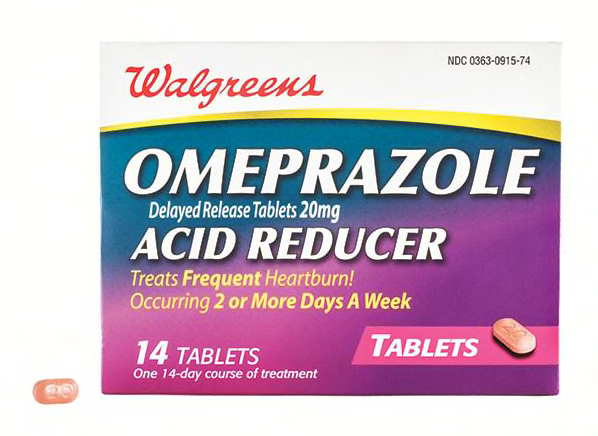
Celecoxib (Celebrex) has consistently shown an advantage in lowering the risk of serious ulcer complications in the short-term (six months or less) compared with other NSAIDs. Although one major study that compared Celebrex with two other NSAIDs—ibuprofen and diclofenac—over a year found that overall, Celebrex was not any less likely to cause serious ulcer complications, analyses of all of the available studies show that Celebrex is effective at reducing the risk of ulcers with longer-term use.
One of the primary ideas behind the development of topical NSAIDs was to minimize the risk of serious ulcer complications by reducing the amount of the medication circulating in the body, since topical NSAIDs produce lower blood levels of the drug than oral NSAIDs. But so far, no randomized, controlled trial has evaluated the long-term risk of serious ulcer or stomach-bleeding complications with the topical forms of diclofenac.
Only one short-term study found that compared to oral diclofenac, topical diclofenac (Pennsaid) lowered—by 66 percent—the risk of "severe" gastrointestinal events—those that produced impairment or incapacitation and were a clear hazard to the patient's health. But the advantage of topical diclofenac beyond 12 weeks has not yet been evaluated in a randomized trial. In an observational study based on a well-known database in the U.K., topical NSAIDs were associated with lower risk of GI bleeding than oral NSAIDs, but more research is needed to verify this finding. Diclofenac is the only NSAID available in FDA-approved topical formulations, to date.
All NSAIDs carry a warning on their labeling that if used in certain ways they have the potential to raise the risk of heart attacks and strokes. These risks appear to be related to blocking the COX-2 enzyme, which all NSAIDs do, though to varying degrees. Taking all of the available studies together, all NSAIDs, besides aspirin and naproxen, appear to nearly double the risk of heart attacks and related complications.
This has led to some troubling questions, such as: At what dose and over what period of time do NSAIDs become unsafe and the dangers outweigh the benefits? And given that the various NSAIDs have differing effects on the COX-2 enzyme, what does that mean regarding their relative safety?
For the older, nonselective, nonaspirin NSAIDs, a meta-analysis of primarily short-term trials found that all except naproxen were associated with similar increased risks of heart attack compared with placebo. Celecoxib (Celebrex) has also been found to increase the risk of heart attack compared to placebo, though most of the trials evaluated patients taking celecoxib for colon polyp prevention or for prevention of Alzheimer's disease, not for treating osteoarthritis. The trials generally evaluated higher doses of NSAIDs.

It isn't clear why naproxen would affect heart attack risk differently than other NSAIDs, though it may be related to the specific structure of the drug. Although the FDA issued a warning about possible heart attack risk with naproxen in 2004 based on results from one trial that was stopped early, subsequent analyses of all of the available evidence have found no increase in risk with it.
No randomized controlled trial has evaluated the risk of heart attacks and strokes with topical NSAIDs.
Hypertension, Heart Failure, and Kidney Problems
NSAIDs can aggravate high blood pressure, which is one way they could raise the risk of heart attack. They cause fluid retention, which can lead to slight weight gain or swollen legs even in healthy individuals. In people who have a "weak heart" (due to congestive heart failure or left ventricular dysfunction), fluid retention due to NSAIDs could make your symptoms worse and increase your risk of being sent back to the hospital if you have previously been hospitalized for heart failure.
NSAIDs also reduce kidney function in some individuals, especially those who already have kidney disease from diabetes or other causes or are dehydrated. The risk of these problems is similar for different NSAIDs. No randomized, controlled trial has evaluated the risk of hypertension, heart failure, and kidney problems with topical forms of diclofenac.
NSAIDs have been associated with kidney failure, so people with kidney disease due to diabetes or other causes should not take NSAIDs unless your doctor has said it is appropriate for your situation.
Liver problems
All products containing diclofenac carry a warning that they can increase the risk of abnormal liver-function tests. And there have been some reports to the FDA about cases of severe liver damage and related deaths that occurred in people taking oral diclofenac. Although a 2005 systematic reviesw of 65 published and unpublished short-term randomized controlled trials found a 3.5-fold increase in risk of abnormal liver-function tests with oral diclofenac compared with a placebo, the degree of increased risk of clinical issues (such as liver failure) is much less certain. So far, only one published study has evaluated the long-term risk of serious liver problems due to diclofenac. That study looked at more than 17,000 patients who took oral diclofenac over 18 months and did not find any cases of liver failure, transplant, or death.

As for topical NSAIDs, short-term trials found that the risk of abnormal liver-function tests were reduced with the diclofenac topical solution (Pennsaid) compared with oral diclofenac over 12 weeks. But no randomized, controlled trial has evaluated the long-term risk of serious liver problems with any of the topical forms of diclofenac.
Fracture
The risk of bone fractures with NSAIDs is uncertain. In 2006, preliminary evidence emerged from a large observational study that found that ibuprofen, diclofenac, and naproxen were associated with an increased risk of fracture. However, there are several drawbacks to this study. One is that it is unclear whether the increase in fractures was due to actual weakening of the bone structure, changes in balance, increased clumsiness, or something else entirely. More studies are needed to better assess the relationship between NSAIDs and fracture risk.
Tolerability
Oral NSAIDs can cause other minor side effects, including upset stomach, abdominal pain, and diarrhea. The frequency of those problems is about the same no matter which NSAID you take. About one in five people who take prescription doses of oral ibuprofen, naproxen, or diclofenac regularly, for example, have experienced one of these side effects, according our analysis. However, most people taking the older oral NSAIDs don't stop taking the medicine because of side effects. Oral NSAIDs can also cause skin rashes, but these are rare.
With topical NSAIDs, one of the most common side effects is irritation of the skin where the drops, gel, or patch is applied. For diclofenac topical solution (Pennsaid), dry skin at the application site was the most common type of skin irritation and occurred in up to 36 percent of the adults treated for osteoarthritis. The risk of dry skin at the application site with diclofenac topical solution was 30 times greater than with a placebo.
In contrast, skin irritation might not be as much of a problem with diclofenac gel (Voltaren gel). Overall, application-site reactions only occurred in four to five percent of the patients using the topical gel for osteoarthritis of the hand or knee, which was only slightly higher than the two percent of patients using a placebo. However, it remains unclear whether the gel offers any real side effect advantage over the solution.
Age is an important factor when considering NSAID treatment, especially long-term. The risk of GI bleeding and stomach ulcers with oral NSAIDs increases with age. The older you are the more cautious your doctor should be in treating you with NSAIDs for long periods of time. Some doctors now routinely prescribe a stomachacid reducer to people 65 and over taking an oral NSAID.

There is scant data on any differences by gender or race in response to oral NSAIDs. But an important recent study found that aspirin's heart- and stroke-protective effect was different in men and women. It found that while women taking low-dose aspirin regularly had fewer strokes than men, they did not get the same benefit as men in preventing a first heart attack. The reason for this difference is unknown. It raises the possibility that women and men might also respond differently to other NSAID drugs.
Whether there are any differences in the benefits and risks of topical NSAIDs based on age, race, or gender is not yet known because their effects in patient subgroups have not yet been evaluated in any studies.

If you need higher doses of an NSAID due to osteoarthritis or other conditions, your best bet is to get a prescription NSAID under a physician's care. He or she should monitor your response and your risk of any side effects, including stomach, heart, and kidney problems.
If your pain is localized to one or a few joints or muscles, one of the topical formulations—gel (Voltaren), drops (Pennsaid), or patches (Flector)— might be good options to consider. A month's supply can cost between $50 and $330 or more, depending on how much and how often they are applied. Although the idea of these topical formulations was to reduce the risk of ulcers and gastrointestinal bleeding, this has not yet been proven definitively, though the medications do cause less stomach upset. And since the topicals result in reduced levels of the NSAID medication in the body, they should theoretically pose a reduced risk of heart attack and stroke, but studies are needed to confirm this.
For occasional use—for example, if your arthritis or pain symptoms are mild or intermittent—you can probably get the pain relief you need by taking nonprescription ibuprofen, or naproxen.
Everyday use of NSAIDs—prescription or nonprescription—can lead to complications, especially at high doses. That's why the instructions on the packaging of all nonprescription NSAIDs state that you should not take them for longer than 10 days without consulting a physician. Unfortunately, many people ignore those recommendations.
If you take a nonprescription NSAID several times a week (or more) because of chronic pain, stiffness, or to prevent sports injuries or muscle soreness after sports activities, you should consider seeing a doctor. There might be better strategies for managing your pain that could also help reduce the amount of medication you take.
Options in Treating Osteoarthritis
|
|
Health Status and Risks |
Options |
|
|
|
|
|
|
|
|
1. GI stands for gastrointestinal. 2. Patients with a history of prior bleeding should talk to their doctor before taking an NSAID. 3. Because the topicals result in reduced levels of the NSAID medication in the body, they should theoretically have a reduced risk of heart attack and stroke, but studies are needed to confirm this. |
|
All NSAIDs ease the pain and other symptoms of osteoarthritis, and other types of pain, too. At equivalent doses, their effectiveness is essentially the same. No study, to date, shows that one NSAID is superior to others in relieving pain.
NSAIDs likely differ in the risks they pose to your stomach or heart. But there is no NSAID associated with having both a low risk of bleeding as well as low heart attack or stroke risk, so your choice of an NSAID and its dose depends on the safety profile of the NSAID and on your individual risk profile.
Some generic NSAIDs versions cost $4 or less for a month's supply, while the retail price of the generic version of Celebrex, (celecoxib), can be purchased for about $50 for a month's supply online at Healthwarehouse.com, depending on the dose.
If price is an important factor in your choice of medication, you could consider our two Best Buy NSAIDs recommendations, which are based on their relatively low cost, but also takes into account the evidence on their effectiveness and safety:
Both of these medications have been on the market for more than 20 years. They are widely prescribed by doctors and are also used heavily (perhaps too heavily) as nonprescription pain relievers. Naproxen is not associated with increased heart risk. So for people at increased risk for heart attacks or strokes or a prior history of them, naproxen may be a better choice, especially if you take it frequently for a long period of time or at higher (prescription strength) doses.
Like other nonselective NSAIDs, both naproxen and ibuprofen are associated with increased risk of gastrointestinal bleeding. If you are at increased risk of bleeding due to older age, use aspirin or other blood thinners, or a history of prior bleeding or ulcers, talk to your doctor before starting an NSAID. Celecoxib (Celebrex) may be an alternative in some situations. You may be able to take an acid blocker to help protect the stomach, though you should be aware of the additional cost of the acid blocker medication.
Celecoxib is no more effective at relieving pain than ibuprofen or naproxen, but is more expensive, so it is not a top choice drug for most people. For people with a very high bleeding risk, even taking Celebrex or using an acid-blocker may not make taking an NSAID safe, so discuss other treatments for pain with your doctor.
Both of our Best Buys—ibuprofen and naproxen—are also available as nonprescription drugs. Prescription-strength doses may cost as little as $4 for a month's supply through generic drug programs run by major chain stores, such as Kroger, Sam's Club, Target, and Walmart. For an even better bargain if you are going to be on those drugs long-term, you may be able to get a three-month supply for as little as $10 through these programs. Some stores, such as CVS and Walgreens, require a membership fee to participate and might charge higher prices. There might be other restrictions too, so check the details carefully to make sure your drug and dose are covered.

Our evaluation is primarily based on an independent scientific review of the evidence on the effectiveness, safety, and adverse effects of NSAIDs, along with periodic review of research updates. A team of physicians and researchers at the Oregon Health & Science University Evidence-Based Practice Center conducted the analysis as part of the Drug Effectiveness Review Project, or DERP. DERP is a first-of-its-kind multi-state initiative to evaluate the comparative effectiveness and safety of hundreds of prescription drugs. A synopsis of DERP's analysis of the NSAIDs forms the basis for this report. A consultant to Consumer Reports Best Buy Drugs is also a member of the Oregon-based research team, which has no financial interest in any pharmaceutical company or product.
Prices cited reflect estimates of the retail cash price for a month's supply of each drug at Heathwarehouse.com, a national online mail-order retail website in January 2016. Other prices for prescription drugs are based on discount generic drug programs run by chain stores. However, the medications covered by these programs can change regularly, we found, so those prices are not used when selecting the Best Buy picks. Although, we do indicate when a drug is likely to be covered by one or more discount generic drug programs.
Other prices for nonprescription drugs were obtained from a nationwide sampling in March 2015 by Consumer Reports secret shoppers from several large drugstore chains.
Consumer Reports Best Buy Drugs selected the Best Buy Drugs using the following criteria. The drug (and dose) had to:
■ Be approved by the FDA for treating at least one form of arthritis.
■ Have a safety record equal to or better than other NSAIDs.
■ Have an average price for a 30-day supply that was substantially lower than the most costly NSAID meeting the first two criteria.
1. Altman RD, Dreiser R-L, Fisher CL, Chase WF, Dreher DS, Zacher J. Diclofenac sodium gel in patients with primary hand osteoarthritis: a randomized, double-blind, placebo-controlled trial. Journal of Rheumatology. Sep 2009;36(9):1991-1999.
2. Barthel HR, Haselwood D, Longley S, 3rd, Gold MS, Altman RD. Randomized controlled trial of diclofenac sodium gel in knee osteoarthritis. Seminars in Arthritis & Rheumatism. Dec 2009;39(3):203-212.
3. Bjordal JM, Ljunggren AE, Klovning A, Slordal L. Nonsteroidal anti-inflammatory drugs, including cox-2 inhibitors, in osteoarthritic knee pain; meta-analysis of randomized placebo controlled trials. British Medical Journal Online 2004 (November 23); 10.1136.
4. Blower A, Brooks A, Fenn G, Hill A, Pearce M, Morant S. Emergency admissions for upper gastrointestinal disease and their relation to NSAID use. Aliment Pharm Ther. 1997(11):283- 291.
5. Bombardier C. Comparison of upper gastrointestinal toxicity of rofecoxib and naproxen in patients with rheumatoid arthritis. VIGOR Study Group. New England Journal of Medicine 2000;343:1520.
6. Caldwell B, Aldington S, Weatherall M, Shirtcliffe P, Beasley R. Risk of cardiovascular events and celecoxib: a systematic review and meta-analysis. Journal of the Royal Society of Medicine. 2006;99:132-140.
7. Chan F, Lanas A, Scheiman J, Berger M, Nguyen H, Goldstein J. Celecoxib vs. omeprazole and diclofenac in patients with osteoarthritis and rheumatoid arthritis (CONDOR): a randomized trial. Lancet. 2010;376(9736):173-179.
8. Chan FK, Hung LC, Suen BY, et al. Celecoxib vs. diclofenac and omeprazole in reducing the risk of recurrent ulcer bleeding in patients with arthritis. New England Journal of Medicine 2002; 347(26):2104-10.
9. Chan FKL, Wong VWS, Suen BY, et al. Combination of a cyclo-oxygenase-2 inhibitor and a proton-pump inhibitor for prevention of recurrent ulcer bleeding in patients at very high risk: a double-blind, randomised trial. Lancet. May 12 2007;369(9573):1621-1626.
10. Dubois RW, Melmed GY, Henning JM, Laine L. Guidelines for the appropriate use of nonsteroidal anti-inflammatory drugs, cox-2 inhibitors and proton pump inhibitors in patients requiring chronic anti-inflammatory therapy. Alimentary Pharmacologic Therapy 2004; 19 (2)197-208.
11. Farkouh ME, Kirshner H, Harrington RA, et al. Comparison of lumiracoxib with naproxen and ibuprofen in the Therapeutic Arthritis Research and Gastrointestinal Event Trial (TARGET), cardiovascular outcomes: randomized controlled trial. Lancet 2004;364(9435):675-84.
12. FDA Advisory Committee Briefing Document: Celecoxib and Valdecoxib Cardiovascular Safety. https://www.fda.gov/ohrms/ dockets/ac/05/briefing/2005-4090B1_03_Pfizer-CelebrexBextra.pdf. Accessed 21 Dec 2005.
13. Fitzgerald GA, COX-2 and beyond: approaches to prostaglandin inhibition in human disease. Nat. Rev. Drug Discov. 2003;2:879-90.
14. Fitzgerald GA. Coxibs and cardiovascular disease. New England Journal of Medicine 2004;351(17):1709-11.
15. Food and Drug Administration. Medical Officer review, 1999: Vioxx. NDA 21- 042. https://www.fda.gov/cder/foi/ nda/99/021042_52_vioxx.htm (accessed Nov.12, 2004).
16. Garcia Rodriguez LA, Varas-Lorenzo C, Maguire A, et al. Nonsteroidal anti-inflammatory drugs and the risk of myocardial infarction in the general population. Circulation 2004;109(24):3000-6.
17. Gislason GH, Rasmussen JN, Abildstrom SZ, et al. Increased mortality and cardiovascular morbidity associated with use of nonsteroidal anti-inflammatory drugs in chronic heart failure. Arch Intern Med 2009; 169:141-149.
18. Goldstein JL, Cryer B, Amer F, Hunt B. Celecoxib plus aspirin vs. naproxen and lansoprazole plus aspirin: a randomized, double-blind, endoscopic trial. Clinical Gastroenterology & Hepatology. Oct 2007;5(10):1167-1174.
19. Gøtzsche PC. Reporting of outcomes in arthritis trials measured on ordinal and interval scales is inadequate in relation to metaanalysis. Ann. Rheum. Disease 2001;60:349-352.
20. Hopper L, Brown TJ, Elliot RA et al. The effectiveness of five strategies for the prevention of gastrointestinal toxicity induced by nonsteroidal anti-inflammatory drugs: a review. British Medical Journal Online 2004 (October 8); 10.1136.
21. Jenkins, JK and Seligman, PJ, FDA Memorandum–Analysis and recommendations for agency action regarding nonsteroidal anti-inflammatory drugs and cardiovascular risk. April 6, 2005. Available at www.fda.gov/cder/drug/infopage/cox2/ NSAIDdecisionmemo.pdf.
22. Kearney PM, Baigent C, Godwin J, Halls H, Emberson J R, Patrono C. Do selective cyclo-oxygenase-2 inhibitors and traditional nonsteroidal anti-inflammatory drugs increase the riskof atherothrombosis: meta-analysis of randomised trials (Structured abstract). BMJ. 2006;332:1302.
23. Kearney PM, Baigent C, Godwin J, Halls H, Emberson JR, Patrono C. Do selective cyclooxygenase-2 inhibitors and traditional nonsteroidal anti-inflammatory drugs increase the risk of atherothrombosis? Meta-analysis of randomized trials. BMJ. 2006;332:1302-1308.
24. Krum H, Liew D, Aw J, Haas S. Cardiovascular effects of selective cyclooxygenase-2 inhibitors. Expert Review of Cardiovascular Therapy 2004;2(2):265-70.
25. Lai KC, Chu KM, Hui WM, et al. Celecoxib compared with lansoprazole and naproxen to prevent gastrointestinal ulcer complications. American Journal of Medicine. 2005;118:1271-1278.
26. Laine L, Goldkind L, Curtis SP, Connors LG, Yanqiong Z, Cannon CP. How common is diclofenac-associated liver injury? Analysis of 17,289 arthritis patients in a long-term prospective clinical trial. American Journal of Gastroenterology. Feb 2009;104(2):356-362.
27. Mamdani M, Rochon PA, Juurlink DN, et al. Observational study of upper gastrointestinal hemorrhage in elderly patients given selective cyclo-oxygenase-2 inhibitors or conventional nonsteroidal anti-inflammatory drugs. BMJ. 2002;325:624.
28. Moore R. Quantitative systematic review of topically applied nonsteroidal anti-inflammatory drugs. British Medical Journal1998;316:333-338.
29. Moore RA, Derry S, Makinson GT, McQuay HJ. Tolerability and adverse events in clinical trials of celecoxib in osteoarthritis and rheumatoid arthritis: systematic review and meta-analysis of information from company clinical trial reports. Arthritis Research & Therapy. 2005;7:R644-R655.
30. Mukherjee D. Selective cyclooxygenase-2 (COX-2) inhibitors and potential risk of cardiovascular events. Biochemical Pharmacolog. 2002;63(5):817-21.
31. Niculescu L, Li C, Huang J, Mallen S. Pooled analysis of GI tolerability of 21 randomized controlled trials of celecoxib and nonselective NSAIDs. Curr Med Res Opin. 2009; 25(3):729-40. PMID: 19210159.
32. Rahme E, Barkun AN, Toubouti Y, et al. Do proton pump inhibitors confer additional gastrointestinal protection in patients given celecoxib? Arthritis & Rheumatism. Jun 15 2007;57(5):748-755.
33. Ray WA, Stein CM, Daugherty JR, Hall K, Arbogast PG, Griffin MR. Cox-2 selective nonsteroidal anti-inflammatory drugs and risk of serious coronary heart disease. Lancet 2002;360(9339):1071-3.
34. Ray WA, Stein CM, Hall K, Daugherty JR, Griffin MR. Nonsteroidal anti-inflammatory drugs and risk of serious coronary heart disease: an observational cohort study. Lancet 2002;359(9301):118-23.
35. Rostom A, Goldkind L, Laine L. Nonsteroidal anti-inflammatory drugs and hepatic toxicity: a systematic review of randomized controlled trials in arthritis patients. Clinical Gastroenterology & Hepatology. May 2005;3(5):489-498.
36. Schnitzer T, Update of ACR guidelines for osteoarthritis: role of the coxibs. J. Pain Symptom Management 2002;23(4 Suppl):S24-30; discussion S31-4.
37. Silverstein FE, Faich G, Goldstein JL, et al. Gastrointestinal toxicity with celecoxib vs. nonsteroidal anti-inflammatory drugs for osteoarthritis and rheumatoid arthritis: the CLASS study. Journal of the American Medical Association 2000;284(10):1247-1255.
38. Simon LS, Grierson LM, Naseer Z, Bookman AAM, Zev Shainhouse J. Efficacy and safety of topical diclofenac containing dimethyl sulfoxide (DMSO) compared with those of topical placebo, DMSO vehicle and oral diclofenac for knee osteoarthritis. Pain. Jun 2009;143(3):238-245.
39. Solomon DH, Schneeweiss S, Glynn RJ, et al. Relationship between selective cyclooxygenase-2 inhibitors and acute myocardial infarction in older adults. Circulation 2004;109(17):2068-73.
40. Strand V, Hochberg MC. The risk of cardiovascular thrombotic events with selective cyclooxygenase-2 inhibtors. Arthritis Rheum 2002;47:349–355.
41. Topol EJ, Falk GW. A coxib a day won't keep the doctor away. Lancet 2004; 364: 639-640.
42. Topol, EJ. Failing the public health–refecoxib, Merck, and the FDA. New England Journal of Medicine 2004; 351 (17): 1707-1709.
43. Trelle S, Reichenbach S, Wandel S, Hildebrand P, Tschannen B, Villiger PM, et al. Cardiovascular safety of non-steroidal anti-inflammatory drugs: network meta-analysis. BMJ. 2011; 342:c7086.
44. Tugwell PS, Wells GA, Shainhouse JZ. Equivalence study of a topical diclofenac solution (Pennsaid) compared with oral diclofenac in symptomatic treatment of osteoarthritis of the knee: a randomized controlled trial. Journal of Rheumatology. Oct 2004;31(10):2002-2012.
45. Vestergaard P, Rejnmark L, Mosekilde L. Fracture risk associated with use of nonsteroidal anti-inflammatory drugs, acetylsalicylic acid, and acetaminophen and the effects of rheumatoid arthritis and osteoarthritis. Calcified Tissue International. Aug 2006;79(2):84-94.
46. White WB, Strand V, Roberts R, Whelton A. Effects of the cyclooxygenase-2 specific inhibitor valdecoxib versus nonsteroidal anti-inflammatory agents and placebo on cardiovascular thrombotic events in patients with arthritis. American Journal of Therapeutics. Jul-Aug 2004;11(4):244-250.
47. Zhang W, Jones A, Doherty M. Does paracetamol (acetaminophen) reduce the pain of osteo arthritis? A metaanalysis of randomized controlled trials. Ann Rheum Disease 2004;63(8):901-7.
These materials are made possible by a grant from the state Attorney General Consumer and Prescriber Education Grant Program, which is funded by the multistate settlement of consumer-fraud claims regarding the marketing of the prescription drug Neurontin (gabapentin).

 Build & Buy Car Buying Service
Save thousands off MSRP with upfront dealer pricing information and a transparent car buying experience.
 Get Ratings on the go and compare
while you shop

