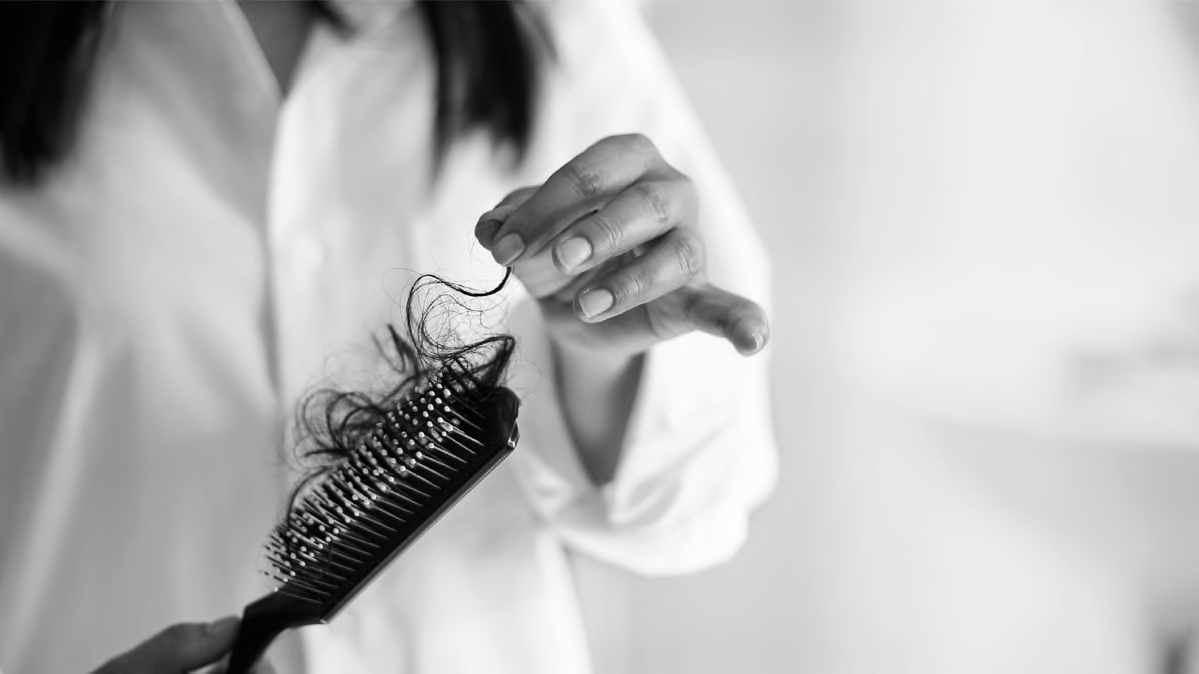
It's normal to lose up to 150 hairs a day. "But by age 60, about 80 percent of men and 40 percent of women will have a measurable amount of hair loss," says Shilpi Khetarpal, M.D., a dermatologist at the Cleveland Clinic.
The cause is usually genetic: male- and female-pattern hair loss. In men, hormones called androgens cause strands to fall out too early. In women, the action isn't as clear, though androgens may play a role for some.
Thyroid problems, stress, trauma, autoimmune disease, and nutrient deficiency can also cause hair loss.
Should you try one of the over-the counter or prescription products touted to help? Here's the lowdown.
Over-the-Counter Help for Hair
You might see the following products on drugstore shelves and online:
Topical minoxidil (Rogaine and generic): This OTC drug, applied to the scalp daily, stimulates hair follicles and pushes more hair into the growing phase.
Worth trying? Probably. A 2016 review of six studies by the independent Cochrane Collaboration found that twice as many women who used minoxidil experienced at least moderate hair regrowth compared with those who used a placebo.
And a review published in 2017 in the Journal of the American Academy of Dermatology (AAD) found that men using the topical twice daily had an average increase of nearly 15 hairs per square centimeter (with 5 percent minoxidil) and eight hairs (with 2 percent minoxidil).
Supplements: Many dietary supplements are marketed for hair growth, most with high levels of the B vitamin biotin.
Worth trying? Probably not. A 2017 review of studies found little evidence that biotin offsets hair loss except in the rare instance of biotin deficiency.
Low-level laser or light therapy: These combs, caps, and headband devices are said to stimulate follicles.
Worth trying? Maybe. "Low-level lasers do stimulate hair growth, and the at-home devices available might be helpful in some cases," says Elise A. Olsen, M.D., director of the Hair Disorders Research and Treatment Center at the Duke University Medical Center in Durham, N.C.
Some data supports their effectiveness, but none have been compared with topical minoxidil or finasteride. And they don't undergo the same rigorous testing that medications do.
Parsing the Prescription Products
Your doctor may prescribe an oral drug along with topical minoxidil. "The combination is often better than a single treatment alone," Olsen says. Here are the options.
Finasteride (Propecia, Proscar, and generic): Approved for men (and prescribed off-label for women), this daily pill prevents testosterone from converting to a type of androgen that contributes to hair loss.
Worth trying? Maybe. The AAD says it helps slow hair loss in most men and stimulates regrowth in many. But it's most effective early on. "It won't help regrow hair that's been gone for three or more years," Khetarpal says.
Finasteride can affect libido and cause erectile dysfunction and birth defects. So it shouldn't be used by premenopausal women who aren't using an effective contraceptive.
Spironolactone (Aldactone and generic): This oral blood pressure drug, used off-label for hair loss in women, blocks the androgen receptor in hair follicles, stopping actions that lead to hair loss.
Worth trying? Maybe, especially if you have elevated androgen levels. We found no clinical trials, but in a survey of 166 women, published in 2015 in the Journal of the American Academy of Dermatology, 74 percent of those taking the drug reported that hair loss had stabilized or improved.
But it has caused tumors in lab animals, can affect blood pressure and kidney function, and may lead to higher than normal potassium levels. Have your potassium levels checked after starting this drug, and talk with your doctor about limiting dietary potassium. And because it can, like finasteride, cause birth defects, it shouldn't be used by premenopausal women who aren't using an effective contraceptive.
Platelet-rich plasma injections: PRP—where plasma from your blood is isolated and reinjected—is approved for injuries such as elbow tendinitis. It's used off-label for hair loss, with monthly scalp injections for three months, a round at six months, and then treatment every few months.
Worth trying? Maybe. It may kick-start dormant hair follicles into producing new strands, says Joel L. Cohen, M.D., a dermatologist in Denver. Large-scale studies are lacking, but a small study, published in 2016 in the journal Dermatologic Surgery, found that it increased hair density after six months by about 13 hairs per square centimeter. The researchers say that more study is needed to confirm those findings.
Editor's Note: This article also appeared in the August 2018 issue of Consumer Reports On Health.