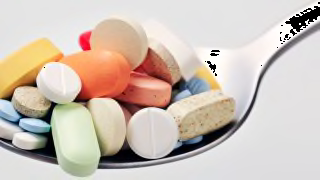
You rely on your prescription medicines to help you feel better, so it may come as a surprise that mixing it with an over-the-counter painkiller or a glass of grapefruit juice, can leave you feeling worse, or even land you in the hospital. Interactions between medications and dietary supplements are increasingly prevalent among older adults—the rate of which has nearly doubled in recent years, from 8 percent in 2005 to 15 percent in 2011, according a study published this week in JAMA Internal Medicine.
But anyone who takes even one medicine is at risk. Drug interactions happen when a drug or supplement affects how a medication works, or when something you eat or drink changes the way a drug is absorbed or broken down in the body.
One example: Taking nitroglycerin, which treats angina (chest pain due to heart disease) with an erectile dysfunction drug such as sildenafil (Viagra and generic) can cause a dangerous drop in blood pressure. And the popular herbal supplement St. John's wort can cause fever, heart problems, tremors, confusion, or anxiety when taken with antidepressants, including amitriptyline (Elavil), citalopram (Celexa), and escitalopram (Lexapro).
The first way to prevent dangerous drug interactions is to "take as little medication as possible," says Marvin M. Lipman, M.D., Consumer Reports' chief medical adviser. In addition, "knowing which drugs, supplements, or foods interact with the medications you're taking can save you lots of misery or even be life-saving."
The following steps can help with that:
Read the Labels
"Follow the instructions" may seem like common sense, but many studies show that people often misinterpret or ignore drug labels. Thoroughly read the labels and inserts of all prescriptions and over-the-counter medicines you take, paying close attention to active ingredients and warnings.
Many medicines come with a "Do not take with alcohol" warning. Pay attention to that because while alcohol can make you drowsy, light-headed, and less coordinated, mixing it with certain drugs can magnify those effects, and even increase your medicine's potency or worsen its side effects. In some cases, alcohol might make a drug less effective or even toxic. For example, just a few drinks mixed with acetaminophen (Tylenol) can damage your liver.

Consult an Expert
In a 2015 nationally representative Consumer Reports telephone poll, 79 percent of people said that when prescribed a new medicine, they had a discussion about the possible side effects with a doctor or nurse, and 70 percent had the talk with their pharmacist. Make it a habit to ask your doctor and pharmacist "Should I expect any side effects or interactions?" Ask your pharmacist about possible OTC drug interactions, too, especially if you're taking multiple medicines.
Have a 'Brown Bag' Office Visit
Your risk for interactions increases with each medication you take. Once or twice a year get together with your doctor to review all of the medications, vitamins, and supplements you take. Ask about side effects, interactions, and whether you might switch to safer or less costly medicines or even eliminate drugs you no longer need.
Go Online
If it's Friday night, and you're worried about whether it's safe to pop an ibuprofen while you're taking blood thinners, there are several websites you can turn to. AARP, CVS Pharmacy, and Medscape are all easy-to-use online checkers that provide detailed information on possible drug, food, and supplement interactions, as well as the level of risk ranging from minor to severe, without requiring you to sign up or divulge personal information. If you discover, with the help of an online checker, that your medications might interact, tell your doctor or pharmacist immediately, rather than stopping therapy on your own.
Stick With One Pharmacy
Our medical advisors recommend filling all of your prescriptions at one pharmacy. Keeping all of the drugs you take in one system allows your pharmacist to alert you of any allergies or potentially dangerous interactions.
Watch: Beware of Risky Drug-Supplement Interactions
Editor's Note: This article and related materials are made possible by a grant from the state Attorney General Consumer and Prescriber Education Grant Program, which is funded by the multistate settlement of consumer-fraud claims regarding the marketing of the prescription drug Neurontin (gabapentin).