5 Best Air Filters for Your Central AC and Furnace, Tested and Reviewed
Clean the air in your home and protect your HVAC system with these high-performing filters from Aprilaire, Filtrete, and Lennox


When you shop through retailer links on our site, we may earn affiliate commissions. 100% of the fees we collect are used to support our nonprofit mission. Learn more.

You probably don’t think much about the air filter hidden in your HVAC system. But a good filter keeps your central air conditioner (and furnace) humming along by protecting it from dust and debris. The best filters trap pet dander and pollen, too, helping to make the air in your home easier to breathe.
And that’s no small feat. The concentration of air pollutants in your dwelling can be two to five times higher than what you typically find outdoors, according to the Environmental Protection Agency. An effective, snug-fitting HVAC filter is even more helpful when the air quality outdoors is poor, the EPA says, and right now it’s wildfire season.
In our tests, we gauge how well an air filter removes dust, pollen, and smoke, and how freely air flows through it at any fan speed. We also calculate the annual cost for new filters, based on the manufacturer’s recommended replacement schedule. (Keep in mind that prices can vary by retailer and buying in bulk can lower costs.)
The relatively high price of smart filters is somewhat justified by the technology, which lets you check your filter’s status on a smartphone to see if and when it needs replacing. But, yes, a note on the calendar works well, too.
“Thicker filters have two big advantages," says Misha Kollontai, who oversees CR’s testing. "They filter particles out of the air better and require replacement less often.” But not every HVAC system can accommodate a thicker filter—the most common size is 1 inch thick—though you can retrofit the ductwork of some systems to accept one.
Below are the top air filters from CR’s tests, grouped by thickness. Each effectively removes dust, pollen, and smoke when the HVAC system is running at a high setting. For more information on air filters, including models to avoid, see our full ratings and buying guide.
Best 4- and 5-inch Air Filters

The 5-inch-thick Lennox Healthy Climate CarbonClean 16 effectively filters dust, smoke, and pollen on both high and low fan speeds. It’s a bit pricey, but the manufacturer recommends replacing it only once per year. It has a high MERV 16 rating, which can help people with allergen sensitivities. (Learn more about MERV ratings below.) Our testing also finds that the filter causes little noticeable restriction of airflow through the forced-air system.
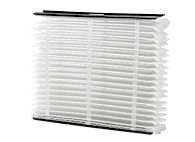
The 4-inch-thick Aprilaire Healthy Home 313 MERV 13 earns a near-top score at removing dust, smoke, and pollen when the HVAC system is running at its highest and lowest fan speeds. With a MERV 13 rating, you can expect the filter to remove everything from dust and dander to pollen and smoke particles. The annual cost is around $61 per year, based on Aprilaire’s recommendation to replace the filter annually.

The 4-inch-thick Filtrete MPR 1550, which has a MERV 11 rating, capably removes dust, pollen, and smoke with the HVAC system running on its highest fan speeds, though it’s a bit less effective on lower fan speeds. This filter also provides nearly unrestricted airflow. Filtrete recommends replacing this filter once a year, and, at around $35 per filter, it’s a pretty cost-effective option.
Best 1-inch Air Filters
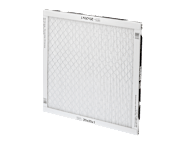
The 1-inch-thick Filtrete Healthy Living Elite Allergen 2200 MPR, which has a MERV 13 rating, does a very good job of removing airborne particles with the system running at its highest fan speed. However, at the lowest speed, particulate removal is slightly less effective. Airflow through the filter is strong in both instances, though. Filtrete recommends replacing this filter every three months.

Rated at MERV 12, the 1-inch-thick Filtrete Ultra Allergen Reduction 1500 MPR earns a very good score for removing dust, pollen, and smoke from the air when the system is running at its highest fan speed. However, it earns only a so-so rating with the HVAC running at the lowest speed. It has no problem maintaining airflow in either situation. Carrier recommends replacing this filter every three months, for an annual cost of $76.
Which MERV Rating Is Best for the Air Filters In Your Home?
To quantify an air filter’s performance, manufacturers often use the MERV (minimum efficiency reporting value) scale, which rates a filter’s effectiveness from 1 to 16.
The higher the number, the smaller the airborne particulates a filter can reliably capture. Filters on the low end of the MERV scale trap large particles only, such as hair, fibers from clothes and carpets, and some pollen. Around MERV 8, filters collect pollen, mold spores, and many types of household dust. At MERV 13—the highest rating you’ll find for most of the popular residential HVAC filter sizes—you can count on the filter to stop bacteria, smoke, and other microscopic particles.
In general, an air filter with a MERV rating between 8 and 13 is considered sufficient for most residential homes and can effectively capture a range of airborne pollutants, from pollen to dust, while allowing for sufficient airflow. If you have an allergen sensitivity or someone in your home smokes, you may consider opting for a filter on the higher end of the scale. But know that while they’re more effective at trapping particles, filters with high MERV ratings can strain residential HVAC systems if they substantially reduce airflow. (That’s why CR tests airflow resistance for every model in our ratings.)
Some filter brands and retailers also use alternative scales, such as Home Depot’s FPR (filter performance rating) and Filtrete’s MPR (microparticle performance rating). But the MERV rating will likely also be printed on the packaging or in the online product descriptions. “Both types of grading assign higher values to more effective filters,” Kollontai says.


