Best Baby Formulas From Our Tests
Whether you’re looking for traditional, organic, or hypoallergenic infant formula, here are the ones that performed best in our contaminant testing

When you shop through retailer links on our site, we may earn affiliate commissions. 100% of the fees we collect are used to support our nonprofit mission. Learn more.

As one of the most heavily regulated foods on the market, infant formula is subject to strict nutrition guidelines and undergoes rigorous safety and quality testing. But CR’s tests of infant formula show that there is still an urgent need for industry and regulators to work together to make this vital first food as safe as possible for babies (read more about CR’s petition to the FDA).
Consumer Reports tested 90 different infant formulas for lead, inorganic arsenic, cadmium, mercury, bisphenol A (BPA), and acrylamide—process contaminants and heavy metals that are all unfortunately common in our food supply (some of which have been found in studies of breast milk as well). While some formulas had concerning levels of contaminants, our testing uncovered some good news, too: Many infant formulas have non-detectable or low levels of contaminants.
The results from our formula testing are designed to help you make an informed decision when choosing the best formula for your baby. Of course, there’s no one “best” formula: The one that’s right for your family will be the one your baby tolerates well, is easy for you to get, and fits into your budget. Whether you’re looking for a whole milk formula or a sensitive or hypoallergenic formula, liquid or ready-to-feed, below are the formulas that ranked highly in our tests for having a low risk of contaminants and heavy metals.
Looking for more information about how to choose a formula? Consult our baby formula buying guide. Wondering how to safely switch formulas? Or how to save money on formula? We have those expert-backed answers, too. Read on for the best baby formulas from our years of testing.
Best Powdered Formulas From Our Tests
Standard infant formulas typically use a base of nonfat cow’s milk and lactose, which most babies tolerate well, without sensitivities. Lactose is also the primary milk sugar found in breast milk. Infant formulas also commonly include plant-based fats—either on their own or alongside whole cow’s milk or goat milk, which provide animal-derived fats. Plant-based sources typically include oils such as sunflower, safflower, rapeseed, soybean, palm, and coconut. These fats have been shown to support babies’ healthy growth and development when included in formula, though several studies suggest palm oil or palm olein oil, a derivative of palm oil, may hinder babies’ absorption of fat, DHA, and calcium, and may contribute to constipation. This may be something to keep in mind when choosing a formula, especially for premature babies who have higher vitamin and mineral needs for growth and development. Your pediatrician or family doctor can help you choose the formula that’s right for your baby.
Bobbie Organic Infant Formula
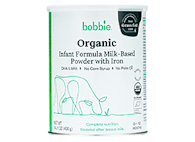
Primary ingredients: Organic lactose, organic nonfat cow’s milk, organic whey protein concentrate
Organic: Yes
Bobbie’s USDA-certified organic powdered formula ranked among the top choices in our tests for low or non-detectable levels of contaminants. The formula is made with organic lactose and organic nonfat milk, and features a 60-40 whey to casein protein ratio that matches what’s found in breast milk. It’s modeled after European infant formulas in that it doesn’t use corn syrup and has a higher amount of DHA per serving than standard American formulas.
Earth's Best Organic Dairy Infant Formula
Primary ingredients: Organic lactose, organic nonfat cow’s milk, organic whey protein concentrate
Organic: Yes
Earth’s Best Organic Dairy Infant Formula is made with organic lactose and organic nonfat milk, with no corn syrup or added sweeteners. It also contains added lutein for eye development, DHA and ARA fatty acids for brain development, as well as prebiotics to support infant digestion. It uses an organic vegetable oil blend with palm oil or palm olein oil.
Enfamil Optimum Enspire
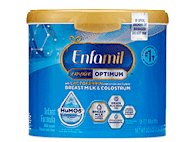
Primary ingredients: Nonfat cow’s milk, lactose, whey protein concentrate
Organic: No
Made with lactoferrin, a protein found in breast milk that may support immune health, and prebiotics, Enfamil’s Enspire Optimum uses a base of nonfat milk and lactose, as well as whey protein concentrate, which is a source of milk fat globule membrane (MFGM), a fat-protein layer that surrounds fat droplets for better absorption. It contains a vegetable oil blend with palm olein oil.
Enfamil Infant Formula
Primary ingredients: Nonfat cow’s milk, lactose, whey protein concentrate
Organic: No
Enfamil’s standard infant formula ranked among the top choices in our tests for low or non-detectable levels of contaminants. It uses nonfat milk as its primary ingredient and has prebiotics and added nucleotides, in addition to DHA and ARA for visual function and cognitive development. It also uses palm olein oil as part of a vegetable oil blend.
Enfamil NeuroPro
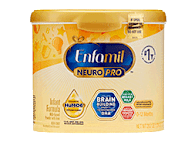
Primary ingredients: Nonfat cow’s milk, lactose, whey protein concentrate
Organic: No
Enfamil’s NeuroPro formula main ingredients include nonfat milk, lactose, a vegetable oil blend (including palm olein oil), and whey protein concentrate, which is a source of milk fat globule membrane (MFGM), a fat-protein layer that surrounds fat droplets for better absorption. It also includes prebiotics and DHA and ARA fatty acids.
Happy Baby Organics Organic Infant Formula
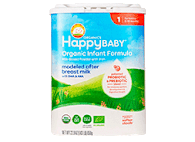
Primary ingredients: Organic lactose, organic nonfat cow’s milk, organic galactooligosaccharides (GOS, a type of prebiotic), organic whey protein concentrate
Organic: Yes
The Organic Infant Formula from Happy Baby Organics contains both probiotics and prebiotics to support digestive health and immune system development. It features a base of organic lactose and organic nonfat milk, and uses organic palm oil, among other organic vegetable oils.
Pure Bliss by Similac Irish Farms
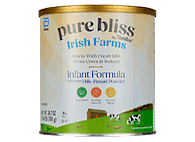
Primary ingredients: Nonfat cow’s milk, lactose, whey protein concentrate
Organic: No
Similac’s Pure Bliss Irish Farms powdered infant formula uses nonfat milk from cows in Ireland as its main ingredient and features lactose as its primary carbohydrate source. It’s formulated without corn syrup and doesn’t include palm oil.
Similac Advance
Primary ingredients: Nonfat cow’s milk, lactose, whey protein concentrate
Organic: No
Similac Advance features nonfat milk, lactose, and whey protein concentrate as its primary ingredients, and includes GOS, a prebiotic usually added for digestive support. It also contains lutein, DHA, ARA, and nucleotides, and it’s made without corn syrup or palm olein oil.
Best Whole Milk Formulas
Most traditional cow’s milk formulas are made with nonfat milk, but a new crop of whole milk formulas has hit the market that use whole milk as a base. This means they may require fewer vegetable oils as a supplemental fat source.
Bobbie Grass-Fed Whole Milk
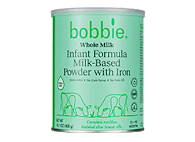
Primary ingredients: Lactose, organic whole cow’s milk, organic whey protein concentrate
Organic: No, but uses some organic ingredients
Bobbie’s Grass-Fed Whole Milk formula is cheaper than its certified organic version, but it’s still made with several organic ingredients, including organic grass-fed whole milk and organic whey protein concentrate.
Bobbie Organic Whole Milk
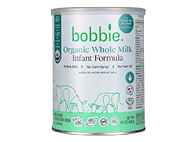
Primary ingredients: Organic lactose, organic whole cow’s milk, organic whey protein concentrate, organic nonfat milk
Organic: Yes
Modeled after Bobbie’s original formula but with a whole milk base, the Bobbie Organic Whole Milk formula contains the fatty acids DHA and ARA, and doesn’t use corn syrup or palm oil.
Kendamil Whole Milk Classic Infant Formula
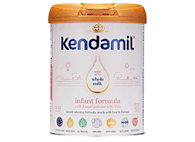
Primary ingredients: Whole cow’s milk, demineralised whey powder, lactose, skimmed milk powder
Organic: No
Kendamil’s Whole Milk formula is made with whole cow’s milk and features milk fat globule membrane (MFGM), a fat-protein layer that surrounds fat droplets for better absorption, as well as human milk oligosaccharides (HMOs) and GOS, both of which are prebiotics. There’s no corn syrup or palm oil.
Best Sensitive/Gentle Formulas
Some babies may do better on a gentle or sensitive formula that features partially broken-down proteins (known as partially hydrolyzed), but note that the terms “gentle” and “sensitive” don’t have a defined meaning under FDA regulations. One brand’s “sensitive” formula may have lower levels of lactose, whereas another’s may not. It’s a common misconception that babies can’t digest lactose—most infants are born with the ability to digest this type of milk sugar. If you’re unsure whether your baby needs a sensitive or partially hydrolyzed formula, speak with your pediatrician.
Bobbie Organic Gentle
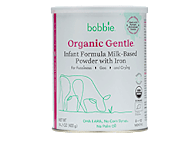
Type: Partially hydrolyzed proteins
Primary ingredients: Organic lactose, organic partially hydrolyzed whey protein
Organic: Yes
Bobbie’s Organic Gentle formula contains organic lactose as the first ingredient and organic partially hydrolyzed whey protein as the primary protein source. These partially broken-down proteins may be easier on an infant’s developing digestive system, but talk to your pediatrician about what’s best for your baby.
Dr. Brown's Good Start Gentle Pro
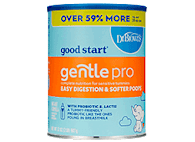
Format: Powder
Type: Partially hydrolyzed proteins
Primary ingredients: Whey protein concentrate (enzymatically hydrolyzed), lactose, corn maltodextrin
Organic: No
The Gentle Pro formula from Dr. Brown’s Good Start features a probiotic strain that’s also found in breast milk, and uses a partially hydrolyzed whey protein blend to make it more easily broken down by babies’ developing digestive tracts. It has lactose and corn maltodextrin as the primary carbohydrate sources and contains palm oil.
Earth's Best Organic Sensitivity
Format: Powder
Type: Reduced lactose
Primary ingredients: Organic glucose syrup solids, organic whey protein concentrate, organic milk protein concentrate
Organic: Yes
Earth’s Best Organic Sensitivity Infant Formula has organic glucose solids as its primary ingredient, along with organic whey protein concentrate and milk protein concentrate. It contains 95 percent less lactose than standard infant formulas, according to the company, though the proteins in this sensitive formula are not listed as partially hydrolyzed—talk to your pediatrician about whether it’s a good fit for your child. Earth’s Best also offers an Organic Gentle formula that includes partially hydrolyzed proteins, though CR has not tested this formula.
Enfamil A.R.
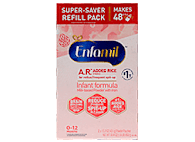
Format: Powder
Type: Added rice starch
Primary ingredients: Nonfat milk, rice starch, lactose, maltodextrin
Organic: No
For babies with frequent spit-up, your pediatrician may recommend a formula with added rice starch, which acts as a thickening agent to help your baby keep formula down. This formula ranked among the top choices in our tests for low or non-detectable levels of contaminants, and is made with a base of nonfat milk, a vegetable oil blend including palm olein oil, plus lactose as the main carbohydrate, and rice starch and maltodextrin as thickening agents. GOS is also added for digestive support.
Enfamil Gentlease
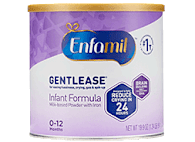
Format: Powder
Type: Reduced lactose and partially hydrolyzed proteins
Primary ingredients: Corn syrup solids, partially hydrolyzed nonfat milk, and whey protein concentrate solids from soy
Organic: No
Designed to support gentle digestion, the Gentlease formula from Enfamil has partially hydrolyzed proteins and uses corn syrup as a carbohydrate source rather than lactose (lactose is the source of carbohydrates in breast milk, and most babies are born with the ability to digest lactose). It contains DHA, and ARA for visual function and cognitive development, and it uses a vegetable oil blend that includes palm olein oil.
Enfamil NeuroPro Gentlease
Format: Powder
Type: Reduced lactose; partially hydrolyzed proteins
Primary ingredients: Corn syrup solids, partially hydrolyzed nonfat milk, and whey protein concentrate solids from soy
Organic: No
Sharing a similar nutritional profile to Enfamil Gentlease, the NeuroPro Gentlease has added prebiotics in the form of polydextrose (PDX), galactooligosaccharides (GOS), and a strain of human milk oligosaccharides (HMO), all of which are designed to support digestion and more closely mimic the composition of breast milk.
Mama Bear Sensitivity Premium
Format: Powder
Type: Reduced lactose
Primary ingredients: Corn syrup, milk protein isolate
Organic: No
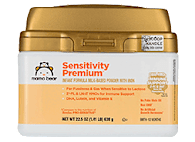
This reduced-lactose infant formula from Amazon’s in-house brand Mama Bear uses a base of corn syrup and milk protein isolate, with HMOs for added digestive support. It’s made without palm olein oil.
Best Goat's Milk Formulas
Goat milk has a different protein structure that’s more similar to breast milk than cow’s milk is, and some studies suggest that goat milk formula may be easier to digest than cow’s milk formula for some babies. But if your baby has a true allergy to cow’s milk, known as cow’s milk protein allergy (CMPA), goat milk formula is not a safe alternative, given the similarities between cow’s milk and goat milk proteins. Talk to your child’s pediatrician about formula options that are safe for babies with CMPA.
Bubs Goat Infant Formula
Primary ingredients: Lactose, goat whole milk solids, goat whey protein concentrate
Organic: No
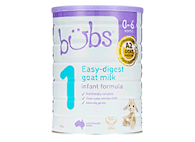
Australian brand Bubs’ goat milk infant formula uses a base of lactose, whole goat milk, and goat whey protein concentrate, along with GOS. It uses a vegetable oil blend that contains palm olein.
Best Store-Brand Formulas
All the store-brand formulas CR tested are made by the same manufacturer, Perrigo. The “premium” formulas in our tests all ranked among CR’s top choices for low or non-detectable contaminants.
Kirkland Signature ProCare Infant Formula
Primary ingredients: Nonfat cow’s milk, lactose, whey protein concentrate
Organic: No
Available only at wholesale club Costco, the Kirkland Signature ProCare powdered infant formula is one of the cheapest formulas we’ve tested, coming in at just $0.76 per ounce (note that it’s sold in a 2-pack). But it doesn’t skimp on premium ingredients: It’s made with nonfat milk and lactose, and doesn’t use corn syrup solids or palm oil. It also includes fatty acids DHA and ARA for visual function and cognitive development, and two strains of HMOs as a source of prebiotics.
Member's Mark Advantage Premium
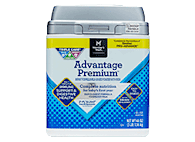
Primary ingredients: Nonfat cow’s milk, lactose, whey protein concentrate
Organic: No
The Member’s Mark Advantage Premium powdered infant formula found at Sam’s Club is also one of the lowest-priced formulas on our list, at just $0.77 per ounce. It differs only minimally from the Kirkland Signature ProCare, so depending on which club membership you have, you can take your pick.
Parent's Choice Advantage Premium
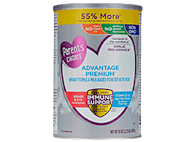
Primary ingredients: Nonfat cow’s milk, lactose, whey protein concentrate
Organic: No
Find Parent’s Choice Advantage Premium powdered formula at Walmart. You’re getting two strains of HMOs, which function like prebiotics, plus a nonfat milk and lactose base; no corn syrup or palm oil.
Up&Up Premium
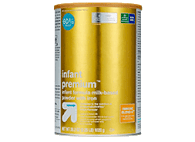
Primary ingredients: Nonfat cow’s milk, lactose, whey protein concentrate
Organic: No
If you regularly shop at Target, look for the Up&Up store brand Premium powdered infant formula, which has a nonfat milk and lactose base, along with whey protein concentrate and HMO for prebiotic support. The vegetable oil blend included in this formula contains palm oil.
Best Ready-to-Feed Formulas
Because it’s made to be sterile, ready-to-feed infant formula is recommended for infants under 2 months old, or for those born prematurely or with weakened immune systems. It comes in pre-portioned containers and is able to be offered to your baby, no additional water needed.
Enfamil NeuroPro Ready to Feed
Primary ingredients: Water, nonfat cow’s milk, lactose, whey protein concentrate
Organic: No
Enfamil’s NeuroPro Ready-to-Feed formula contains water, nonfat milk, lactose, a vegetable oil blend (including palm olein), and whey protein concentrate as its main ingredients. Prebiotics, DHA and ARA fatty acids, and MFGM, a fat-protein layer that surrounds fat droplets for better absorption, make up the extra ingredients and are modeled after breast milk’s composition, according to the company.
Enfamil Optimum Ready to Feed
Primary ingredients: Water, nonfat cow’s milk, lactose
Organic: No
Similar to Enfamil NeuroPro, the Optimum Ready to Feed formula has added HMOs and prebiotics.
Pure Bliss by Similac Organic Ready to Feed
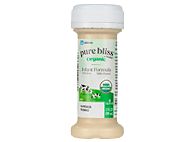
Primary ingredients: Water, organic lactose, organic nonfat cow’s milk
Organic: Yes
It’s difficult to find an organic liquid infant formula, but the Similac Pure Bliss Organic Ready to Feed formula ranked among CR’s top choices for low or non-detectable contaminants. It uses organic lactose and organic nonfat milk as primary ingredients, and doesn’t contain palm oil as a fat source or corn syrup as a sweetener.
Best Liquid Concentrate Formulas
Liquid concentrate formulas are also sterile and designed for infants under 2 months of age, or for those born prematurely or with compromised immune systems. They need to be mixed with an equal amount of water from a safe source before offering to your baby.
Enfamil Concentrated Liquid Formula
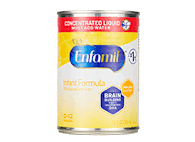
Primary ingredients: Water, lactose, nonfat cow’s milk
Organic: No
Enfamil Concentrated Liquid Formula is made with water, nonfat milk, and lactose. It also has prebiotics and added nucleotides, in addition to DHA and ARA. It uses palm olein oil as part of a vegetable oil blend.
Other Types of Formulas CR Tested
Some families look for soy-based formulas to feed their babies during the first year, either because of galactosemia, a rare condition resulting in an inability to digest lactose, or another specific condition. None of the plant-based or soy-based infant formulas we tested met the criteria to be included in our low-risk category for heavy metals and other contaminants. Across the samples we tested, we repeatedly saw moderate to high levels of inorganic arsenic and lead, and we also found BPA and acrylamide in one plant-based formula product. If you’re looking for a plant-based infant formula, talk to your doctor about your best options.
Hypoallergenic formulas were another category where CR found moderate to high levels of heavy metals and other contaminants in all of the FDA-registered products we tested. One European formula, HiPP Hypoallergenic, landed in our low-risk category, but because it’s not registered for sale in the U.S., it can be tricky to find, and shopping for overseas formulas introduces new risks around tracking expiration dates, safety alerts or recalls, storage methods, and potential tampering. If your infant is a candidate for hypoallergenic infant formula, your pediatrician can help you make the best choice.
How CR Tests Baby Formula
As one of the most tightly regulated foods on the market, all infant formula sold in the U.S. undergoes regular quality and safety testing.
But despite stringent oversight of many aspects of formula production, there are currently no federal limits on levels of toxic elements such as lead, arsenic, mercury, and cadmium, or on contaminants such as BPA, acrylamide, and PFAS in baby formula. Consumer Reports’ scientists partnered with an outside lab to test dozens of samples of powdered, liquid, and ready-to-feed infant formula for contaminants in two rounds of testing. (You can see the full methodology for our most recent round of testing (PDF) and the methodology for our first round of testing (PDF).) Our test results highlight that there are safer alternatives when it comes to reducing your baby’s exposure to toxic heavy metals and other contaminants in infant formula, and that it is possible to produce formula that doesn’t contain concerning levels of toxic contaminants.


