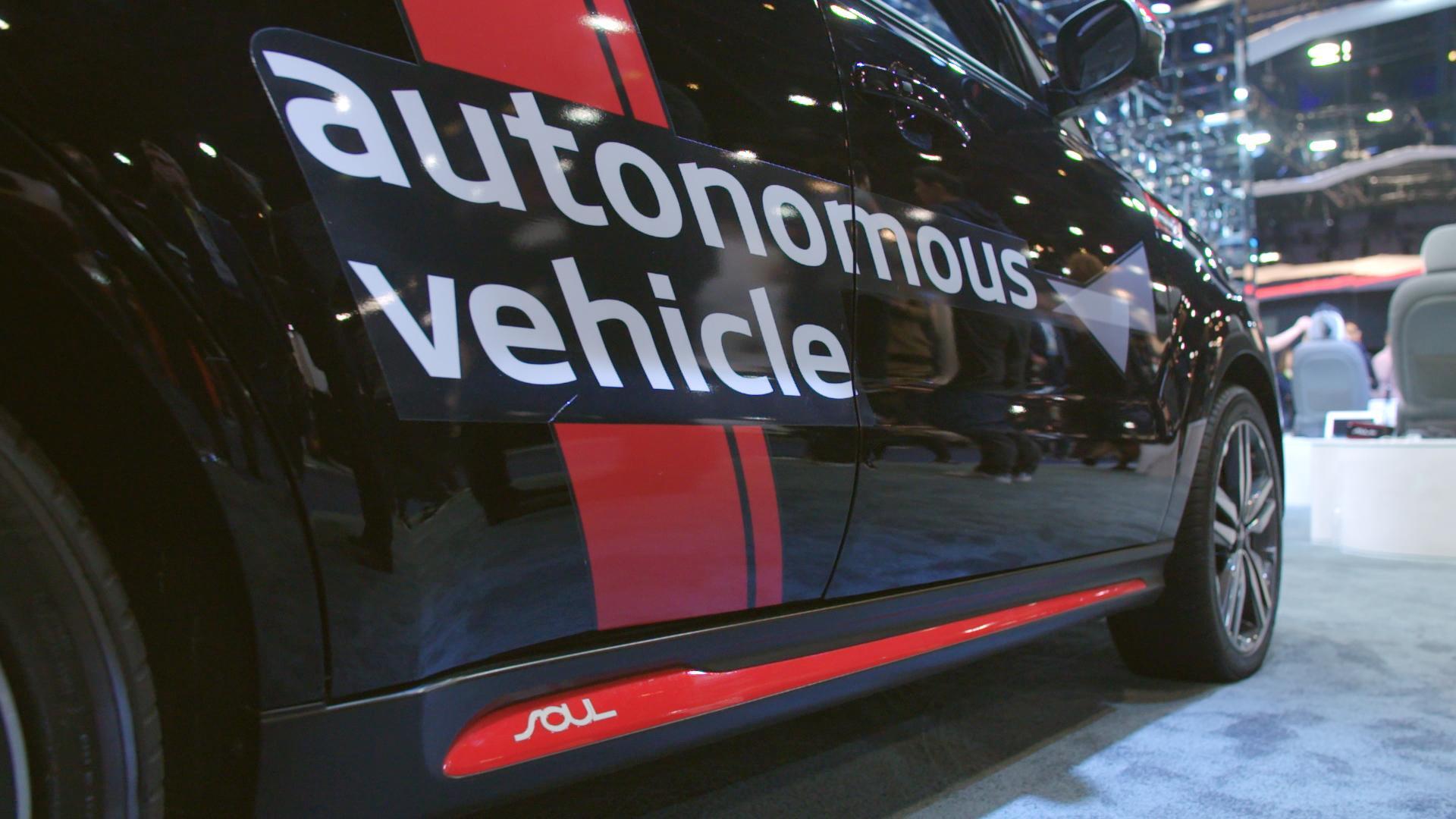
The North American International Auto Show starts January 8 in Detroit, but many of the most important news about upcoming automotive technologies will come out a week earlier at the Consumer Electronics Show (CES) in Las Vegas.
"CES is a lot more important to the auto industry than just a few years ago, with more announcements and more floor space devoted to cars" says Stephanie Brinley, a senior analyst with IHS Automotive. "The companies have learned how to take advantage of the huge audience that follows CES."
"It's because technology has become so much an integral part of the car, and because so much of that technology is consumer facing," Brinley said.
Nissan CEO Carlos Ghosn will deliver a keynote address on January 5 that's expected to touch on new technology. Audi may demonstrate a new feature that detects the status of upcoming traffic lights. Ford and Toyota plan to announce new models and technologies. And Fiat Chrysler is expected to unveil its first electric car and some near self-driving features in its Pacifica minivan.
Also, electric-car startup (and potential Tesla rival) Faraday Future is planning a high-profile reveal on January 3. The company could make big news if it shows off a functioning version of its upcoming consumer vehicle. Although last year, the company teased a big event, only to show off a concept racecar that was obviously not ready for production.
Many companies working on self-driving technologies will be in Vegas, including automakers such as Honda and BMW, as well as parts suppliers such as Delphi, Continental, Autoliv, Mobileye, and Velodyne.
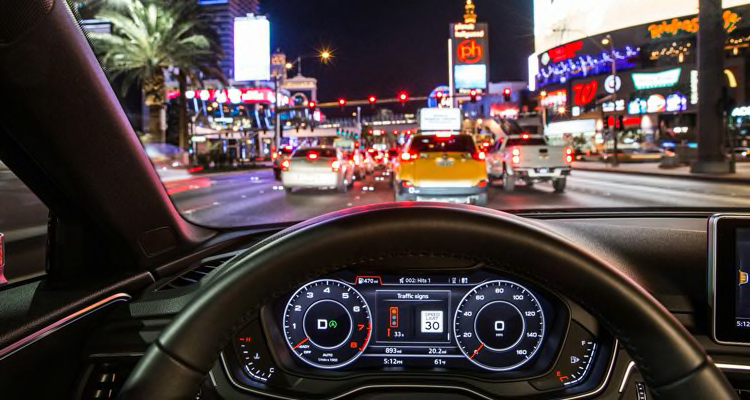
Several self-driving prototype cars will be making a circuit around the world-famous Vegas strip. Delphi, which is hoping to sell its self-driving car system to an automaker by 2019, is setting up a demonstration involving everything from tunnels to bridges to clogged city streets—described as the most challenging test yet for a near-production automated vehicle.
Another set of technologies vying for attention at CES will be vehicle-to-vehicle (V2V) and vehicle-to-infrastructure (V2I) communications. V2V got a big push from the outgoing Obama Administration with a December 13 announcement from the Department of Transportation proposing a mandate for cars to share information wirelessly about their direction, speed, acceleration, and braking to other cars.
The National Highway Traffic Safety Administration believes the ability for cars to communicate with one another has the potential to dramatically reduce highway fatalities—which are on track to exceed 38,000 in 2016, up 16 percent from two years ago.
Like V2V, V2I has the promise of revolutionizing what information is available to drivers and passengers. You may be able to get detailed road conditions, like upcoming potholes, gridlocked traffic or flooding underpasses.
The other major areas of focus are ways to make drivers even more constantly connected to the Internet, and the dark underside of that connection—cybersecurity. Automotive connectivity has been a trend for years, but expect to see new ways to make the process of integrating smartphones into car infotainment systems easier.
Also look for ways to limit the kind of browsing that causes distracted driving, which regulators say causes thousands of highway deaths each year.
Finally, don't be surprised if there is some news about car-hacking, as there has been the last two years at CES. Security researchers have taken to Vegas to highlight new ways of taking control of cars' vital functions, like steering, acceleration and braking. The hack of a Jeep Grand Cherokee discussed at last year's show laid the groundwork for the first-ever federal safety recall related to cybersecurity.