Your membership has expired

The payment for your account couldn't be processed or you've canceled your account with us.

Re-activate

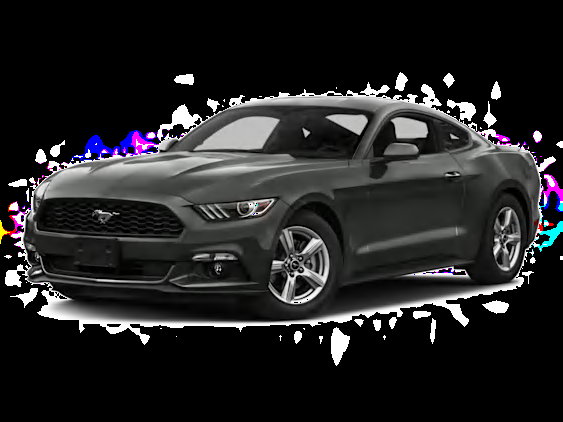
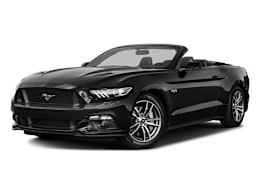
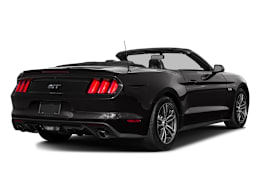
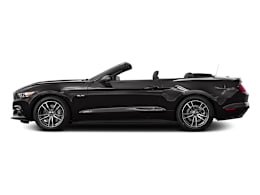
Ford Mustang

EPA MPG: 18 mpg

RECALL ALERT:
There are 5 recalls on this vehicle. Learn More.

Reliability

Overall Reliability

The 2016 Mustang has about average reliability compared to other cars from the same model year.

The 2016 Ford Mustang has been recalled 5 times by NHTSA. View Recalls
Most Common Trouble Spots
Common Trouble Spot
Common Trouble Spot

Owner Reported Trouble Spots

The Reliability score is based on our latest subscriber survey of 2016 Ford Mustang owners. The owner comments describe problems respondents experienced with this vehicle.

In-car Electronics

Infotainment system (audio, GPS, phone), rear entertainment system, backup or other camera/sensors, head-up display.

What Owners Say

Phone pairing (e.g., Bluetooth)

""Broken when bought, voice commands didn't work. Replaced APIM.""

Anonymous, ND (2016 Ford Mustang GT Premium 5.0-L V8)

"Phone does not pair up well with the system. Navigation from my phone does not display. Fits could not figure it out. Tried other phones and it did not work."

Anonymous, SC (2016 Ford Mustang GT Premium 5.0-L V8)

Climate System

AC compressor, blower (fan) motor, condenser, evaporator, heater system, automatic climate system, electrical failure, refrigerant leakage.

What Owners Say

Automatic climate control

""Having to replace the AC/heating unit again, now on the third unit. A Chinese made unit, which obviously has quality control issues. Ford is aware this is lousy unit but still uses it.""

Anonymous, (2016 Ford Mustang Premium 2.3-L 4 Cyl turbo)
Refrigerant leaks

"After 6 years of ownership the AC performance was poor. One time recharge resolved the problem."

Anonymous, MA (2016 Ford Mustang Premium 2.3-L 4 Cyl turbo)

Noises/Leaks

Squeaks, rattles, wind noises, seals and/or weather stripping, air and water leaks.

What Owners Say

Other noises & leaks problem

"The manual transmission makes a soft whining sound while driving. I've had 4 mechanics drive it including a drive line shop. It does affect the operation of the car but I find the noise annoying"

Anonymous, OH (2016 Ford Mustang GT Premium 5.0-L V8)
Squeaks or rattles

"i had to replace radio speakers for 800 dollars with radio off it sounded like the doors were falling off."

Anonymous A., FL (2016 Ford Mustang Premium 3.7-L V6)

Electrical Accessories

Cruise control, clock, warning lights, body control module, keyless entry, wiper motor or washer, tire pressure monitor, interior or exterior lights, horn, gauges, 12V power plug, USB ports, alarm or security system, remote engine start, heated or cooled seats, heated steering wheel, headlights, automatic headlights, automatic wipers, wireless charging pad.

What Owners Say

Other electrical system problem

"Starter motor failed leaving me needing a tow"

Anonymous A., ON (2016 Ford Mustang Base 3.7-L V6)

Exhaust

Muffler, pipes, catalytic converter, exhaust manifold, heat shields, leaks.

What Owners Say

Other/unsure

"A very rough, uncomfortable rear seats"

Anonymous A., NC (2016 Ford Mustang Premium 3.7-L V6)

Fuel System/Emissions

Sensors (O₂, or oxygen, sensor), emission-control devices (includes EGR), fuel-injection system, fuel gauge/sender, fuel pump, problems filling up the tank.

What Owners Say

Fuel injection system

"Evaportative emission system purge flow performance during boost"

Anonymous, CA (2016 Ford Mustang Premium 2.3-L 4 Cyl turbo)

Suspension/Steering

Shocks or struts, ball joints, tie rods, wheel bearings, alignment, steering linkage (includes rack and pinion), power steering (pumps and hoses, leaks), wheel balance, springs or torsion bars, bushings, electronic or air suspension.

What Owners Say

Ball joints

"Front left lower control arm outer ball joint had play that was considered excessive in regard to having an alignment."

Anonymous A., PA (2016 Ford Mustang Premium 2.3-L 4 Cyl turbo)

Engine Electrical

Alternator, starter, hybrid battery replacement, hybrid battery related systems, regular battery, battery cables, engine harness, coil, ignition switch, electronic ignition, spark plugs and wires failure, auto stop/start.

Brakes

Premature pad/rotor wear, pulsation or vibration, antilock system, parking brake, master cylinder, calipers, squeaking, brake failure, regenerative braking.

Engine Major

Engine rebuild or replacement, cylinder head, head gasket, turbocharger or supercharger, timing chain or belt.

Engine Minor

Accessory belts and pulleys, engine computer, engine mounts, engine knock or ping, fuel leaks, oil leaks.

Engine Cooling

Radiator, cooling fan, water pump, thermostat, antifreeze leaks, overheating.

Transmission Major

Transmission rebuild or replacement, torque converter, premature clutch replacement.

Transmission Minor

Gear selector and linkage, transmission computer, transmission sensor or solenoid, clutch adjustment, rough shifting, slipping transmission, leaks.

Body Hardware

Windows, locks and latches, doors or sliding doors, tailgate, trunk or hatch, mirrors, seat controls (power or manual), seat belts, sunroof, convertible top, glass defect.

Paint/Trim

Paint (fading, chalking, peeling, or cracking), loose interior or exterior trim or moldings, rust.

Drive System

Driveshaft or axle, CV joint, differential, transfer case, four-wheel-drive/all-wheel-drive components, driveline vibration, electrical failure, traction control, electronic stability control.

2016 Sports Cars & Convertibles Reliability

This Car
vs. Similar Cars

Ford vs. Other New Car Brands Reliability

Reliability History
* Redesign year
00
01
02
03
04
05*
06
07
08
09
10
11*
12
13
14
15*
16
17
18
19
20
21
22
23
24*
25
Overall Reliability Verdict
POTENTIAL TROUBLE SPOTS
Powertrain
Engine Major
Engine Minor
Engine Cooling
Engine Electrical
Transmission Major
Transmission Minor
Drive System
Fuel System/Emissions
Exhaust
Suspension/Steering
Brakes
Climate System
Build Quality
Electrical Accessories
Body Hardware
Paint/Trim
Noises/Leaks
In-car Electronics
Reliability indicates how models have performed in the past, providing the basis for predicting how the vehicles will hold up in the year ahead. These charts provide the most comprehensive reliability information available to consumers. Based on information received from our latest subscriber survey for about 380,000 vehicles, our reliability history charts give you a rundown on how 2000 through 2025 vehicles are holding up in 20 potential trouble spots, ranging from the engine, transmission, electric motor, EV charging, and brakes, to power equipment and the electrical accessories.
Recalls
PROVIDED BY
SEAT BELTS
Sep 12, 2025
A corroded cable can break, preventing the seat belt from properly restraining an occupant, and increasing the risk of injury during a crash.
Summary:
Ford Motor Company (Ford) is recalling certain 2015-2017 Mustang vehicles. Water and road salt may corrode the front seat belt anchor pretensioner cables.
What should you do:
Dealers will inspect and replace both front seat belt anchor pretensioner assemblies, as necessary. In addition, dealers will remove sections of the carpet and underlayment that contact the cables. Dealers will also inspect the A-pillar sealing patches, and as necessary, install A-pillar body plugs, and/or inspect and replace the front outboard seat bolts. Repairs will be performed free of charge. Interim letters, notifying owners of the safety risk, were mailed October 20, 2025. Additional letters will be sent once the final remedy is available, anticipated January 2026. Owners may contact Ford customer service at 1-866-436-7332. Ford's number for this recall is 25S92. Vehicle Identification Numbers (VINs) involved in this recall became searchable on NHTSA.gov September 17, 2025.
For more information:
NHTSA CAMPAIGN ID Number: 25V614000
Potential Number of Units Affected: 332778
BACK OVER PREVENTION
Sep 03, 2025
A rearview camera that displays an inverted, distorted, or blank image can reduce the driver¿¿¿s view behind the vehicle, increasing the risk of a crash.
Summary:
Ford Motor Company (Ford) is recalling certain 2015-2019 Lincoln MKC, Mustang, F-350 SD, F-250 SD, F-450 SD, 2015-2017 Lincoln Navigator, Expedition, 2015-2018 Edge, Transit Connect, 2016-2019 F-550 SD, Transit, 2017-2019 Econoline, and 2019 Ranger vehicles. The rearview camera may display a distorted, inverted, or blank image when the vehicle is in reverse.
What should you do:
Dealers will inspect and replace the rearview camera as necessary, free of charge. Owner notification letters were mailed January 13, 2026. Ford owners will receive letters in phases, beginning January 2026 and May 2026. Owners may contact Ford customer service at 1-866-436-7332. Ford's number for this recall is 25S89. This recall expands previous NHTSA recall number 25V270. Vehicle Identification Numbers (VINs) involved in this recall will be searchable on NHTSA.gov beginning September 8, 2025.
For more information:
NHTSA CAMPAIGN ID Number: 25V572000
Potential Number of Units Affected: 1456417
BACK OVER PREVENTION
Feb 16, 2022
A rearview camera that displays a blank or distorted image can reduce the driver's rear view, increasing the risk of a crash.
Summary:
Ford Motor Company (Ford) is recalling certain 2015-2017 Mustang vehicles. The rearview camera wiring may be loose or damaged, which can result in a blank or distorted image.
What should you do:
Dealers will inspect and repair the decklid wiring harness and/or replace the rearview camera, as necessary, free of charge. Owner notification letters were mailed December 23, 2022 and June 26, 2023. Remedy parts are expected to become available in the 4th Quarter of 2022. Owners may contact Ford customer service at 1-866-436-7332. Ford's number for this recall is 22S06.
For more information:
Owners may also contact the National Highway Traffic Safety Administration Vehicle Safety Hotline at 1-888-327-4236 (TTY 1-800-424-9153), or go to www.nhtsa.gov.
NHTSA CAMPAIGN ID Number: 22V082000
Potential Number of Units Affected: 330784
ENGINE AND ENGINE COOLING
Oct 26, 2016
A sudden loss of engine oil may cause engine failure, increasing the risk of a crash. Additionally, an oil leak, in the presence of an ignition source, increases the risk of a fire.
Summary:
Ford Motor Company (Ford) is recalling certain model year 2015-2017 Mustang vehicles manufactured February 24, 2015, to August 30, 2016. A hose may separate from the engine oil cooler tube assembly causing an oil leak.
What should you do:
Ford will notify owners, and dealers will replace the engine oil cooler tube assembly, free of charge. The recall began on March 23, 2017. Owners may contact Ford customer service at 1-866-436-7332. Ford's number for this recall is 16S40.
For more information:
Owners may also contact the National Highway Traffic Safety Administration Vehicle Safety Hotline at 1-888-327-4236 (TTY 1-800-424-9153), or go to www.safercar.gov.
NHTSA CAMPAIGN ID Number: 16V779000
Potential Number of Units Affected: 6582
CHILD SEAT, SEAT BELTS
Oct 26, 2015
If the restraint components do not function as intended, the occupants may not be properly restrained in the event of a crash, increasing their risk of injury.
Summary:
Ford Motor Company (Ford) is recalling certain model year 2016 Ford Mustang vehicles manufactured September 26, 2015, to October 1, 2015. The front and rear seat belts and child seat tether anchors may have been damaged in shipping from the supplier to the vehicle assembly plant and may not adequately restrain the occupant in a crash. As such, these vehicles fail to comply with the requirements of Federal Motor Vehicle Safety Standard numbers 208, "Occupant Crash Protection," and 225, "Child restraint anchorage systems."
What should you do:
Ford will notify owners, and dealers will replace the front and rear seat belt assemblies and the child seat tether anchors, free of charge. The recall began on December 18, 2015. Owners may contact Ford customer service at 1-866-436-7332. Ford's number for this recall is 15C13.
For more information:
Owners may also contact the National Highway Traffic Safety Administration Vehicle Safety Hotline at 1-888-327-4236 (TTY 1-800-424-9153), or go to www.safercar.gov.
NHTSA CAMPAIGN ID Number: 15V707000
Potential Number of Units Affected: 1900
Check Vehicle for Unrepaired Recalls
Enter a valid 17-character VIN
Change Vehicle