The redesign year indicates that the car is either introduced for the first time or an existing model has been
significantly re-engineered. The more extensive or complicated the redesign, the higher the risk of reliability problems.
2025 Model Redesign Year
The redesign year indicates that the car is either introduced for the first time or an existing model has been
significantly re-engineered. The more extensive or complicated the redesign, the higher the risk of reliability problems.
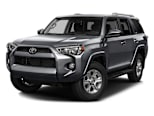
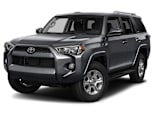
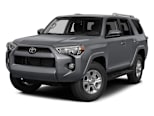
True to its roots, the redesigned 4Runner is an off-road-capable SUV, sharing a platform with the Tacoma pickup and Land Cruiser SUV.
Lower trims come with a 278-hp, turbocharged four-cylinder, while higher trims get a 326-hp, turbo four-cylinder hybrid.
Sadly, the 4Runner is a bit disappointing for a full redesign.
The new turbo-four powertrain in the base SR5 we tested proved rather crude, with elevated, uncouth noise levels and rough shifts.
Meanwhile, the ride is unsettled and on-road handling is clumsy.
It’s slightly slower from 0 to 60 mph than the last V6-powered 4Runner we tested, although fuel economy is up to a competitive 21 mpg overall.
The cabin has a burly look, but it’s a sea of hard plastic panels.
The front seats are comfortable and supportive, but the rear seat is neither spacious nor comfortable.
A third-row seat is available.
The interior features lots of large, physical knobs and buttons that are easy to use.
Road test score is a composite based on more than 50 tests and evaluations at our 327-acre test facility in
Colchester, Conn., on cars that Consumer Reports has purchased. Among the many tests are assessments of emergency-handling, braking capabilities,
fuel economy, ride, seat comfort, headlights, and controls.
Road Test Score
Road test score is a composite based on more than 50 tests and evaluations at our 327-acre test facility in
Colchester, Conn., on cars that Consumer Reports has purchased. Among the many tests are assessments of emergency-handling, braking capabilities,
fuel economy, ride, seat comfort, headlights, and controls.
Predicted Reliability
Our extensive survey data, combined with our technical knowledge, allows us to expertly predict the reliability of new and redesigned models.
Predicted Reliability
Our extensive survey data, combined with our technical knowledge, allows us to expertly predict the reliability of new and redesigned models.
Predicted Owner Satisfaction
Our extensive survey data, combined with our technical knowledge, allows us to expertly predict the owner satisfaction of new and redesigned models.
Predicted Owner Satisfaction
Our extensive survey data, combined with our technical knowledge, allows us to expertly predict the owner satisfaction of new and redesigned models.
Base MSRP Range
$41,870 - $68,200
Destination Charge: $1495
Destination Charge
This charge covers the cost of transporting a vehicle from a carmaker’s U.S. factory or port of entry to its dealerships. Destination charges are typically not negotiable. Occasionally some select model trims will have a slightly higher fee than others.
Destination Charge
This charge covers the cost of transporting a vehicle from a carmaker’s U.S. factory or port of entry to its dealerships. Destination charges are typically not negotiable. Occasionally some select model trims will have a slightly higher fee than others.
Destination Charge
This charge covers the cost of transporting a vehicle from a carmaker’s U.S. factory or port of entry to its dealerships. Destination charges are typically not negotiable. Occasionally some select model trims will have a slightly higher fee than others.
Road test score is a composite based on more than 50 tests and evaluations at our 327-acre test facility in
Colchester, Conn., on cars that Consumer Reports has purchased. Among the many tests are assessments of emergency-handling, braking capabilities,
fuel economy, ride, seat comfort, headlights, and controls.
Road Test Score
Road test score is a composite based on more than 50 tests and evaluations at our 327-acre test facility in
Colchester, Conn., on cars that Consumer Reports has purchased. Among the many tests are assessments of emergency-handling, braking capabilities,
fuel economy, ride, seat comfort, headlights, and controls.
Predicted Reliability
Our extensive survey data, combined with our technical knowledge, allows us to expertly predict the reliability of new and redesigned models.
Predicted Reliability
Our extensive survey data, combined with our technical knowledge, allows us to expertly predict the reliability of new and redesigned models.
Predicted Owner Satisfaction
Our extensive survey data, combined with our technical knowledge, allows us to expertly predict the owner satisfaction of new and redesigned models.
Predicted Owner Satisfaction
Our extensive survey data, combined with our technical knowledge, allows us to expertly predict the owner satisfaction of new and redesigned models.
Road test score is a composite based on more than 50 tests and evaluations at our 327-acre test facility in
Colchester, Conn., on cars that Consumer Reports has purchased. Among the many tests are assessments of emergency-handling, braking capabilities,
fuel economy, ride, seat comfort, headlights, and controls.
Road Test Score
Road test score is a composite based on more than 50 tests and evaluations at our 327-acre test facility in
Colchester, Conn., on cars that Consumer Reports has purchased. Among the many tests are assessments of emergency-handling, braking capabilities,
fuel economy, ride, seat comfort, headlights, and controls.
/ 100
Predicted Reliability
Our extensive survey data, combined with our technical knowledge, allows us to expertly predict the reliability of new and redesigned models.
Predicted Reliability
Our extensive survey data, combined with our technical knowledge, allows us to expertly predict the reliability of new and redesigned models.
/ 100
Predicted Owner Satisfaction
Our extensive survey data, combined with our technical knowledge, allows us to expertly predict the owner satisfaction of new and redesigned models.
Predicted Owner Satisfaction
Our extensive survey data, combined with our technical knowledge, allows us to expertly predict the owner satisfaction of new and redesigned models.
The redesign year indicates that the car is either introduced for the first time or an existing model has been
significantly re-engineered. The more extensive or complicated the redesign, the higher the risk of reliability problems.
2025 Model Redesign Year
The redesign year indicates that the car is either introduced for the first time or an existing model has been
significantly re-engineered. The more extensive or complicated the redesign, the higher the risk of reliability problems.
True to its roots, the redesigned 4Runner is an off-road-capable SUV spun off a platform shared with the latest Tacoma pickup and other body-on-frame Toyota models.
It is larger than before, being both longer and wider.
The SR5, TRD Sport, and TRD Sport Premium trims come with a 278-hp, 2.4-liter turbocharged four-cylinder engine.
Higher trims get the 326-hp, 2.4-liter turbocharged hybrid four-cylinder engine.
Both engines are paired with an 8-speed automatic transmission.
The 4Runner can be had in two-, part-time four-, and full-time four-wheel drive.
The interior features more modern amenities than before, with screen sizes dependent on trim level.
The second-row seat tumbles forward to aid cargo versatility.
And yes, the rear window on the liftgate powers up and down--a classic 4Runner characteristic. Toyota's latest suite of driver assistance features come standard.
The redesign year indicates that the car is either introduced for the first time or an existing model has been
significantly re-engineered. The more extensive or complicated the redesign, the higher the risk of reliability problems.
2010 Model Redesign Year
The redesign year indicates that the car is either introduced for the first time or an existing model has been
significantly re-engineered. The more extensive or complicated the redesign, the higher the risk of reliability problems.
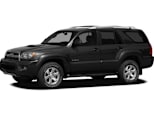
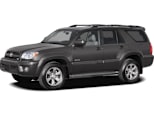
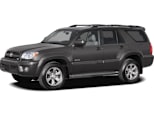
By 2010, almost every mid-sized SUV had moved to a car-based design, but the Toyota 4Runner remained one of the last full-framed, truck-based SUV holdouts on the market.
That makes it especially suited to off-roading.
Otherwise, the 2010 redesign felt like a step backwards from the previous refined generation.
The unsettled ride, mediocre handling, cheap interior, high-step-in, and low ceiling left us unimpressed.
Limited trim versions have a sports suspension with somewhat better control, but a stiffer ride.
The 4.0-liter V6 engine is powerful, but roars when accelerating.
Fuel economy of 18 mpg overall is decent for this brick-shaped SUV.
Controls are simple, with big buttons and knobs, but the touch screen is relatively small.
A tight third-row seat is optional.
Truck-based SUVs are generally known for their towing ability, but the 4Runner's rating isn't appreciably higher than some better-driving, car-based competitors. All 2020 models get the Toyota Safety Sense P (TSS-P) as standard equipment, which includes forward collision warning with automatic braking and pedestrian detection, lane departure warning, automatic high beams, and adaptive cruise control. Also, all versions get a standard 8-inch touch-screen infotainment system with Android Auto and Apple CarPlay compatibility.
The redesign year indicates that the car is either introduced for the first time or an existing model has been
significantly re-engineered. The more extensive or complicated the redesign, the higher the risk of reliability problems.
2003 Model Redesign Year
The redesign year indicates that the car is either introduced for the first time or an existing model has been
significantly re-engineered. The more extensive or complicated the redesign, the higher the risk of reliability problems.
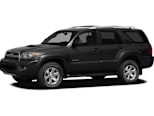
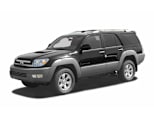
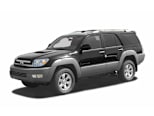
Like traditional SUVs, the 4Runner is based on a full truck-based frame and is especially suited for serious off-roading.
It doesn't provide the nimble, carlike handling of car-based SUVs, but among old-school SUVs, the 4Runner was better than most peers.
This generation was surprisingly refined, with a reasonably comfortable ride and a very quiet cabin.
Lively and responsive, the smooth 4.0-liter V6 returns only 16 mpg overall.
A silky smooth 4.7-liter V8 is also available.
Stability control is standard.
Thanks to near-bulletproof durability and a subsequent 2010 redesign that cheapened the car, this generation is highly sought on the used market, keeping prices high.
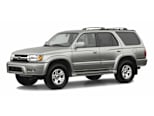
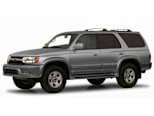
Based on Toyota's compact pickup, the 4Runner is a traditional truck-based SUV.
In pre-'96 models, neither the four-cylinder nor the V6 engine is very strong.
The rear seat and cargo area are tight.
A 1996 redesign significantly improved this model's ride, powertrain, and interior packaging.
A longer wheelbase and lower floor provide more cargo space and rear leg room.
A low seat and high floor makes access a chore and the driving position awkward.
We prefer the lively 3.4-liter V6 to the 2.7-liter Four.
The V6 and stability control became standard on all models in 2001.
You will get digital access to reviews and ratings for over 8,500 products and services
to help you make better choices for life’s big moments and the everyday ones in between.
If you feel you have received this message in error, please view our customer care
FAQs or access your
account information here.