Readers Asked Us to Test These 5 Protein Powders. All Had Low Levels of Lead.
We tested powders from Clean Simple Eats, Equate, Premier Protein, Ritual, and Truvani. Our results underscore that it’s possible to make products with less contamination.


After a Consumer Reports investigation revealed that some popular protein powders and shakes contained troubling levels of lead, many readers wrote in with a simple question: What does this mean for the brands I use that CR didn’t test? To find out, CR conducted a new round of heavy metal testing targeting five of the most popular reader-requested chocolate protein powders. All came back safe for daily or near-daily consumption, with lower average levels of lead and arsenic than what CR found in its previous protein tests.
The results suggest that safer manufacturing is possible, even for chocolate-flavored products, which some in the industry have claimed are harder to keep clean. The findings also raise questions about why so many other protein powders on the market have elevated levels of heavy metals. Our earlier test results, published in the fall, showed that for more than two-thirds of the products we analyzed, a single serving contained more lead than CR’s food safety experts say is safe to consume in a day—some by more than 10 times.
“Consumers shouldn’t have to guess whether their protein powder poses a risk for lead,” says Tunde Akinleye, the CR food safety researcher who led both testing projects. “These results show manufacturers can keep contamination low, but we know from prior investigations that lead levels in protein powders are not consistent across the industry.”
Lack of regulation may be a key contributor. Oversight of the protein powder industry largely falls to the Food and Drug Administration, which has limited authority and typically doesn’t review, approve, or test dietary supplements—including protein powders—before they’re sold. There are no federal limits specifying the amount of lead or other heavy metals allowed in protein powders. And while the FDA requires that manufacturers keep their products free of harmful contaminants, it largely leaves it up to companies to decide what counts as harmful and to test their own products for compliance.
The broad range of contamination levels identified by CR’s tests is “very consistent with how the supplement industry is,” says Pieter Cohen, MD, an associate professor of medicine at Harvard Medical School and a Cambridge Health Alliance physician who has studied the safety of supplements for more than a decade. “There are companies that are working hard to try to do the right thing, despite the fact that it’s not required by the law, and there are other companies that are cutting corners.”
The lack of a strong law regulating these products, coupled with the lack of enforcement of existing laws, stacks the deck against consumers seeking safe, high-quality supplements, Cohen says. “Unless there’s very clear guidance from the Food and Drug Administration and the requirement that that be followed through, I doubt there will be any standardization in terms of lead levels in protein powders.”
An FDA spokesperson said that the agency “routinely evaluates food, including dietary supplements, for the presence of lead and other toxic elements,” and that it takes action when it finds unsafe levels of contamination. “We will review the findings from Consumer Reports’ testing along with other data we have collected to better inform where to focus our testing efforts and enforcement activities,” said the spokesperson. Since the publication of CR’s previous investigation, the “FDA has conducted its own review of the information to determine next steps, and initiated targeted inspections and sampling activities focused on this issue.”
How CR Tested
For this round of follow-up tests, CR selected five reader-requested protein powders that our market analysis also indicated were popular, including two mass-market staples from Equate and Premier Protein, and three direct-to-consumer favorites from Clean Simple Eats, Ritual, and Truvani. The lineup spanned both whey (or dairy) and plant-based options. As with our previous tests, both vegan powders used pea protein as a primary ingredient. To control for as many variables as possible, this time we tested only protein powders—no premade shakes—and only chocolate-flavored products.
What CR’s Tests Found
Four of the five protein powders tested below CR’s level of concern for lead, which is 0.5 micrograms per daily serving. CR’s food safety experts say that the lower levels of lead found in these products make them a better choice for daily protein powder users—though, as CR has previously reported, most people don’t need to take these supplements to hit their protein goals. (See the chart below for product-specific consumption limits.)
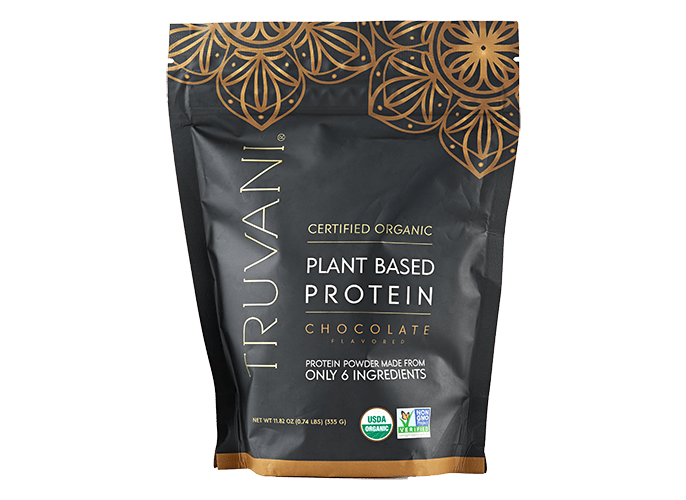
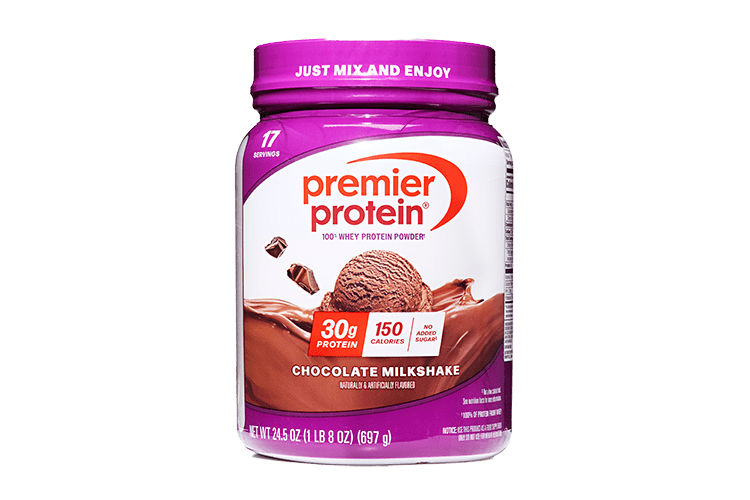
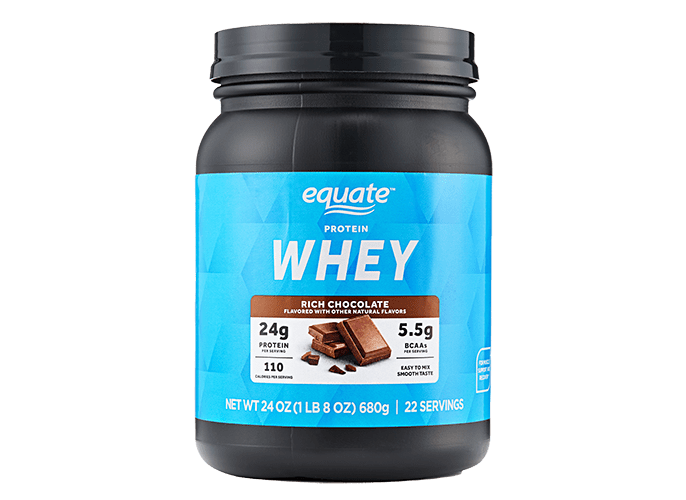
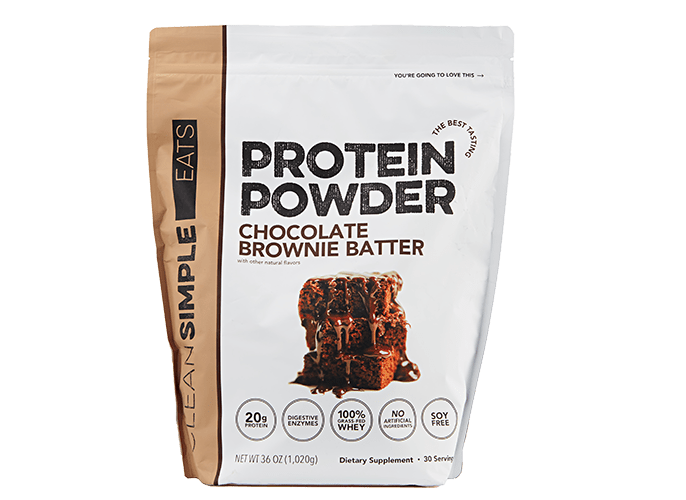
Clean Simple Eats’ whey-based protein powder contained the least lead at 0.21 micrograms per serving, which is 42 percent of CR’s level of concern for the heavy metal. Another whey-based powder from the Walmart brand Equate came in just above that at 55 percent of CR’s level of concern with 0.27 micrograms of lead per serving. (Whey is a popular source of protein derived from cow’s milk.) A serving of Premier Protein’s similarly dairy-based protein powder contained 0.38 micrograms of lead, putting it at 77 percent of CR’s daily lead limit. And Truvani’s plant-based protein powder (made using pea protein) contained 0.46 micrograms of lead per serving, or 93 percent of CR’s level of concern.
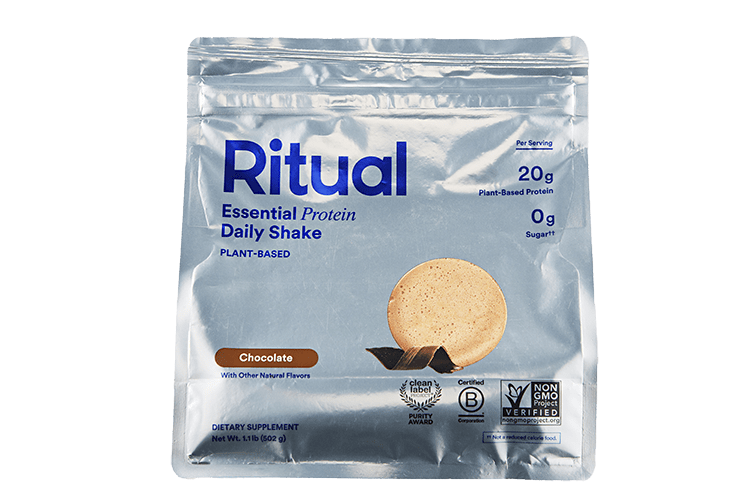
One plant-based product, Ritual’s Essential Protein Daily Shake (a powder also made with pea protein), contained 0.53 micrograms of lead per serving, putting it at 107 percent of CR’s level of concern. Still, the amount of lead found is low enough that CR’s experts say it’s okay to have up to 6½ servings of it per week.
CR’s level of concern has a wide safety margin built in by design. It’s based on a highly protective standard known as the California Proposition 65 maximum allowable dose level (MADL), which is 0.5 micrograms per day for lead. “We use this value because the science is clear that there is no safe level of lead exposure,” says Sana Mujahid, PhD, who oversees food safety research and testing at CR.
Because lead lingers in the body, repeated exposure to even small amounts can add up over time and contribute to health risks. Low levels of lead have been found in many foods in the average American diet, and it can also be present in the air, soil, and household contaminants. “We want to help people understand their exposure pathways so they can make more informed choices,” Mujahid says.
For more information on how CR’s level of concern for lead was selected and how it compares with other standards, see our protein powder testing FAQ.
Under Prop 65 regulations for lead or other substances that are “known to the state of California” to cause birth defects or other reproductive harm, products that exceed the MADL must carry a warning label.
Unlike Prop 65, which takes into consideration consumers’ average exposure over time and dietary frequency to calculate whether a product exceeds the MADL and requires a warning label, Consumer Reports assumes one serving a day of the product in its risk assessment calculations. This difference in methodology means no Prop 65 judgments can be made from CR’s findings. Our results are meant to provide guidance on which products have comparatively higher levels of lead, not to identify the point at which lead exposure will have measurable harmful health effects, or to assess compliance with California law. For more information, see our testing methodology sheet.
Before publication, CR contacted the manufacturers of all the products we tested and shared our results and methodology with them. We wanted to know whether they were using any unique sourcing or manufacturing processes that could explain their comparatively cleaner results, and what that might reveal about other manufacturers’ practices.
Premier Protein declined to comment. Representatives from Equate’s parent company, Walmart, and Clean Simple Eats didn’t respond to multiple requests for comment.
Truvani’s co-founder and co-CEO, Derek Halpern, said in an interview that what sets his company apart is the frequency with which it tests for heavy metals. “I’ve been told routinely by my manufacturers that the volume of tests that we ask for far outstrips anyone else they’ve ever worked with,” he said. “I just want a test result for every lot—that doesn’t seem that ridiculous to me.”
Truvani has tested its chocolate-flavored protein powder 162 times over the last 12 months, Halpern said. Every lot of Truvani products is tested for heavy metals and other contaminants, and ingredients that don’t meet internal standards are rejected. (Halpern declined to share the specific thresholds Truvani uses, but said that its lead standard is similar to the California Prop 65 limit that CR uses in its level of concern calculations.)
Halpern said he suspects less rigorous approaches are more common across the industry because they’re less costly and still technically meet FDA requirements. Some companies rely on spot-checks or certificates of analysis from ingredient suppliers instead of testing every finished lot, he said.
“It can be more expensive to ensure that every vat of your product is very low in lead,” says Cohen of Harvard Medical School. “And without a requirement that it be that way, it’s unlikely that the industry as a whole is going to move in that direction.”
Lindsay Dahl, chief impact officer at the supplement brand Ritual, says she thinks that “heavy metal testing transparency is feasible for the entire industry.” Ritual tests its ingredients and all finished goods for contamination, and uses California’s Prop 65 limit as a goalpost for most products, she says.
Ritual is unique in that it publishes detailed sourcing information for its products. “We openly share the final place of manufacturing and the names of our suppliers for the public to see,” says Dahl, who added that the company thinks that “ingredient traceability is the best way to help reduce contaminants.” She noted that the powder tested by CR was made with Puris-brand pea protein from North America and cocoa powder from several countries through Cocoa Horizons, a program that promotes sustainable and traceable farming.
“It took us three years of searching and testing different cocoa suppliers to finally launch a chocolate flavor version of Essential Protein,” says Dahl, who attributed the delay to Ritual’s heavy metal and human rights standards. “While we spend a tremendous amount of time working to find the highest quality suppliers, we also know it’s hard to have formulas that are entirely contaminant-free, which is where our product testing comes in.”
In a letter to Congress last year, Ritual’s CEO, Katerina Schneider, said that because plant-based protein powder is a “high-risk product,” the company publishes heavy metal test results for one recently released lot of each flavor of its Essential Protein powder on its website. In the letter, Schneider also took the rare step of advocating for greater industry regulation, calling on Congress to “empower the FDA to establish health-protective limits for heavy metals in supplements and protein powder.”
It’s a position also held by CR’s consumer advocates—and many others. A CR petition calling on the FDA to set strict standards for heavy metals in protein supplements has garnered over 43,000 signatures since October.
“The FDA is still lacking enforceable lead limits for protein powders and dietary supplements,” says Brian Ronholm, CR’s director of food policy. “Having these standards in place would push the industry to consistently make products with lower levels of lead, which our test results certainly demonstrate is possible for companies to do.”


