Tech Tools That Make Life Easier as You Get OIder
They include video doorbells and robotic vacuums

When you shop through retailer links on our site, we may earn affiliate commissions. 100% of the fees we collect are used to support our nonprofit mission. Learn more.

While there’s no need to adopt every new technology-driven gadget, a growing number of products can make aging in place simpler and safer. They include robotic vacuums, video doorbells that allow you to see who’s at your door without heading to it, and appliances that you can switch on with voice commands. In fact, a 2020 CR survey of 39,251 members found that 22 percent of those who say they’ve made home modifications have installed a smart appliance, which can connect to devices such as smartphones and smart speakers to operate remotely. CR.org has information (available to all) and ratings (available to members) for many of these products. You can also check Tech-Enhanced Life (techenhancedlife.com). Here’s the lowdown on three popular types of items.
Smart Speakers
These allow you to do a variety of tasks with your voice, such as calling family members, ordering groceries, turning on the lights, and reminding you to take your medicine. Features vary, but for those who want a smart speaker with a screen—nice for video calls—the Amazon Echo Show 8 (second generation) may be the simplest.
Smartwatches
The watches below all have certain health functions, such as fall detection and the ability to call a friend or relative for assistance. (Apple Watches can also call 911 for you.) The Apple Watch Series 8 has a larger display and the most sophisticated health features, including an electrocardiogram function and a blood oxygen sensor.
Medical Alert Systems
These call for help when you need it, and the four brands here rated highest out of seven for satisfaction in a 2020 CR survey of 1,869 members. Monthly fees vary depending on whether you opt for landline or mobile service (or both) and on features such as GPS tracking and fall detection. Note that all seven brands in the survey (which also included Medical Guardian, Medical Alert, and Life Alert) received fairly high satisfaction scores, with none lower than 80 out of 100. Get more information in our review of the best medical alert systems.
See CR’s report on how to age-proof your home.
Smart Speakers
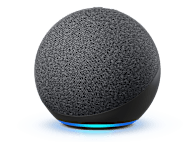
The fourth-generation Echo is better than its predecessor in every way. The new Zigbee hub is a useful smart home upgrade. And the sound quality is improved, with strong but slightly boomy bass and enough volume to fill a medium-sized room. That said, the latest Echo still can’t compete with the best-sounding smart speakers like the Sonos One or Amazon’s Echo Studio.

The Show 8 offers a lot of device for the money. The voice-enabled touchscreen can be useful in a kitchen when you want to follow a recipe while your hands are messy. The sound quality does have flaws: Our testers found the treble to be strident and heard echoes in the all-important midrange. The Show 8 also lacks the Zigbee smart home hub found on the latest-generation Echo.
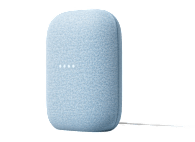
If you prefer Google Assistant, with its flexible search engine, to Amazon’s skills-heavy, shopping-oriented Alexa, the Nest Audio is a solid choice. While the company has touted the model’s improved sonic performance, our testers found it falls short of, say, the Amazon Echo, with a midrange that’s a little hazy and some sizzle on the high frequencies.
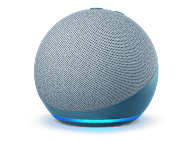
The Echo Dot is the cheapest way to enter the Amazon smart speaker ecosystem. Despite its low price and small size, it’s powered by Amazon’s cloud servers, so it offers the same smart speaker functionality as its far more expensive brethren. With stronger bass and more extended trebles, the sound quality on the latest globe-shaped model is improved over previous versions, but it’s still not the best choice for listening to music. If you’re looking for a smart speaker to get weather reports and perhaps listen to podcasts, the Dot will do just fine.


