We Tested 5 Fire Extinguishers and 2 Fire Blankets on Grease Fires. Here's How They Performed.
Plus, tips for buying a fire extinguisher, including how to understand the labels and make sure you buy the right type

When you shop through retailer links on our site, we may earn affiliate commissions. 100% of the fees we collect are used to support our nonprofit mission. Learn more.

Although fire extinguishers are a critical safety tool for every home, few Americans own one. According to a 2020 survey conducted for the insurance agency Zebra, only 43% of Americans own a fire extinguisher, though residential fires can cause thousands of deaths and billions in property damage each year, according to data collected between 2014 and 2023 by the U.S. Fire Administration.
The 5 Types of Fire Extinguishers and Their Uses
In the U.S., there are five classifications of fire extinguishers. The last two—D and K extinguishers—are typically used in factories and commercial kitchens, respectively. We’ll focus on the first three here—A, B, and C—because those are the classifications most useful for residential fires.
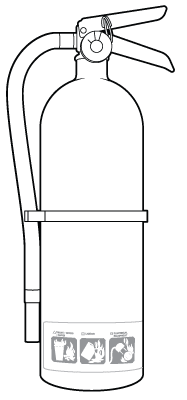




Class A fire extinguishers target fires generated from wood, paper, and textiles. Class B fire extinguishers can extinguish fires fueled by oil, grease, and other flammable liquids or gases. Class C fire extinguishers work on fires involving live electrical equipment.
ABC fire extinguishers work on all three types of fire and are the best for home use, including the kitchen, because they’re more versatile and because you want to be able to fight a fire even if you don’t know its origin. The wrong type of fire extinguisher can actually make some fires worse.
When shopping for a fire extinguisher, find one that’s been certified by UL Solutions, CSA, FM Approvals, or ETL. These national laboratories ensure that the extinguisher is safe to use and that it puts out the types of fire it says it does.
Read more about fire extinguishers, including tips on how to shop for the best one for you, in our buying guide.
How the Fire Extinguishers and Blankets Performed in Our Tests
We tested five fire extinguishers—three that use powder and two that use liquid as extinguishing agents—and two fire blankets, and deployed them against a cooking fire, the most common type of fire you’re likely to face in your home. We created a grease fire using vegetable oil in a frying pan that overheated on an outdoor propane burner typically used for heating the oil for deep-frying turkeys. We let the fire completely engulf the frying pan before wielding the extinguishers.


