Media Room
Consumer Reports Reveals 2026 Annual 10 Top Picks in New Cars, Trucks, and SUVs
CR also introduces a comprehensive, new rating to help car buyers identify the safest new vehicles
COLCHESTER, CT — Given the persistently high average price of a new car, it’s crucial for shoppers to choose a model that’s worth their hard-earned money, keeps them safe, and meets their needs and expectations for years to come. To guide car shoppers to a smart decision, Consumer Reports, the nonprofit research, testing, and advocacy organization, today revealed its 2026 Annual 10 Top Picks in cars, trucks, and SUVs.
Each Top Pick has among the highest Overall Scores in its respective category, which combines performance in Consumer Reports’ exhaustive road tests, reliability and owner satisfaction ratings from the organization’s exclusive member surveys, and performance in government and insurance industry crash tests. Additionally, each winner comes standard with automatic emergency braking that works both at low speeds with pedestrian detection and at highway speeds.
“A car is one of the most important purchases Americans make, but not one of the easiest. We have to juggle so many priorities, like safety, reliability, and fuel-efficiency – not to mention whether it’s affordable,” said Phil Radford, president and CEO of Consumer Reports. “Our Top Picks makes buying a car simpler for everyone, giving you confidence that you can get a high-quality vehicle that checks all your priorities, fits your budget, and meets your needs.”
For the first time, every model on this year’s Consumer Reports best new cars list is either a hybrid, available as one, or is an electric vehicle. While car shoppers can’t go wrong with the traditional gas-only versions, their hybrid counterparts often offer quicker acceleration, quieter cabins, and improved fuel economy, which could translate into lower long-term ownership costs.
Three new models earned spots on this year’s list: the Honda Civic, Toyota Grand Highlander, and Ford F-150, which is the first Top Pick in the full-sized pickup truck category since 2019. The remaining winners are carryovers from last year’s list.
“All 10 Top Picks have important things in common: they performed exceptionally well in our comprehensive road tests, they get high marks for safety, reliability, and owner satisfaction, and our team of experts would enthusiastically recommend them to their own friends and family,” says Alex Knizek, associate director of auto test development at Consumer Reports. “Whether you’re looking for the best small SUV, the best full-sized pickup, or something in between, there’s a great choice for you on this list.”
Consumer Reports 10 Top Picks, The Best New Cars of 2026
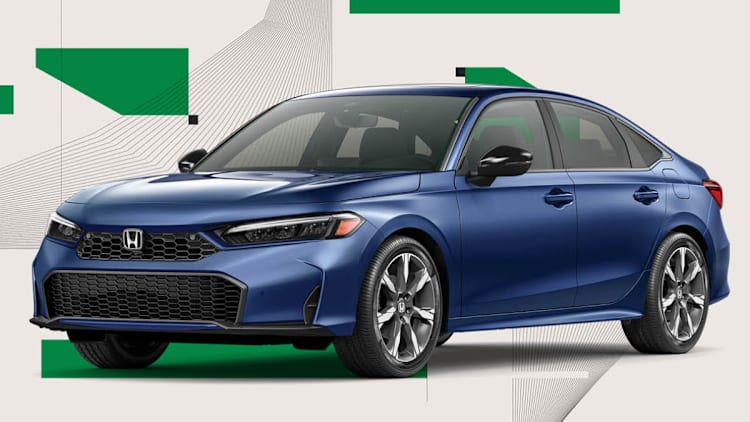
- Best Small Car: Honda Civic. The Honda Civic is an excellent sedan, and the Hybrid is the best version. It possesses all the qualities Consumer Reports’ automotive experts love about the gas-only sedan, including quick and responsive steering, a comfortable ride, and a spacious interior. The nimble-handling Si trim is one of the sportiest compact sedans. But the Hybrid version adds a marvelous 2.0-liter four-cylinder powertrain that produces 200 hp—50 hp more than the base gas-only Civic. That extra boost enables it to zip from 0 to 60 mph in 7.5 seconds, a full 2 seconds faster than the regular Civic, while also achieving 44 mpg overall in Consumer Reports’ testing, up from 33 mpg. However, the Civic Hybrid is more than the sum of its test results. It’s as impressive for its refined power delivery and rewarding driving experience as it is for being refreshingly entertaining on twisty roads.
- Best Midsized Car: Toyota Camry. The Camry, now sold exclusively as a hybrid, with a very efficient 2.5-liter, four-cylinder engine that hit a superb 48 mpg overall in Consumer Reports’ tests. The latest iteration strikes a pleasing balance between ride comfort and capable handling, offers practical interior space, and features user-friendly controls that effectively utilize physical knobs and switches. Both front and rear seats are comfortable, but the low stance can make access a challenge for some occupants. Every trim is available with all-wheel drive, broadening its already wide appeal. The Camry’s reliability score is even stronger than last year’s model, according to Consumer Reports’ latest reliability survey data, making this repeat winner an even smarter choice than before.
- Best Subcompact SUV: Subaru Crosstrek. The Crosstrek returns to the Top Picks list again this year with even more positive attributes. Each gas-only version now has a 180-hp, 2.5-liter four-cylinder engine with a continuously variable transmission and AWD, which achieved 29 mpg overall in Consumer Reports’ fuel-economy testing. (The new, slightly more powerful Hybrid has an EPA-estimated 36 mpg combined.) The Crosstrek handles well, with quick steering and minimal roll through turns, but it’s the ride quality that’s most noteworthy. It absorbs road imperfections better than many cars, so it’s comfortable even during off-pavement excursions. Its added ground clearance makes getting into and out of a cinch.
- Best Compact SUV: Subaru Forester. Last year, the gas-only Forester claimed a spot in Consumer Reports’ Top Picks due to its good all-around performance and reliability scores. High points also included easy access in and out, great visibility, a comfortable ride, good safety credentials, and a spacious interior. This year, the Forester adds to those virtues a fuel-efficient hybrid powertrain, with a 2.5-liter flat-four “boxer” engine augmented by Toyota-sourced electric hardware. Unlike most other small hybrid SUVs, which only offer limited all-wheel drive, the Forester Hybrid has a mechanical, full-time AWD system. Consumer Reports’ testing confirmed the hybrid boasts a 5 mpg advantage over the regular Forester, making the exceptional SUV even more desirable.
- Best Midsized SUV: Toyota Grand Highlander. It’s rare to find a three-row SUV that’s roomy enough to accommodate an adult in every seat and still have space for cargo. The Grand Highlander is that SUV, which makes it a near-perfect people-mover. When outfitted with 18-inch tires, it’s also unusually smooth to drive. But the Toyota’s real advantage is its optional 245-hp hybrid powertrain, which matches the standard turbo engine’s performance while returning a stunning 35 mpg overall in Consumer Reports’ tests—fuel efficiency that’s on a par with the best compact SUV hybrids.
- Best Luxury Compact SUV: Lexus NX. The Lexus NX remains a standout in small luxury SUVs. This repeat winner combines elegance, efficiency, and reliability. Although the cabin is fairly compact, it doesn’t feel crowded, and it’s outfitted with soft surfaces and controls with a solid, high-quality feel. The front seats are especially plush and supportive. The turbocharged four-cylinder in the gas-only NX has real pep, making it competitive among its upscale peers. The hybrid version—now available with front-wheel drive—is even more refined, with the electric assist helping to smooth out the power delivery. The AWD version achieved 38 mpg overall in Consumer Reports tests, far better than the 25-mpg gas-powered NX. In addition to the benefit of being able to drive solely on electricity for 37 miles, the NX PHEV boasts a combined 304 horsepower—enough to make it among the quickest in its class.
- Best Small Pickup Truck: Ford Maverick. The Maverick is a great choice for a weekday commuter or a weekend plaything. The latest version continues to stand out for its low entry price, relatively spacious cabin, and smooth ride—and for being available with a hybrid powertrain. The 2.5-liter, front-drive hybrid impressed us by achieving a superb 37 mpg overall in Consumer Reports’ tests. The more spirited, gas-only 250-hp turbocharged four-cylinder returned 23 mpg overall, but has a better predicted reliability score based on Consumer Reports’ exclusive reliability survey data. This year, AWD configurations are available for each engine, and there are special trims, including the street-performance Lobo and the off-road-ready Tremor. The Maverick remains a standout vehicle, and its appeal continues to increase over time.
- Best Luxury Midsized SUV: BMW X5. The BMW X5 remains one of the best luxury SUVs Consumer Reports has ever tested. It is a luxurious, well-rounded vehicle that feels special even before you put it into gear. The cabin is adorned with leather, wood, chrome, and soft surfaces, and the supportive seats are expertly sculpted for day-long road trips. The gas-only X5 is both powerful and efficient, with acceleration that rivals a sports sedan and fuel economy that, at 23 mpg overall, is among the best of any nonhybrid midsized SUV. The X5 plug-in hybrid version is ideal for drivers whose daily trips are near its 39-mile electric-only range. (Once the battery is depleted, that version gets 21 mpg.) Either configuration provides an entertaining driving experience that lives up to BMW’s reputation.
- Best Electric Vehicle: Tesla Model Y. The Model Y combines a practical yet sleek hatchback design, a long driving range, sports-car-level performance, and access to Tesla’s widespread Supercharger network. Refreshed for 2026, the latest Model Y has gained numerous updates. It features a more compliant ride, acoustic glass for a quieter cabin, upgraded interiors, and—in the midlevel Premium trim and above—an 8-inch touchscreen for rear passengers. Like last year’s version, the revised Y still benefits from thrilling acceleration, sharp handling, comfortable front seats, and wonderfully unobstructed forward views. Most significantly, its reliability continues to improve, making it more enticing than ever.
- Best Full-Sized Pickup Truck: Ford F-150. Improved reliability earned the F-150 a spot on Consumer Reports’ 10 best list. It also stands out for its strong powertrains, roomy cabin, and simple controls. The latest version adds useful innovations, such as blind-spot monitors and aids that simplify backing up and hooking up a trailer, as well as a flat tailgate that doubles as a workbench. The base 325-hp, 2.7-liter turbo V6 is a gem, with loads of low-end power and a smooth-shifting 10-speed automatic transmission. A traditional midtier 400-hp V8 is also still available; however, a more potent option is the 430-hp, 3.5-liter turbocharged V6 hybrid. Unlike some hybrids, this powertrain prioritizes brawn over efficiency. It boasts an impressive 570 lb.-ft. of torque, compared to the 5.0-liter V8’s 410 lb.-ft., and at a lower rpm, making it a strong choice for towing. Ford’s excellent BlueCruise active driving system is also available.
Consumer Reports Reveals New Safety Verdict
Vehicle safety is about more than just protecting passengers in a crash. The safest cars can prevent a collision from happening in the first place to protect both passengers and pedestrians. To help car shoppers more easily find the new cars that offer the broadest safety protections, Consumer Reports today announced its new Safety Verdict rating system (CR.org/carsafety), which incorporates CR’s evaluations for handling and ease of use, crash test results from the Insurance Institute for Highway Safety, and whether proven safety technologies are available as standard equipment. This comprehensive view of car safety is condensed into a single score: BASIC, BETTER, or BEST.
“People shouldn’t have to pay extra for a safer car. That’s why for a vehicle to be eligible for the highest Safety Verdict score, all trims must be standard equipped with highway-speed AEB, blind spot warning, and rear cross traffic warning, three technologies proven to prevent crashes and injuries, “ says Emily Thomas, PhD, associate director for car safety at Consumer Reports’ Auto Test Center, with nearly two decades of automotive and car-related biomechanical experience.
The Three Consumer Reports Safety Verdict Scores:
-
- BASIC
- The vehicle must meet all of the National Highway Traffic Safety Administration’s (NHTSA) federal motor vehicle safety standards
- BETTER
- All the requirements of Basic, AND
- An Average or higher score in Consumer Reports’ independent braking, emergency handling, routine handling, and rollaway prevention tests
- Automatic Emergency Braking (AEB) that can detect pedestrians, standard across all trim levels.
- A curb weight above 2,500 pounds, since a lightweight car is at a disadvantage in a crash with a heavier car.
- If crash-tested, a Good or Acceptable rating in the IIHS small overlap front crash test (which simulates hitting a pole or tree) and in the IIHS’ evaluation of front crash prevention technology.
- If tested, at least an Acceptable rating in the IIHS side crash test
- BASIC
- BEST
-
- All the requirements of Better, AND
- The vehicle cannot have the lowest usability rating in Consumer Reports’ tests, because confusing controls and finicky infotainment systems can distract drivers
- All trim levels must have standard highway-speed AEB, blind spot warning, and rear cross traffic warning
- A Good rating (the top rating) in the IIHS’ side crash test.
- At least an Acceptable rating in the IIHS’ moderate overlap crash test, which simulates a partial head-on crash with another vehicle that crosses a center yellow line.
Mazda, Genesis, Acura Make Safest New Cars
Mazda makes the safest new cars on the road, based on a brand-level analysis of Consumer Reports’ Safety Verdict. The Japanese automaker has the highest percentage of its tested fleet earning the highest Safety Verdict score, followed by Genesis, Acura, Hyundai, and Lincoln. No other brand has more than half its vehicles rated “Best.” Land Rover is dead last due to its less-than-average performance for braking and emergency handling.
How Consumer Reports Tests Cars
Consumer Reports tests about 50 new vehicles every year. Each one is purchased anonymously at dealerships. The organization does not test free loaned vehicles from manufacturers to maintain its independence and test cars with the trim and options consumers are more likely to buy, rather than the special versions carmakers want to showcase. After a 2,000-mile break-in and initial assessment period for each car, CR conducts more than 50 tests using state-of-the-art measurement tools at its 327-acre Auto Test Center in Connecticut and on surrounding roads. CR’s team of auto experts also churns through reams of reliability and satisfaction survey data collected from our members to supplement the analysis, evaluations, and ratings from the track.
For more information, visit CR.org/cars.
Media Contacts
About Consumer Reports
Founded in 1936, CR has a mission to create a fair and just marketplace for all. Widely known for our rigorous research and testing of products and services, we also survey millions of consumers each year, report extensively on marketplace issues, and advocate for consumer rights and protections around safety as well as digital rights, financial fairness, and sustainability. CR is independent and nonprofit.
© 2026 Consumer Reports. The material above is intended for legitimate news entities only; it may not be used for advertising or promotional purposes. Consumer Reports® is an expert, independent, nonprofit organization whose mission is to work side by side with consumers to create a fairer, safer, and healthier world. We accept no advertising and pay for all the products we test. We are not beholden to any commercial interest. Our income is derived from the sale of Consumer Reports® magazine, ConsumerReports.org® and our other publications and information products, services, fees, and noncommercial contributions and grants. Our Ratings and reports are intended solely for the use of our readers. Neither the Ratings nor the reports may be used in advertising or for any other commercial purpose without our prior written permission. Consumer Reports will take all steps open to it to prevent unauthorized commercial use of its content and trademarks.