4 Best Robot Vacuums of 2026, Tested and Reviewed
We not only test how well these robotic vacuums clean, but also evaluate how well they protect the data they collect

When you shop through retailer links on our site, we may earn affiliate commissions. 100% of the fees we collect are used to support our nonprofit mission. Learn more.

If you want to be more hands off in your cleaning, a robot vacuum could be a helpful addition to your home. While they aren’t as powerful as upright or canister vacuums, the best robotic vacuums from our tests are great for regular touch-ups and spot-cleaning.
As the category has evolved, many manufacturers of robot vacuums have combined the functions of vacuuming and mopping in a single machine. Here, though, we’re looking specifically at vacuum-only models. If you’re interested in a device that vacuums and mops, we have separate recommendations for the best robot vacuum-mop combos.
To find the best robot vacuums, we put them through a string of cleaning performance tests. We also judge them on reliability and owner satisfaction based on surveys of thousands of CR members who have purchased a robot vacuum since 2015. The list of reliable brands making high-quality robot vacuums isn’t long, but CR evaluates many of the major brands, whose models range from inexpensive to pricey.
Below, we’ve listed our most highly rated robot vacuums in alphabetical order. All of them excel at cleaning bare floors and picking up pet hair. Many of them are adept at avoiding obstacles, and all of them offer WiFi connectivity with a level of data security acceptable to our experts.
For more detailed information on how all the models we tested perform, you can consult our robotic vacuum ratings. Our full vacuum ratings also include our reviews of canister, upright, handheld, and corded and cordless stick models from more than 20 brands. And if you’re a pet owner, you might want to check out these robot vacuums that are especially proficient at vacuuming up pet hair.
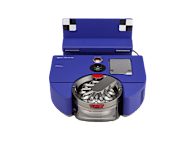
The Dyson 360 Vis Nav stands out for its unique features and powerful cleaning performance, despite some limitations and a high price (though it can be found on sale for half off). It’s on the heavy side, but compensates with extremely strong suction, effectively picking up pet hair. It’s the only robot vacuum we’ve tested to earn a top-notch score in carpet cleaning. Instead of a conventional side brush, it uses an extending side duct to tackle edges and corners. It also has a large brush roll that spans the full size of the vacuum for effective cleaning. The vacuum comes with a charging dock, but not a self-emptying station. Its dustbin is on the smaller side, according to our testers, but it’s easy to empty.
While the vacuum earns very good scores for data security, we judged it less than satisfactory on data privacy. Dyson robot vacuums earn a solid rating for predicted reliability, based on our member surveys, though they get bottom marks for owner satisfaction.
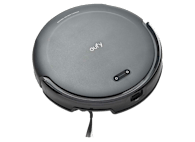
For a less expensive alternative, the Eufy C10 T2292 is a great choice if you don’t have too many carpeted areas in your home. While it’s only middling at cleaning dust and debris from carpets, it’s excellent at cleaning bare laminate floors in our lab tests. The vacuum is also impressive at cleaning up pet hair, making it ideal for pet owners.
This vacuum’s body is slimmer than those of the other vacuums we’ve tested, and its low clearance means it’s less likely to get caught under furniture. Although the vacuum’s dustbin is on the smaller side, that might not be much of a problem, because the vacuum automatically deposits debris into a self-emptying station. Its convenience score takes a bit of a hit because our testers have noticed that when hair gets caught in the vacuum’s brush roll it’s hard to remove. But on the upside, Eufy robot vacuums earn a near-top-level rating for their predicted reliability and a decent rating for owner satisfaction. Like the Dyson above, it earns very good scores for data security but scores less than satisfactorily for data privacy.
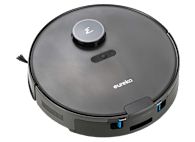
The Eureka NERE10SW is another great option if you’re looking for a less expensive bot. It’s very good at cleaning carpets (the vacuum automatically boosts suction when it detects a carpet). It’s stellar at vacuuming up pet hair and performs just as well at removing debris from bare floors. But it tends to have a harder time cleaning the edges and corners of a room.
Though it’s a strong cleaner, it’s not necessarily as efficient as some of the other models we’ve tested. We noticed that it takes longer than other robot vacuums to fully clean our test area. The vacuum does not have a self-emptying base. Its data privacy and data security scores mirror those of the Dyson and Eufy models above. We currently do not have sufficient data to assign predicted reliability or owner satisfaction scores for Eureka robot vacuums.
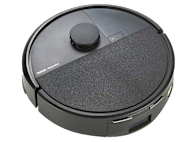
The iRobot Roomba Max 705 may be slightly more expensive than other robovacs, but it’s quiet and performs well in every cleaning test we’ve thrown at it. It’s also outstanding at vacuuming up pet hair, and it’s no slouch at cleaning carpets, either. (Like the Eureka NERE10SW above, it increases suction power when it’s on carpets.) This vacuum is also better than many other robot vacuums at navigating spaces and avoiding obstacles. The manufacturer has declared bankruptcy but maintains that its pending restructuring will not affect the functioning of its devices.
Based on our assessment of how well the vacuum and its manufacturer protect a user’s data, the Roomba Max 705 earned a high score for its data security measures. But it scored only so-so for data privacy. The vacuum comes with an automatic-emptying base and tangle-free brushes. In our member surveys, iRobot vacuums earn middling ratings for reliability and owner satisfaction.
How CR Tests Robot Vacuums
While upright and canister vacuums are better at deep cleaning hardwood and carpets, a robot vacuum—often controlled by a smartphone app—can be useful for regular touch-ups. Top performers can find their way out of tight spots and around extension cords. You’ll need to do some prep work in moving clothes, toys, and other objects from the floor before sending out the vacuum.
We evaluate robot vacuums for how well they perform in these categories:
Carpet cleaning: For surface cleaning, our technicians disperse 20 grams of cereal, 30 grams of rice, and 20 grams of yellow peas across a 4x5-foot framed test area of medium-pile carpet. Then they measure how much debris is captured during a 10-minute period. For embedded dirt, they embed 75 grams of flour across a section of test carpet, let the vacuum run in the area for 3 minutes, and then weigh the amount of flour it picks up. Human hair is embedded in the same section of the test carpet. Technicians time how long it takes for the vacuum to pick up the hair and weigh the amount that’s in the dustbin and the brush roll.
Bare-floor cleaning: Our technicians spread 75 grams of sand over laminate flooring in a 4x5-foot framed test area and measure the amount the vacuum collects over a 10-minute period.
Navigation: Our technicians attach a tracking device to the vacuum and map its movement through a multi-room lab. Then they calculate how much of the area the vacuum covered over multiple runs and note what the vacuum avoids and what it doesn’t. They also conduct several runs to see whether the vacuum can learn the layout and improve its navigation. In a separate 4x5-foot framed area, they observe whether the vacuum gets caught on power cords or carpet fringe and whether it can transition over different materials. They also measure the vacuum’s height to determine how likely it is to get stuck under furniture.
Ease of use: This score is based on a combination of factors, such as the size of the dustbin, whether the vacuum has a handle for carrying it around your home, how easy it is to clean the brush roll, whether the vacuum scatters debris, and whether you can schedule it for routine cleaning.
Data privacy and security: Together with other organizations, we created The Digital Standard, an open-source set of criteria for evaluating the security and privacy of digital products. We score robot vacuums on more than 70 criteria in this set.
 BEST TIME TO BUY:


