Sign In

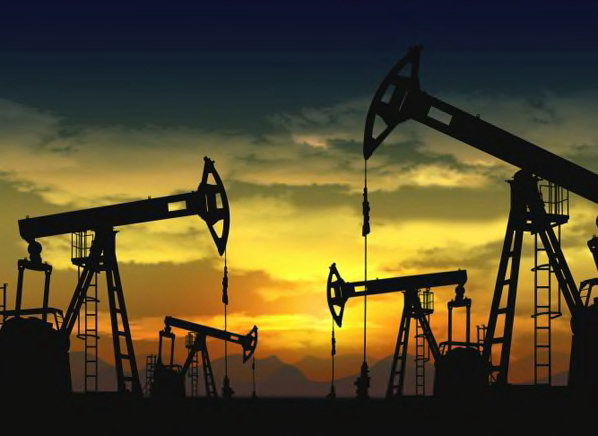
A historic agreement between the White House and China to limit greenhouse gas emissions could have a lasting effect on the types of cars we drive.
The agreement calls for the United States to emit 26 to 28 percent less CO2 than it did in 2005. Transportation accounts for about 28 percent of total greenhouse emissions in the United States. Light-duty vehicles, the type of cars and trucks that consumers drive, account for 63 percent of that total. (CO2 emissions are directly linked to the amount of fuel a car or truck burns.)
For its part, China has pledged to stop increasing its greenhouse gas emissions by 2030 and to get 20 percent of its energy from renewable sources by then.
The Obama administration had already set aggressive greenhouse gas emissions targets that would require cars by 2025 to average 54.5 mpg. (That's a regulatory target that includes credits and other incentives; the average fuel economy figures shown on new-car window stickers should average closer to 39.4 mpg.) These standards require twice the overall decrease in greenhouse gas emissions, although it's unclear how much of that may come from cars. (Read about how the higher fuel economy standards will save you money.)
That's likely to be a tall order in the face of gas prices that have dropped to the lowest levels since 2008, reaching a national average of $2.94 a gallon last week.
Americans are responding to the decreasing gasoline costs, according to the latest results in an ongoing fuel economy survey from the University of Michigan. In September and October, new-car buyers flocked to SUVs and trucks that get worse gas mileage than cars, reducing the average fuel economy of new cars by 0.5 mpg. The sales fleet average had peaked in August at 25.8 mpg.
This is still more than 5 mpg better than the average vehicle purchased in late 2007, thanks largely to new technology boosting gas mileage in a wide variety of cars and trucks.
It's worth noting that this trend emerges every time gas prices drop and likewise reverses when prices inevitably climb.
Car buyers: Don't be lulled into minimizing fuel economy when buying your next vehicle. We think choosing a car with better fuel economy is a good financial hedge against future increases in fuel costs. And as we've said before, consumers have plenty of good choices among cars and even SUVs that get great fuel economy today.
—Eric Evarts

 Build & Buy Car Buying Service
Save thousands off MSRP with upfront dealer pricing information and a transparent car buying experience.
 Get Ratings on the go and compare
while you shop

