Sign In

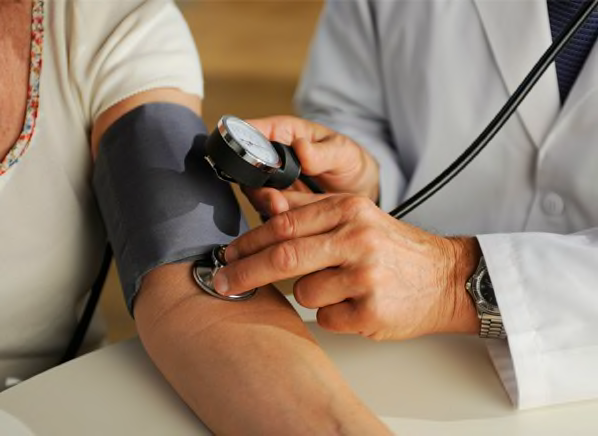
There's a good chance you have high blood pressure and don't even know it. One in five Americans with hypertension are unaware of the problem, according to estimates from the Centers for Disease Control and Prevention. That's because high blood pressure usually harms the body without causing obvious symptoms—until it triggers a heart attack or stroke, that is.
That's why you need to get your blood pressure regularly measured by a health care provider. That means at least every two years, and more often if you're over age 50 or have other risk factors. Some people should consider measuring at home, too. That includes:
See our Ratings of blood pressure monitors and read our Best Buy Drugs report on how to treat high blood pressure.
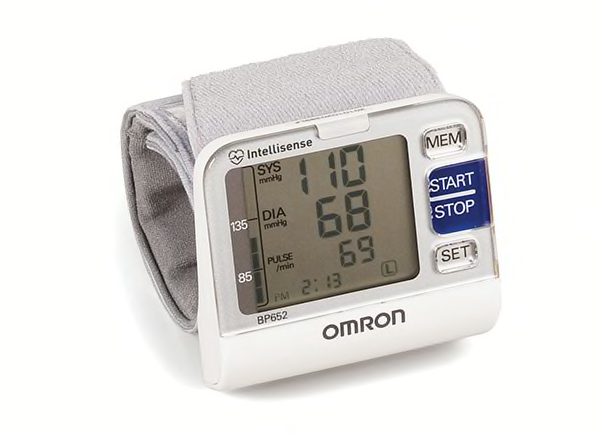
Levels are usually lowest in the morning, and then rise steadily through the day.
All can make blood pressure spike temporarily (though it's unclear if they have a lasting effect on blood pressure.)
A full bladder can raise systolic pressure by 10 to 15 mmHg. One of the main blood pressure medications, diuretics, lower blood pressure in part by causing your kidneys to remove more sodium and water from the body (in other words, go to the bathroom a lot), which helps to relax the blood vessel walls. (See our Best Buy Drugs advice on drugs for high blood pressure.)
Feet should be flat on the floor, legs uncrossed, and cuff at heart level; those can each affect systolic pressure by 2 to 10 mmHg.
Putting it over clothes can raise systolic pressure by up to 40 mmHg.
Talking can raise systolic pressure by 10 to 15 mmHg.
Use our calculator to determine your risk of having a heart attack or stroke in the next 10 years. Use our tool to see which heart disease tests make sense for you.
This article also appeared in the May 2015 issue of Consumer Reports on Health.


 Build & Buy Car Buying Service
Save thousands off MSRP with upfront dealer pricing information and a transparent car buying experience.
 Get Ratings on the go and compare
while you shop


