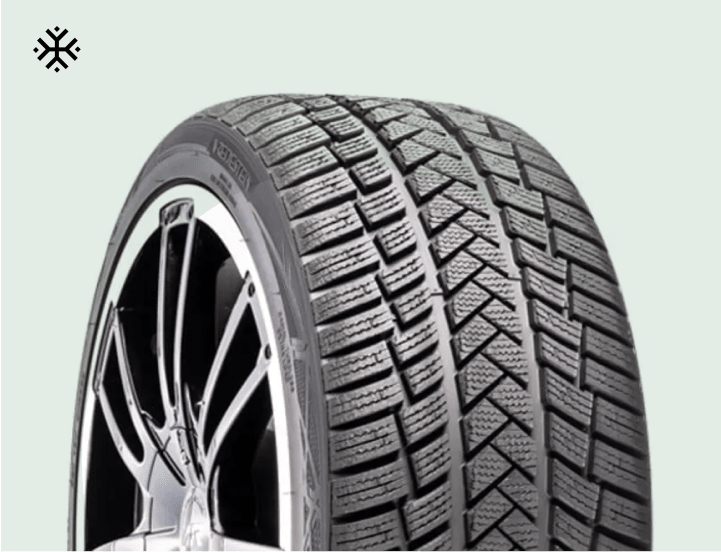
Tires

What's behind our tire Ratings?

Experts at our National Testing and Research Center tested 182 models in tires to see which ones perform best.
We look for:
  • Overall score
    Overall score emphasizes safety-related tests, including braking, handling, and resistance to hydroplaning. Scores and ratings are held to a comparative standard within a tire category.
  • Dry braking
    Dry braking is from 60 to 0 mph.
  • Wet braking
    Wet braking is from 40 to 0 mph or 60 to 0 mph. Refer to the wet braking iText at the top of the Ratings chart for the specific speed used.
  • Handling
    Handling includes how well the tires gripped in an avoidance maneuver involving a swerve into the left lane and back into the right lane; dry and wet cornering grip; and subjective steering feel.
  • Hydroplaning
    Hydroplaning reflects how quickly we could drive through standing water before the tires begin to lose contact with the pavement.
  • Snow traction
    Snow traction reflects the distance our test car needed to accelerate from 5 to 20 mph on moderately packed snow.
  • Ice braking
    We tested ice braking on a skating rink from 10 to 0 mph.
  • Ride comfort
    Ride comfort reflects our on-road judgments.
  • Noise
    Noise reflects our on-road judgments.
  • Rolling resistance
    Rolling resistance, measured on a dynamometer, is a factor in fuel economy.
  • Tread life
    Tread life is an indicator of wear potential from CR's vehicle road test on the Federal Government's treadwear course.

Connect

Forums

Discuss cars and safety with subscribers and fans.

Tire user reviews

Share your reviews and provide valuable feedback to other members and our testers.

Follow Consumer Reports

Recommended tires

Recommended tires are standout choices with high scores. They include CR Best Buys, which offer exceptional value. When narrowing your choices, weigh features, price, and attributes that matter to you.
  • Buying Guide
  • Price & Shop
Car owners need to replace their tires a few times over the life of a typical vehicle. Despite advances in longer-lasting tires, actual tread life will vary by car type, tire type (such as all-season or high-performance), driving aggressiveness, and even road and weather conditions. If you're looking for information about tires, Consumer Reports is your best resource. Consumer Reports’ tire reviews will give you honest buying advice that you can trust. Use our tire buying guide to discover which features are most important to consider. We also provide unbiased Ratings and tire reviews to help you choose the best tires for your needs.

Recently reviewed tires

${model.videoCaption}
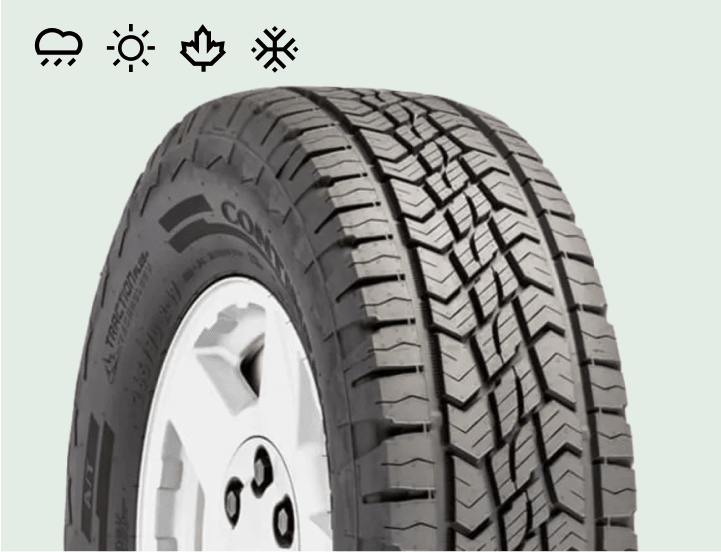
Geolandar H/T-S G051
An all season tire designed for light duty pickups and SUVs. It has a 60,000 mile treadwear warranty.

Tire buying guide

Tire buying guide

Despite advances in longer-lasting tires, actual tread life will vary by car type, tire type (such as all season or high performance), driving aggressiveness, and even road and weather conditions. Car owners still need to replace their tires a few times or more throughout the life of a typical vehicle. As the adage goes, nothing lasts forever.

Proper maintenance and responsible driving can maximize the mileage in a set of tires. Monthly tread inspections can inform when the tires warrant replacement, well in advance of the federally mandated tread-wear indicators. In most states, tires are legally worn out when their tread depth reaches 1/16 inch (or 2/32 inch as found on standardized tread-depth gauges). The easiest way to measure this, if you don't have a gauge, is to hold a penny upside down in the tread. If the top of Lincoln's head is visible, you need new tires. But using a penny standard doesn't work for all weather conditions. We have found in our tests that a tire with just 1/8-inch tread was notably worse in hydroplaning resistance and snow traction. By the time only 1/16 inch remains, wet-pavement cornering and braking drop off too. Based on our experience, when your tires have less than 1/8 inch of tread left, it's a good time to start shopping for replacement tires.

As a better indicator of tread wear, place a quarter upside down in a tire groove. The distance from the coin's rim to George Washington's hairline is about 1/8 inch. If you see all of his head in any one groove where a tread-wear indicator appears, consider shopping for new tires.

Once a need for new tires is determined, it is necessary to identify the best tires for your vehicle and driving demands.

Car News

Mid-level 2013 Toyota RAV4 joins our test program

One of the more popular small SUVs, the RAV4 has been a top performer in Consumer Reports tests for years. To see how the new model compares against fresh competitors, we just purchased a typical...

First drive video: 2014 Kia Forte brings much to the small-car competition

The Kia Forte was introduced in 2010 and gets a full redesign for 2014. That's one of the shortest product cycles we've seen, giving you an idea of how competitive the small car market is. We dro...

2013 Car Brand Perception Survey: Consumers name their top 20 brands

When it comes to how people perceive car brands, Toyota, Ford, Honda, and Chevrolet stand above all others, based on the 2013 Car Brand Perception Survey, conducted by the Consumer Reports Nation...

First drive video: Updated 2013 Lexus LS 460 luxury sedan

Since its 1990 introduction, the Lexus LS has steadfastly followed one mission statement: serve as a loyal, plush, isolating, and pampering cruiser for its affluent clientele. Updates for 2013 mo...

Warning: The Ford Focus ST can be addicting

We'll remember 2012 as being a banner year for driving enthusiasts. The Scion FR-S and Subaru BRZ twins took to the road, closely followed by the Ford Focus ST, a model whose track prowess we rec...
left arrow right arrow
See also:
74 Tested down arrow
19 Tested down arrow
GPS
87 Tested down arrow
See buying guide down arrow