Sign In

Proton pump inhibitors (PPIs) are a class of very effective and generally safe medicines used to treat heartburn, gastroesophageal reflux disease (GERD), and gastric ulcers.But not everyone who experiences heartburn needs one.
Several of the PPIs have been widely advertised to consumers and heavily promoted to physicians, and this has led to an overuse of the drugs in the treatment of garden-variety heartburn. PPIs are among the highest-selling classes of drugs in the U.S., with $9.5 billion in sales last year, and one of them, Nexium, was the top-selling of all drugs, earning nearly $6 billion in 2012, according to IMS Health, which tracks drug sales and marketing.
If you suffer from occasional heartburn and have not been diagnosed with GERD, nonprescription antacids such as Maalox, Mylanta, Rolaids, and Tums, or acid-reducing drugs known as H2 blockers, such as cimetidine (Tagamet), famotidine (Pepcid), nizatidine (Axid), and ranitidine (Zantac) will very likely provide relief. All of those products are available without a prescription as low-cost generics.
Talk with your doctor about the role that dietary and lifestyle changes can play in alleviating heartburn, too, such as eating smaller meals and not lying down for at least three hours after eating, losing weight if you need to, and avoiding alcohol. If, however, you experience heartburn twice a week or more for weeks or months on end, have frequent regurgitation of food into your throat or mouth (with or without heartburn), or if your heartburn is not relieved by the drugs mentioned above, you may have GERD and may need a PPI. GERD is a condition that makes you prone to acid reflux and, over time, can cause damage to your esophagus.
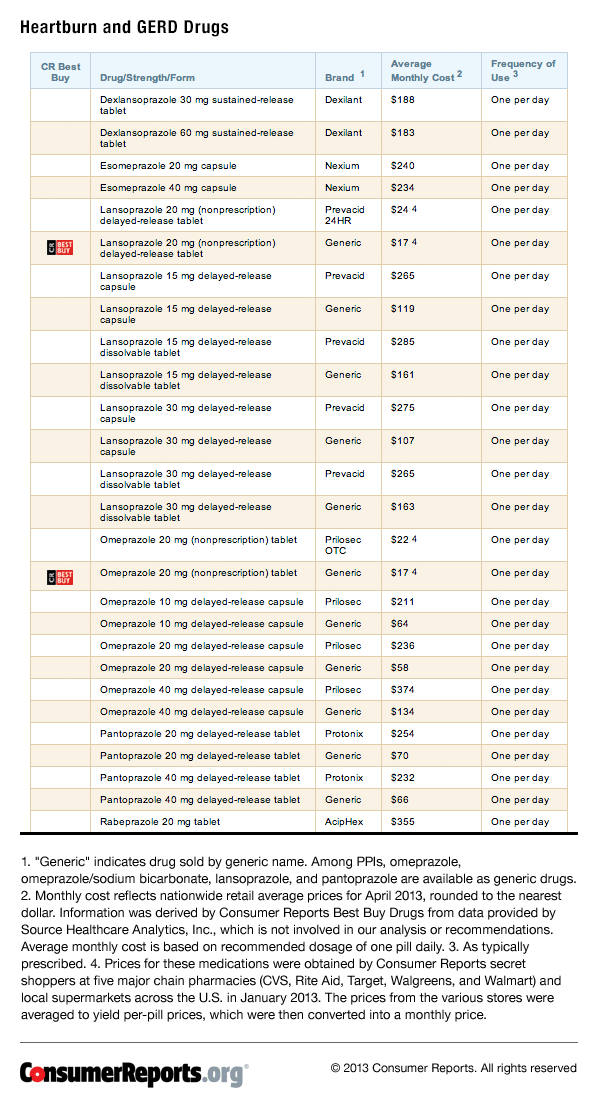
The seven available PPI medicines are roughly equal in effectiveness and safety but differ in cost. Three—omeprazole (Prilosec, Prilosec OTC), lansoprazole (Prevacid, Prevacid 24HR), and omeprazole/sodium bicarbonate (Zegerid, Zegerid OTC)—are available as both prescription and nonprescription drugs. Four—lansoprazole, omeprazole, omeprazole/sodium bicarbonate, and pantoprazole (Protonix)—are available as both brand-name drugs and generics that contain the same active ingredient but cost significantly less.
Taking the evidence for effectiveness, safety, cost, and other factors into account, if you need a PPI, we have chosen the following as Consumer Reports Best Buy Drugs:
These materials are made possible by a grant from the state Attorney General Consumer and Prescriber Education Grant Program, which is funded by the multi-state settlement of consumer-fraud claims regarding the marketing of the prescription drug Neurontin (gabapentin).

 WASHING MACHINE REVIEWS
 GENERATOR REVIEWS
 Build & Buy Car Buying Service
Save thousands off MSRP with upfront dealer pricing information and a transparent car buying experience.
 Get Ratings on the go and compare
while you shop