These Baby Wipes Have No Detected PFAS, Our Tests Show
CR tested baby wipes from 18 companies, including Coterie, Huggies, Kirkland Signature, Millie Moon, and Pampers, for PFAS. Our results are good news for families.


Unless you’re a parent, you probably can’t fathom the amount of baby wipes a child can go through every day. Researchers in one study estimated the number to be as high as around 10,000 wipes in the first three years of life alone. It’s only natural to wonder what’s actually in baby wipes, especially considering they’re used on babies’ sensitive skin.
Concerns about harmful chemicals in baby wipes have been on the rise, especially per- and polyfluoroalkyl substances (PFAS), human-made compounds known as “forever chemicals” because of their persistence in the environment and in human bodies. PFAS chemicals are found in many types of products and packaging, and can also contaminate products during the manufacturing process. All of that has made PFAS difficult for consumers to avoid. Recent testing by Consumer Reports has found PFAS in bandages, food packaging, and cookware in varying amounts, and PFAS in personal care products is also a concern.
How We Tested Baby Wipes for PFAS
Consumer Reports purchased baby wipes from 18 brands, including store brands, direct-to-consumer companies, and widely available baby wipe brands. We tested wipes labeled as “sensitive” and “fragrance free,” as well as those labeled as “organic,” “conscious,” and “gentle”.
We then partnered with an external laboratory to analyze each sample for the presence of 30 individual PFAS compounds. Though more than 21,000 PFAS compounds are known to exist, according to the Environmental Protection Agency, the 30 we tested for are the ones most commonly detected—and the ones most associated with serious health risks.
Using a standardized method that the EPA employs to test drinking water for PFAS, we tested baby wipes for those 30 PFAS compounds. We found no measurable levels of PFAS in any of the baby wipes in our tests.
Our testing method can reliably detect PFAS as low as 2.3 nanograms per sample. (A nanogram is one-billionth of a gram.)
This is positive news for parents and caregivers, Kapoor says. “The absence of detectable PFAS across such a diverse set of products—ranging from store-brand and mass-market options to premium and eco-positioned lines—suggests that PFAS contamination is not a widespread or systemic issue in the baby wipes currently available to U.S. consumers,” she says.
Baby Wipes We Tested
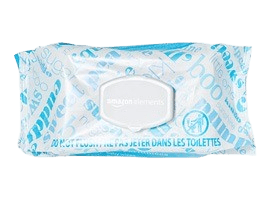
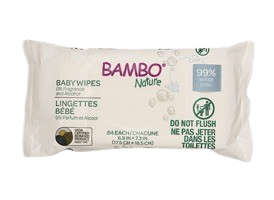
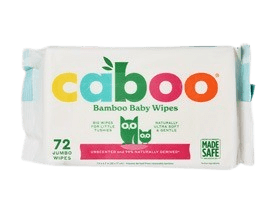
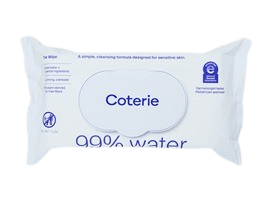
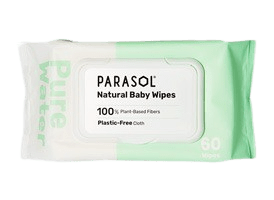
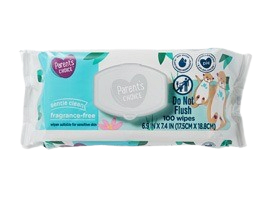
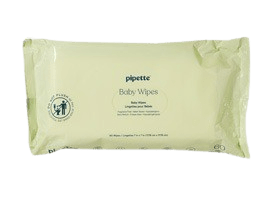
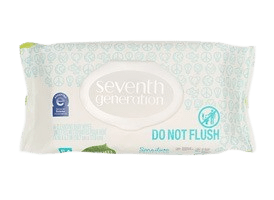
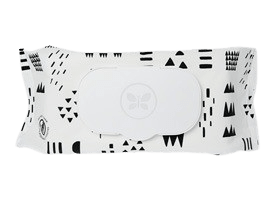
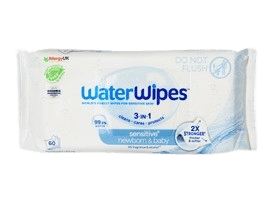
Consumer Reports tested 19 baby wipe products for 30 PFAS compounds—a subset of PFAS that are commonly used when testing consumer products, and which are known to have negative health effects. An entry of “ND,” for “Not Detected,” means we didn’t find PFAS in that product at or above our level of detection.
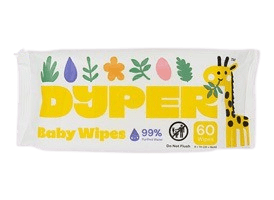
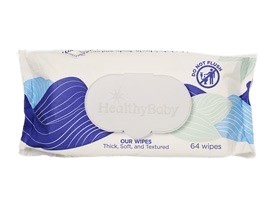
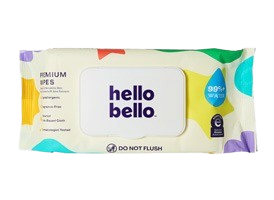
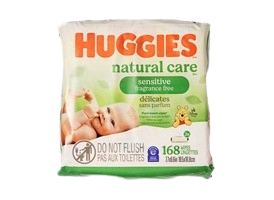
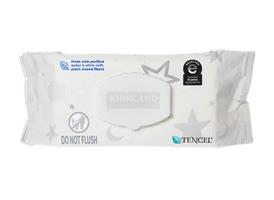
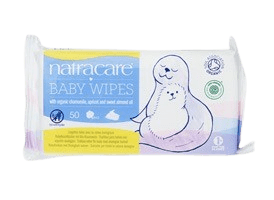
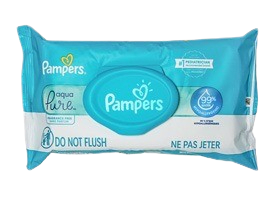
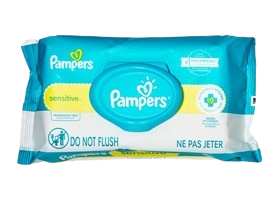
What Our Test Results Mean for Parents and Caregivers
Limiting Children’s PFAS Exposure Is Important
While we found no detectable PFAS above our 2.3 ng limit in the wipes in this test, trace amounts or less researched compounds could still be present. The upside is that CR’s scientists are not concerned about levels below this threshold, even with daily use. “Still, limiting exposure to sources of PFAS where you can is crucial, as we know that even small amounts can add up over time,” Kapoor says.
Babies are especially vulnerable to PFAS compared with adults, researchers have found, because of their higher surface area to body weight ratio. Their skin, which is estimated to be 20 to 30 percent thinner than adult skin, absorbs chemicals more easily. Babies are also likely to have more hand-to-mouth contact than adults—another route PFAS can enter their bodies.
Because PFAS are so widespread, CR experts recommend reducing your child’s exposure where possible to help lower their potential future health risks. A 2022 study found varying levels of PFAS in children’s clothing, upholstered furniture, rugs, and crib mattress protectors, even those labeled as “green” or “nontoxic,” and several recent studies have found PFAS in diapers. Though some states have banned the intentional use of PFAS in clothing and children’s care products, there’s no federal ban on PFAS in these categories, which means they could still be added. Your best bet is to avoid items marked as “waterproof” or “stain-resistant” or those that use chemical flame retardants.
Parents and Caregivers Deserve Transparency
Families deserve to know what’s in the personal care products they use every day with their babies and young children. “Parents and caregivers use baby wipes multiple times a day, every day. They should not have to worry about PFAS or other potentially harmful chemicals being constantly wiped onto a baby’s sensitive skin,” says Oriene Shin, CR’s manager of safety advocacy. “While CR’s test results are reassuring, manufacturers can help build trust with consumers by regularly testing their own products for these chemicals and publicly sharing their results.”
PFAS may not be the only chemical of concern in baby wipes. Volatile organic compounds, which can be components of fragrances added to a wipe or processing byproducts, have been linked to respiratory and reproductive system issues and liver and kidney conditions. A 2023 study found traces of VOCs in baby wipes and suggested that repeated exposure to these toxic compounds may affect both children and the adults who care for them. But it’s hard to tell if the wipes you’re using contain them.
Though a 2025 state law in New York requires diaper manufacturers to list the intentionally added ingredients in their diapers on the packages, wipes are not covered under the law. Several states, including California, Colorado, Illinois, and Minnesota, among others, have passed laws banning intentionally added PFAS in children’s and other consumer products. But PFAS (and VOCs) in products may not be an “intentionally added” ingredient. While PFAS have long been added to products like cookware and clothing to make them nonstick, waterproof, or resistant to grease or stains, their widespread use and general persistence (remember, they never fully break down) means that these chemicals are now unfortunately common in our environment, air, food, and drinking water, according to the Environmental Protection Agency. Today, it’s more likely that PFAS, when not purposely added, may find their way into products as process contaminants.
How to Choose a Safer Baby Wipe
Go fragrance-free: More baby wipes are now available in fragrance-free formulations, which is a positive change, as “the term ‘fragrance’ on the back of a product label is an umbrella term for what could be over 100 fragrance ingredients,” writes Sydney Cook, a toxics and environmental health expert. Some of those fragrance ingredients, such as phthalates, are linked to cancer, endocrine disruption, allergies, environmental problems, and more. Cook recommends avoiding any product that doesn’t list all fragrance ingredients on the label, and seeking out fragrance-free options where you can.
Look for biodegradable materials: Many wipes are made from plastic sources, such as polypropylene and PET (polyethylene terephthalate), which not only contribute to landfill waste but can continue to leach chemicals and pollution as they sit, according to a 2023 interview with Amy Ziff, executive director of Made Safe, a nonprofit working to ensure consumer products are made with safer ingredients. Wipes made with plant-based, biodegradable materials, such as organic cotton, are better choices because cotton can break down completely, and organic cotton is grown with more sustainable practices. Another good choice is a wipe made from plant-derived fibers, like viscose, lyocell, modal, or Tencel, which is a type of trademarked lyocell or modal.
Avoid flushing wipes: Even those whose packages say they’re flushable and are made from biodegradable materials could get stuck in the pipes in your home, your community’s sewer lines, or your septic tank.
Consider an alternative: In some cases, a paper towel or reusable washcloth could be a better choice than a nonbiodegradable, plastic-based wipe. We’ve also tried the square 100 percent biodegradable organic cotton pads paired with liniment from French-style diapering brand Propre, with very good results.


