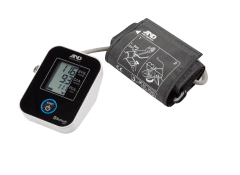
Here's a good reason to buy a blood pressure monitor: Using one of these devices at home is one of the best ways to find out whether you have high blood pressure—and it's even more accurate than getting your blood pressure measured at your doctor's office. That's according to the U.S. Preventive Services Task Force, an independent panel of experts that advises the government on public health issues.
Your blood pressure numbers are worth knowing: High blood pressure triggers more heart attacks and strokes in the U.S. than any other cause. Yet one in five Americans with the problem don't know they have it. That's because high blood pressure typically causes no obvious symptoms.
The task force recommends that everyone 18 and over get screened for high blood pressure. You could go to your doctor's office to get your blood pressure numbers, but up to 30 percent of people get misdiagnosed that way and might actually have lower numbers once they walk out the door. That's partly because of "white coat" hypertension, where your blood pressure is normal at home but spikes at the doctor's office, perhaps because of anxiety. Blood pressure numbers can be tricky things in general: They can change throughout the day depending on your activity or stress level, what you ate or drank, whether your bladder is full, and more.
The Value of Home Monitoring
If your doctor diagnoses high blood pressure during an office visit, don't rush to treatment but instead ask whether you can confirm the elevated levels by monitoring your levels at home.
The gold standard for that is called ambulatory monitoring, involving a small, portable device that your doctor prescribes. It records blood pressure at frequent intervals over 24 hours. But that kind of monitoring isn't widely available, and insurance might not cover the cost. A good alternative, says the task force, is to use a home blood pressure monitor.
"Repeated measurements over time are generally more reliable in determining if someone really has high blood pressure," says Marvin M. Lipman, M.D., Consumer Reports' chief medical adviser. Record your levels once in the morning and once in the evening for a week. (Levels tend to rise steadily through the day, usually peaking in the middle of the afternoon.) Our recent tests found several home blood pressure monitors that got excellent scores for accuracy, including six arm models and one wrist model, priced from $40 to $80.
The ideal blood pressure levels are a systolic blood pressure of 120 millimeters of mercury (mmHg) or less and a diastolic blood pressure of 80 mmHg or less. Still, most people age 60 or older don't need medication for high blood pressure until their levels hit 150/90; for most people with diabetes or chronic kidney disease those numbers are 140/90.
If your blood pressure numbers are worrisome, take them back to your doctor so that you can discuss lifestyle changes and the possible use of medication.
Don't Rely on In-Store Monitors
More research is needed on the accuracy of blood pressure numbers taken by a visiting nurse, the task force found, and for self-use kiosks in pharmacies and grocery stores. Moreover, unlike home-use blood pressure monitors, store kiosks are not regulated by the Food and Drug Administration, and their one-size-fits-all cuffs might not be accurate for every user.
Take these steps to make your readings at home accurate, and check our blood pressure monitor buying guide and Ratings.