Your membership has expired

The payment for your account couldn't be processed or you've canceled your account with us.

Re-activate

    Audi A6 First Drive

    Summary

    Introduction

    2026 Audi A6 Is a Powerful, Quiet Sedan for Gobbling Up Highway Miles

    But with frustrating controls and poor fuel economy, it doesn’t feel special compared with its few competitors

    Overview

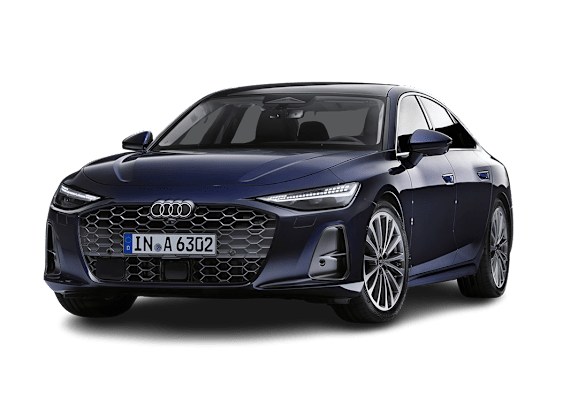
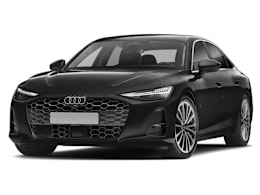
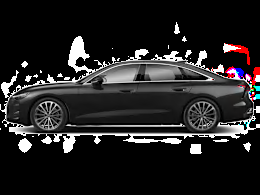
    The redesigned 2026 Audi A6 competes against what automakers call “executive” sedans: cars for people who may regularly carry four adults, are comfortable spending $70,000 or so, and enjoy driving. That final item may be most important. As a sedan, the A6 is meant to offer handling agility that buyers won’t get with a bulky SUV like Audi’s Q8.

    But the decline of sedan purchases shows that these buyers are getting harder for automakers to find. Audi sold just 6,897 A6s in the U.S. in 2025, while it sold 10,881 Q8s and 18,381 of the three-row Q7. In addition, the automaker sold 17,207 Q6 E-Trons and 3,931 A6 Sportback E-Trons, indicating that buyers were willing to choose an electric SUV or hatchback over a traditional sedan.

    In redesigning the A6 sedan (instead of killing it off, as Audi did with the A4), Audi also cut down on engine choices, at least for the first year or so. The only powertrain is a 362-hp, 3.0-liter turbocharged V6 engine paired with a seven-speed dual-clutch automatic transmission (DCT), driving all four wheels. Unlike its BMW 5 Series and Mercedes-Benz E-Class competitors, as well as the previous-generation A6, U.S versions of the 2026 A6 aren’t available with a small, turbocharged four-cylinder engine. Despite the extra cylinders, it still undercuts the base price of the four-cylinder BMW and Mercedes by a few thousand dollars.

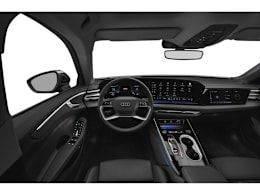
    The redesigned A6 and the recently redesigned Q5 SUV and A5 sedan are all based on a shared vehicle design platform for internal-combustion vehicles that Audi calls Premium Platform Combustion. (Premium Platform Electric is used for the A6 E-Tron and Q6 E-Tron.) All of them share the Digital Stage infotainment system, which consists of an 11.9-inch display in front of the driver and a 14.5-inch center-mounted touchscreen for infotainment, climate, navigation, and other controls. They’re combined into what appears to be a single display screen, with the right side curved toward the driver. Prestige trims also include a 10.9-inch screen for the front-seat passenger.

    The 2026 A6 Allroad raised wagon and RS 6 Avant high-performance wagon remain on the previous-generation platform. There’s no indication that an S6 sedan with a gas engine will be available, although there’s an S6 E-Tron all-electric model.

    The redesigned A6 sedan is available in three trim levels. All have a $1,295 destination charge.

    • Premium: Starting at $64,100, it features 19-inch wheels, heated/ventilated front seats, and adaptive cruise control.
    • Premium Plus: Starting at $67,500, this trim adds lane centering assistance, a surround view camera system, heated rear seats, a heated steering wheel, and a Bang & Olufsen sound system, among other options.
    • Prestige: Starting at $71,400, it adds an adaptive air suspension, OLED taillights, speakers in the front headrests, an infotainment display for the front-seat passenger, and power door closing.

    For our test, Consumer Reports bought a Premium Plus trim in order to evaluate the Adaptive Cruise Assist system, which allows the A6 to accelerate, decelerate, and stay within the travel lane at both city and highway speeds, including in traffic jams. It’s not available on the Premium trim. The total cost was $72,670.

    The final assembly point is Neckarsulm, Germany.

    Impressions

    What We Like

    Engine

    All discussions about the 2026 Audi A6’s desirability start and end with the turbocharged V6 engine; it’s that good. There’s plenty of power (362 hp), and the abundant low-end torque (406 lb.-ft. from just 1,700 rpm) helps significantly to compensate for the headaches of the DCT gearbox. It metaphorically lifts the car up and away from the places where it trails the competition.

    “Great power from the engine throughout the whole rev range,” said one Consumer Reports tester. “Nice to see a V6, really,” another wrote in our logbook. “Good power available from the V6. Because of the extra low-rpm torque, the transmission stays in higher gears without downshifting a lot compared with the [Audi] A5.”

    Power delivery from the V6 is smooth and predictable, without any significant turbo-lag surges. Using the transmission’s Sport mode keeps the engine revs up and in the meat of the torque curve, rather than having it lug along in a higher gear. This hurts fuel economy but makes the A6 enjoyable and rewarding to drive. There’s plenty of low-speed power for pulling out into moving traffic, while highway passing or on-ramp acceleration is instantaneous. Even in Normal mode, the driver never has to worry if there’s enough power in either situation.

    Handling

    “Solid handling all-around.” While those are the words of just one tester, they sum up the overall sentiment about the A6. Whereas the 5 Series and E-Class feel like stately touring sedans, the Audi is sportier and a little more fun to drive.

    The car’s steering delivers some feedback about the road surface and tire grip, which we appreciate. The steering quickness varies depending on how far the driver turns. With more input (turning the wheel a lot), the steering speeds up. Some drivers found this variable speed a little odd, but it didn’t change their overall impression of the sedan’s handling capability.

    Seat comfort

    Nearly every tester praised the A6’s front sport seats, which isn’t always the case, given our staff’s diverse body shapes and sizes. They’re firm, like most Audi seats, but the back and bottom cushions, as well as the side bolsters, are all well-shaped. As a result, there’s good back and under-leg support.

    The lumbar support is quick to adjust, and it’s easy to fine-tune a comfortable seating position because slight touches to the seat controls don’t result in big moves. One tester wished that the wing bolsters on the seatback were adjustable, while another wished for a bit more contouring and adjustability. But overall, most testers didn’t find the seats fatiguing during multihour drives.

    The rear seat, while not overly spacious, is comfortable and supportive. The bottom cushion is a bit low, resulting in insufficient under-leg support. But the rear seat feels roomier and is better contoured than the BMW 5 Series, and testers said they had sufficient headroom and legroom.

    Visibility

    It’s refreshing to drive the A6 because, at least in terms of visibility, form and function work together. The thin windshield pillars, large glass all-around, and reasonably sized rear roof pillars combine to create an airy cabin that’s easy to see out of. “So much better than in the A6 E-Tron with its slit-like rear glass,” one tester said. Most testers commented on the useful triangular quarter windows in the rear, between the side windows and the rear roof pillar, which help when making over-the-shoulder glances before a lane change or reversing out of a parking spot.

    A different tester said they’re used to driving tall vehicles, “but it’s nice to get into a low-to-the-ground car and be able to see out of it.”

    The only headache comes at night, when the interior accent lighting reflects in the side-view mirrors.

    Quietness

    Overall, our testers were impressed by how well Audi has kept noise out of the cabin. Sure, it’s expected that a midsized luxury car will be quiet, but the A6 is impressively so, kicking the level of refinement up a notch. Wind noise is very well managed, with the only noticeable sounds being muted levels of road and tire noise.

    In fact, drivers universally noted that they wish the engine were louder, particularly under hard acceleration. “I didn’t get any more enjoyment out of it than the A5’s four-cylinder exhaust note, which is really too bad,” a tester wrote in the logbook. “I think an active exhaust would wake it up nicely,” another said. There’s no need for fakery, or EV-like augmented “engine” sounds that come through the stereo, but giving a little flavor to the engine and exhaust sounds, particularly in Sport mode, would liven up the experience.

    Connectivity and charging

    For all the ills that come with Audi’s Digital Stage, pairing and charging a mobile phone have been stress-free for us. Whether it’s an Android or Apple device, the wireless pairing process is smooth and seamless, and the phones reconnect quickly when the driver comes back to the parked car. No drama, no fuss.

    Furthermore, the Qi charge pad is the epitome of “it just works.” There’s no need to fiddle with the phone to make sure it lies JUST SO on the grippy surface. Plop it down—even with a drop-proof case—and the phone charges, no adjustments required.

    What We Don't Like

    Copy and paste

    While design consistency is important for an automaker, Audi seems to have taken it a bit far with its new and redesigned models. The A6 is the fifth Audi we’ve tested in a little over a year, and from the controls on the steering wheel and door to the air vents and massive Digital Stage displays, they all look alike. Our $57,000 A5 Premium Plus looks a lot like the $60,000 Q5 Premium Plus—and they both are nearly identical to our $72,000 A6 and $75,000 Q6 E-Tron. And don’t get us started on the flimsy, bland, black plastic key fob!

    Sure, there are small differences here and there, but the A6 lacks the distinction and gravitas expected in a more premium product. In comparison, the BMW 5 Series and Mercedes-Benz E-Class feel like significant steps up compared with the 3 Series and C-Class, respectively.

    Drivetrain hesitation

    Just like with the A5 and Q5 we tested, we’re surprised that Audi went with a seven-speed DCT in the A6. Most negative tester feedback centered on low-speed performance and the transmission’s slow downshifts.

    “The DCT doesn’t ruin the car,” one tester said, “but it certainly doesn’t perform as well as some competitors, such as BMW’s eight-speed automatic.” Another said the transmission made the car feel unrefined.

    In certain situations, such as when stepping on the throttle after a rolling stop, the transmission can be slow to engage the correct gear. This can result in a noticeable delay in acceleration. Other situations can cause the clutches to repeatedly engage and disengage as the gearbox tries to select the appropriate gear while also determining the NEXT gear. This can result in some clunking and shuddering, and some lurching forward as the gear finally engages and power is sent to the wheels.

    Like most DCT-equipped vehicles, the A6 doesn’t creep smoothly at low or parking-lot speeds because the clutches grab so abruptly. This causes a rough response when lifting off the brake, so the driver has to be hyper-aware and feather the accelerator pedal to move slowly.

    Some testers found that in normal mode, the gearbox was slow to downshift during hard acceleration, as if the transmission couldn’t determine how many gears to shift down.

    But the A6 has an advantage over the A5 and Q5: torque. The A6’s turbo V6 makes 406 lb.-ft. of torque, while the small four-cylinder turbos in the other cars make just 295 lb.-ft. Engine power can overcome the DCT’s performance in some situations, so the headaches aren’t as noticeable as in the A5 and Q5. It’s an assumption on our part, but this is likely why the 2.0 turbo isn’t offered in the redesigned A6.

    Drivers who select Sport mode will find that the transmission stays in a gear longer for stronger acceleration, and upshifts are better timed. I would routinely pull back on the gear selector and engage Sport at intersections when I knew I’d have to jump out into traffic moving at 40 or 50 mph. Once up to speed, I’d pop it back into D.

    Just as we noted in our A5 and Q5 First Drives, modern transmissions “learn” from repeated use. Some testers who drove the car after it had about 1,000 miles on it said they didn’t notice DCT issues as much as they had with the other Audis. So we’ll see whether it has improved when we fully test the A6.

    Fuel economy

    “23 mpg combined is not great,” said one CR tester. “I was able to squeak out 28-29 mpg on the highway, but drive normally and tanking the fuel economy is effortless!”

    That 23 mpg combined figure is the EPA’s rating for the A6. We got 26 mpg overall in our test of the previous-generation A6, which had a 2.0-liter four-cylinder turbo and seven-speed automatic transmission. That figure matched the EPA’s estimate. So a 3-mpg drop isn’t great, especially since the car requires/recommends premium gas.

    The A6’s turbo V6 doesn’t even come close to the BMW 530i, which got 30 mpg overall in our tests, or the Mercedes-Benz E350, which got 27 mpg overall. (For both, our results matched the EPA combined ratings.)

    And before Audi fans go, “but, but, but what about the BMW and Mercedes six-cylinder engines?” Those versions get 28 mpg and 25 mpg combined, respectively, in the EPA tests.

    Persistent software issues

    The advanced driver assistance systems (ADAS) and infotainment software used in the A6 have already caused problems in most of the Audis we tested in 2025 and 2026.

    Our A6 keeps giving warnings that the automatic emergency braking, the driver assistance system, and/or the adaptive cruise control aren’t working. Yet all of them seem to function fine for some, while others said they couldn’t get them to work. Some of us made sure to hand-clean all sensor surfaces, just to rule out winter road grime as the cause of the faults. But they persisted.

    The infotainment system would routinely log us out and default to guest mode, which limits functionality, such as starting the radio at the 87.9 frequency (it’s static by us) and resetting any presets.

    Controls

    Sure, we’ve become used to the new controls on Audi’s driver’s doors—and they’re still annoying. For those not familiar with the change, starting with the 2025 Q6 E-Tron, Audi added seat memory, child lock, and headlight buttons to the driver’s door in addition to the lock and unlock buttons and mirror controls. All are on a panel that moves when the driver selects an option.

    Their location also pushes the grab handle used to close the door rearward, making it more difficult to pull the door shut from inside. Awful? No. An ergonomic mistake that makes us wonder what Audi was thinking when they designed it? Yes!

    The control panel also situates the window controls farther back along the armrest, making them awkward to access, particularly for drivers who sit closer to the steering wheel. There’s little delineation between the buttons on the panel. For example, it’s easy for the driver to inadvertently fold the side mirrors if they press the wrong part of the pad. This is, at best, a distraction (their motion takes the driver’s eyes away from the road) and, at worst, dangerous, because they could be folded in at the moment they’re needed. The only separation between each “button” is a small raised line.

    The controls on each side of the steering wheel are similarly frustrating. The center of each pad has controls that can be adjusted just by touch, such as audio volume or the screen in front of the driver. The controls at each corner of the pads are like the ones on the driver’s door. They are all part of the same pad but must be pressed to engage. Like the door controls, the only separation between the “buttons” is small raised lines. And because the controls are on a single plane, they can’t easily be operated by feel.

    That said, while this was being written, Audi announced a number of changes to the 2026 A5 and Q5, including “updated multifunction steering-wheel design featuring return of the scroll wheel,” according to a press release. There’s no information about when the changes will be applied to the A6 sedan or the A6 and Q6 E-Trons.

    Whatever the source of feedback (customers, Consumer Reports, other media), Audi has made rapid changes to models just one year after introducing redesigns. We’ll borrow one of the 2026 models to reevaluate the steering wheel controls and other systems later this year.

    What We'll Keep an Eye On

    Ride comfort

    The A6 is on the firm side, more so than the 5 Series and E-Class. Audi has done a good job keeping the body controlled, so there isn’t any floaty feeling, as with older American luxury cars (think Buick Park Avenue).

    But a few testers noted that bump absorption was almost as bad as in the Q6 E-Tron, which we found overly stiff and unforgiving over most road imperfections. Single impacts punch through with a hard edge. While the ride is better at highway speeds, transverse ridges and highway expansion joints are more noticeable than in other similarly-sized vehicles.

    Every Audi we’ve tested this year has come with run-flat all-season tires, and most have 20-inch wheels (the A5 has optional 19-inch wheels and tires). Bigger wheels and run-flat tires will deliver a stiff, sometimes harsh ride due to their short sidewalls.

    Cabin access

    Some testers thought the A6 sat lower to the ground than the 5 Series and E-Class, and the tall floor and wide doorsill made it a challenge to get into the front seats. The entryway to the rear seat feels narrow, which is surprising given the step up in size from a compact luxury car.

    The touchpads under the exterior door handles must be pressed to unlatch the door rather than lifting the handle. That caused problems for some people, particularly family members and friends who were new to the car. Plus, as we mentioned above, the location of the inside grab handle on the driver’s door makes it a challenge to close the door when it’s fully open.

    Brakes

    Most testers found the brakes were a bit grabby, making it a challenge to smoothly slow the car at low speeds, such as approaching a stop sign or traffic light. On the highway, they were better as the driver pushed through the pedal travel for greater braking power. One tester had to make a panic stop to avoid a crash ahead, and said that when he “stood on the pedal,” everything was fine.

    We’ll see how well they perform in our repeated dry and wet braking tests.

    Safety and Driver Assistance Systems

    All versions of the A6 come with a full suite of ADAS features, including automatic emergency braking (AEB) with pedestrian detection, AEB that works at highway speed, blind spot warning, rear cross traffic warning, adaptive cruise control, and lane departure warning.

    We chose the Premium Plus trim in order to get the Adaptive Cruise Assist system. It uses radar, cameras, and ultrasonic sensors to maintain a following-gap distance from the vehicle ahead, and will let the A6 accelerate, decelerate, and steer to help it stay centered in the travel lane at both city and highway speeds, including in traffic jams.

    Change Vehicle