



Introduction
2026 Dodge Charger R/T Is a Modernized Muscle-Bound Sedan
Overview
Dodge gambled that the next muscle car era would be electric, with the aptly named Charger leading the brand’s commitment to the appeal of EV power. But they didn’t put all their money on it. In a clever move, Dodge developed a coupe and sedan that would be offered as electric vehicles and as conventional gas-only cars.
Sales thus far indicate that the current gasoline-fueled muscle-car era continues, with the regular gas version of the all-new Charger far outselling the Charger Daytona EV. So we purchased a Charger R/T sedan with the twin-turbocharged inline-six-cylinder engine to experience the latest take on an American classic.
Muscle cars were first bred in the 1960s by combining midsized cars with large engines. As the decade progressed, the cars became more flamboyant, the engines more powerful, and overall chassis, such as brakes and suspension, were increasingly fortified. By the late 1960s and into the early 1970s, cars like the Dodge Challenger and Charger were winning races, turning heads, and becoming four-wheel celebrities that adorned movie screens and bedroom posters.
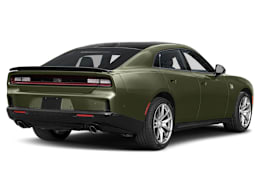
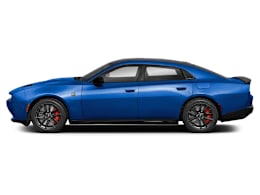
Today’s Mopar muscle formula is somewhat similar: Give a car an imposing design and big power, this time with a choice of electric motors or turbocharged engines. The result is a mean machine with modern convenience and performance underneath a nostalgia-provoking appearance. This Charger is a natural evolution from the prior-generation car: long, low, and wide. But there are some key differences, among them, its hatchback design and standard all-wheel-drive. These are nice upgrades that manage to preserve the basic packaging and character that the nameplate has exhibited for so long. And we do mean long, as the last generation dates back to 2011 without a major redesign.
The good news for enthusiasts is that there are different powertrain levels to choose from and several individual options and packages to heighten capabilities. To best reflect the experience of most Charger customers, we went with the 420-hp R/T with limited extras. (There is a 550-hp version available called Scat Pack. Safe to assume that other upgrades will bring expected enhancements, especially for track use.)
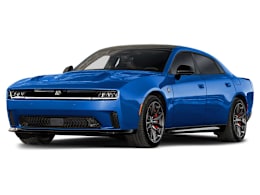
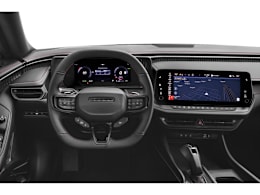
We bought a blue (which Dodge officially calls “Bludicrous”) sedan locally with the Blacktop package ($1,295), which adds a sport suspension, 20-inch all-season tires on black wheels, black exhaust tips, and dark exterior badging. Plus, it has the driver convenience group ($1,495), which added a long list of upgrades, like an eight-way power driver’s seat and a nine-speaker Alpine audio system.
Not only did our buying strategy help keep the price down, but this Charger configuration makes for a reasonable comparison against the Ford Mustang GT we previously tested. Buyers with flexible brand loyalties should consider either model.
As we log miles ahead of formal testing, our team has been taking notes, debating the virtues, and arm-wrestling over where this Charger has earned a place in the pantheon of muscle cars. And all the while, our enthusiastic drivers are resisting the temptation to do a smoky burnout, as any damage to the Nexen NFera AU7 tires would affect track performance and test results.
We bought a 2026 Dodge Charger R/T Blacktop with a 420-hp, 3.0-liter turbocharged inline-six engine; 8-speed automatic transmission; and all-wheel drive.
Adding a few option packages, the total MSRP is $57,705 including a $1,995 destination fee.
The final assembly point is Windsor, Ontario, Canada.