




Your membership has expired

The payment for your account couldn't be processed or you've canceled your account with us.

Re-activate

Kia Seltos

EPA MPG: 28 mpg

Kia Seltos First Drive

Summary

Introduction

Next-Gen 2027 Kia Seltos Levels Up with Tech and Comfort

A smooth ride, expanded cabin space, and user-friendly tech make Kia's subcompact SUV a tempting alternative to the Chevrolet Trailblazer and Toyota Corolla Cross

Overview

  • The redesigned Seltos stands apart from most subcompact rivals in some positive ways, with its many available high-tech features borrowed from larger Kia SUVs, easy front access, and a compliant ride.
  • The underwhelming base four-cylinder engine, a carryover from the previous generation, is the Achilles heel. A more powerful turbo engine is available on the top trim only.
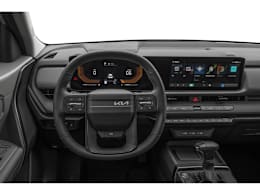
  • We don’t love the powered pop-out exterior door handles, odd-shaped steering wheel, and head restraints that tilt far forward.


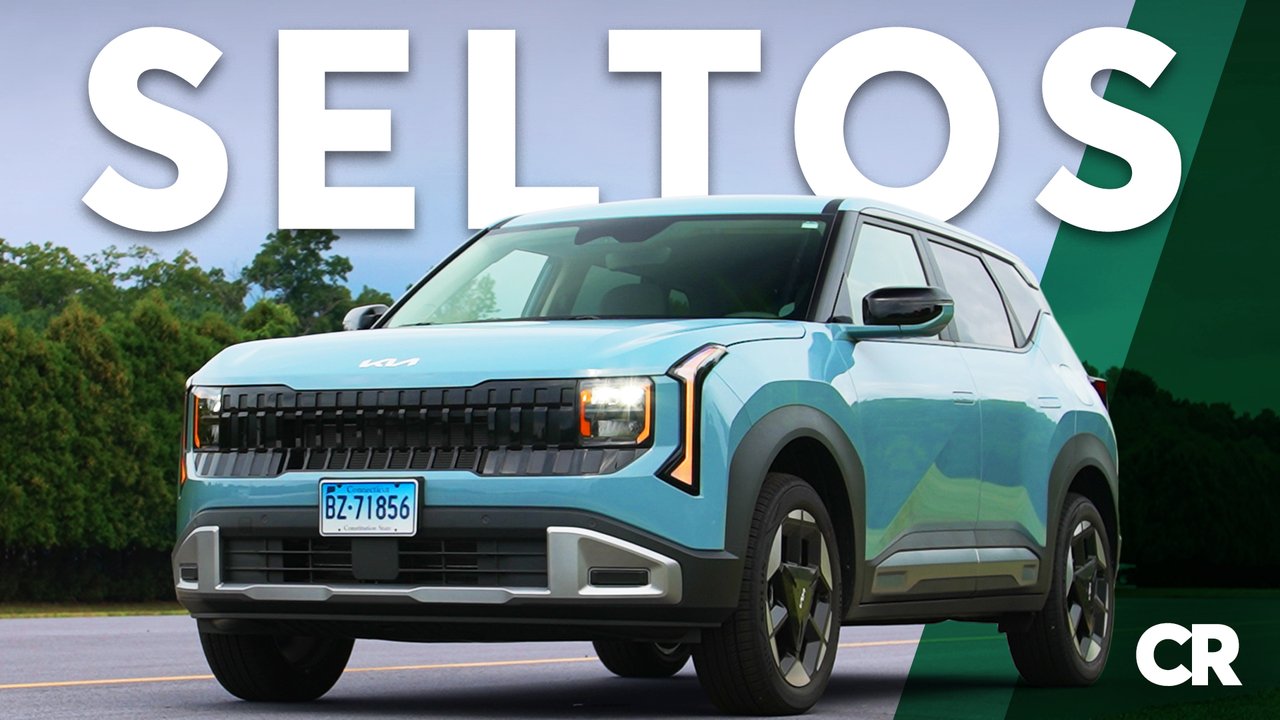
A few years ago, the subcompact SUV market blossomed with a wide variety of tall hatchbacks sourced from around the globe. Models like the Chevrolet Trailblazer, Hyundai Kona, and Kia Seltos combined the frugal nature of small cars with the convenience of large doors, a tall roof, and a roomy cabin on a tiny, urban-friendly platform. Now, some of these baby SUVs are growing up, like the redesigned 2027 Kia Seltos.

The second-generation Seltos expanded slightly in most dimensions. It also expanded its amenities to provide comfort, convenience, and active safety features that rival those of SUVs in larger, more costly classes.

The base 147-hp, 2.0-liter four-cylinder engine is offered in the LX, S, EX, and X-Line S, while the 190-hp, 1.6-liter turbocharged four-cylinder is available in the top trim X-Line SX only. Kia also offers a Seltos Hybrid to be on sale late 2026.

For testing, we bought a Seltos S with all-wheel drive. This hits a sweet spot for price and value. In addition, we borrowed an X-Line SX from Kia to experience its turbocharged engine. We’re glad we did, as each Seltos provided quite a different driving experience.

We tested the 2027 Kia Seltos S AWD with 147-hp, 2.0-liter four-cylinder engine; continuously variable transmission; and all-wheel drive. The base MSRP is $28,090. Adding floor mats ($200) and a destination fee of $1,495, the total cost came to $29,785.

We borrowed a 2027 Kia Seltos X-Line SX AWD with 190-hp, 1.6-liter turbocharged four-cylinder engine; 8-speed automatic transmission; and all-wheel drive. The base MSRP is $32,790. Adding options such as Prestige package ($2,500), all-weather mats ($220), floor mats ($200), first aid kit ($45) and a destination fee of  $1,495, the total cost came to $37,250.

The final assembly point for the Seltos is Gwangju, South Korea.

It competes with the Buick Encore GX, Chevrolet Trailblazer, Honda HR-V, Hyundai Kona, Mazda CX-30, Nissan Kicks, Subaru Crosstrek, and Toyota Corolla Cross.

Impressions

Driving Experience

Most versions of the Seltos come with the 147-hp four-cylinder matched to a continuously variable transmission. This is the same powertrain as the previous generation and in our current K4 sedan, where, as noted in our road test, it provides “unobtrusive operation” and “doesn’t suffer from any low-speed power delays.” Both of those statements are true with the Seltos. However, the Seltos S AWD is about 440 pounds heavier based on our scales and 279 pounds heavier than the last one we tested. In this portlier SUV, the engine feels underpowered and short on torque. The tepid acceleration requires planning ahead for highway merging or passing, as there is very little reserve once at speed. Cruising on the highway, especially uphill, results in higher revs and, consequently, increased engine noise. Switching the Seltos to Sport mode improves responsiveness, but it isn’t a true solution. During our break-in miles, we’ve been observing 25 to 27 mpg, as indicated by the trip computer—not enough to offset the engine’s deficiencies. The window sticker carries an Environmental Protection Agency estimate of 28 mpg combined.

The 190-hp turbocharged engine we experienced in a borrowed X-Line SX felt much more appropriate. There remains some low-end turbo lag, but once rolling, this stronger engine feels less strained in routine driving. It does concede some fuel economy, with the window sticker indicating 26 mpg combined.

In either configuration, the Seltos absorbs road bumps well for an entry-level vehicle. The soft suspension does come with some body roll, which is most noticeable on undulating surfaces. Overall, our drivers appreciated the suspension compliance on urban streets and rough highways.

Ride quality is prioritized over handling. The Seltos feels large and heavy when pushed, an impression furthered by slow steering response and minimal feedback to the driver. Handling is fine in general, but the Seltos lacks some of the agility found in other subcompact models. Ultimately, this may be the preferred balance of ride and handling for many drivers.

Cabin Comfort

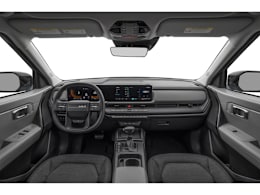
The flush-mounted, powered exterior door handles seem like a frivolous parlor trick. They deploy in a timely fashion, but using them is like shaking hands with a finger: You don’t get a full grasp. We’d rather Kia save the money and put it toward interior accents to dress up the rather plain and plasticky cabin.

Front entry is extremely easy thanks to a large door, a low floor, and a seat slightly below hip height. For most drivers, there is no need to step up or duck, unlike with some taller SUVs. The X-Line SX makes access even easier by moving the driver’s seat back when parked, aiding both exit and entry on return.

Although there is plenty of front headroom, the driver’s space feels somewhat constrained for some testers due to a prominent bulge on the lower steering column that can intrude on knee space. The center armrest is set too far back for shorter drivers and lacks soft padding.

The front seats are comfortable for the class, with mild thigh and torso support that makes them inviting for even larger drivers. However, our testers universally panned the adjustable head restraints, which push heads too far forward, even in their rearmost setting. The base car has a firm, solid head restraint, and the turbo has a pillowy head restraint: Something in between and more upright would be preferred.

The back seat is not as easy to enter because the rear seat base is higher than the front seat base, requiring significant ducking to fit in the space. Entry is further challenged by a narrow footpath.

Once settled, the rear seat is competitive with ample legroom, good underleg support, and generous seatback tilt adjustment. Headroom is a bit limited, even without a moonroof. Fortunately, there is a ton of foot space under the front seats. Large adults may find the rear constraining, though average-sized adults and children will fit fine. Those front seats have a hard plastic shield on the back that extends up toward the head restraint, making a hook for hanging a bag. There are USB charge ports on the front seatbacks. The higher-trim turbo also has an air vent on the back of the front center console.

Controls and Usability

We applaud that the Seltos has many physical controls and a traditional T-shaped “PRND” gear selector. The two versions we drove have different climate controls, with our purchased test car featuring a row of physical buttons, with fully half of them dedicated to choosing where the air is routed. This configuration puts the fan toggle switch to the far left, where it can be obscured by the steering wheel, and it pushes the temperature toggle switch to the far right, making it a stretch for the driver to reach. The turbo reduces the number of climate buttons by combining several into a single “mode” button for directing air. It uses an extra screen between the instrument panel and the infotainment system to display the mode and temperature. Unfortunately, the steering wheel blocks the view of that screen.

The steering wheel isn’t quite round, which feels odd when parking, but its controls are all physical and straightforward to operate. Large, mechanical buttons for infotainment shortcuts are quite convenient. The familiar, snazzy Kia infotainment touchscreen display is easy to use, and its graphics add some visual flair to the stark cabin. Phone pairing went well for most drivers, and the wireless charging pad and three USB ports are smartly placed directly under the climate controls. Heated seat controls are mounted on the door, making them easy to access once you know where to look.

Safety and Driver Assistance

A generous roster of active safety and driver assistance systems comes on the Seltos, such as automatic emergency braking with pedestrian and cyclist detection, lane keeping assistance, lane departure warning, front and rear parking sensors, adaptive cruise control, and lane centering assistance.

However, the base LX does not come with blind spot warning or rear cross traffic warning, two systems we feel should be on every new car. Some features become available only on higher trims, and a few systems, like surround view camera and reverse automatic emergency braking, are limited to the X-Line SX. Consequently, it will not receive a Best safety verdict rating from Consumer Reports.

Change Vehicle