Your membership has expired

The payment for your account couldn't be processed or you've canceled your account with us.

Re-activate

Lexus ES Hybrid First Drive

Road Test Review

Introduction

The Redesigned Lexus ES Hybrid Is in Its Soft Era

If you’re looking to swap angst for serenity, this laid-back hybrid is a worthwhile alternative to sportier sedans from Audi, BMW, and Mercedes-Benz, and almost as excellent as the all-electric ES

Overview

A plumber is currently clearing the sewer line that backed up into our kitchen this morning. Every post I doomscroll past says that AI is coming for my job and, maybe, everyone and everything I love. On top of all that, my favorite pizza place closed after 62 years in business.

But this week, all is right with the world. This week, I’m driving the new Lexus ES 350h Hybrid.

  • A totally redesigned interior is roomier, but more minimalist than its predecessor.
  • Ride quality and comfort are superb, and the ES is an ideal road trip car.


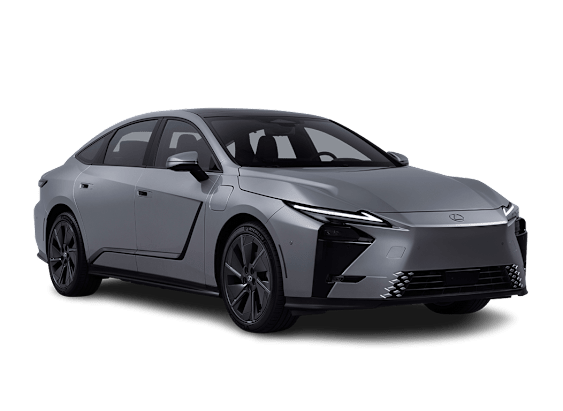
Lexus totally redesigned the ES for 2026, and Consumer Reports just purchased one (anonymously, as always, from a local dealership) for our auto test program. It’s the second new ES we bought. Earlier this year, we picked up an all-electric ES 500e, which is nearly identical to the hybrid in every way except for its power source. Where the EV has an EPA-rated 276-mile driving range, the ES Hybrid uses a gas pump, not a plug, and can go on a 600-mile road trip between fill-ups thanks to its EPA-estimated fuel economy of 44 mpg combined with our test car’s optional all-wheel drive. There is no longer a gas-only, nonhybrid version.

The all-electric ES broke new ground in the Lexus lineup, but the revamped ES Hybrid is at its heart. Sure, SUVs are more popular, the Toyota Crown is a better value, and the Audi A6 is more engaging to drive. But the ES Hybrid represents what I think is the true essence of luxury: Freedom from stress. That’s because it’s a hybrid, a Lexus, and a luxury car.

Hybrids offer a hedge against high gas prices and typically deliver quicker, smoother acceleration than gas-only cars. Lexus usually sits near the top of our brand reliability and owner satisfaction survey results. And in any car, luxurious perks like suede trim, a higher-end sound system, and a more hushed interior can make a hard day feel just a little softer.

For over 13 years, the ES Hybrid has combined all three of those virtues to become the avatar of stress-free driving, and the patron saint of predictable luxury car ownership.

Now, the redesigned model sure looks different. So does the window sticker, thanks to a starting price that shot up by over $6,000. But so far, the 2026 Lexus ES Hybrid seems to have retained the magic that had the Consumer Reports Auto Test Center staff fighting over the keys to the last ES we tested.

We bought a 2026 Lexus ES 350h Premium AWD with 244-hp, 4-cylinder hybrid engine; electronic continuously variable transmission (eCVT); and all-wheel drive. The base MSRP is $51,100O.
Adding the Cold Area Package (windshield wiper de-icer, headlamp washers, and radiant knee heater), $375; Convenience Package (sensor-based parking assist, front cross-traffic alert, and driver monitoring system), $1,220; Premium Cloudburst Gray paint, $500; Screen protector, black badge overlays, wheel locks, carpet trunk mat, leather key holder, and rear bumper appliqué, $552.
The destination fee is $1,395. The total cost came to $55,142.

The final assembly is Miyawaka, Fukuoka, Japan.

Impressions

Driving Experience

It’s almost unfair that the ES Hybrid has to sit next to the electric ES at dealerships. The ES Hybrid is smooth, efficient, quick, and quiet. It’s just that the electric version is smoother, more efficient, quicker, and quieter.

Part of it comes down to the technology itself. Electric motors offer instant, silent torque. Even the best hybrid system can’t compete with that. And the ES350h has one of the best hybrid systems we’ve driven. It’s the latest version of Toyota’s hybrid technology, which has been around since the late 1990s.

In the Lexus, it is exceptionally smooth, with seamless handoffs between the gas engine and electric motor. Tap the throttle pedal and you’ll get an easy blip of power for passing. Its regenerative braking, which recharges the hybrid battery with recaptured energy that would otherwise be lost as heat, can slow the car in a linear fashion without any weird grabbiness or odd noises.

Lexus did a superb job isolating wind, road, and engine noise, but you can’t avoid the fact that it has a gas engine. Under heavy throttle or heavy loads, some vibration comes through the chassis and steering wheel. It’s more of a low growl than the unpleasant snarl of some earlier hybrid models, but it’s still more intrusive than the true silence of the EV.

The ES Hybrid has a composed ride: You’ll feel bumps, but they won’t unsettle the car or its occupants. It does a great job isolating harsh impacts. Still, it’s less plush than its electric sibling, and a few smaller, sharper impacts and suspension noises make it through.

Quick steering and the all-wheel-drive system’s traction make the ES feel controlled despite its relatively large size. There’s less body motion than the EV, which isn’t surprising: Our ES hybrid weighs 721 pounds less than our electric version.

The EPA says that a front-wheel-drive ES Hybrid should get 46 mpg combined, while the all-wheel-drive version should get 44 mpg. We’ve seen mpg in the mid-40s on the dashboard display, but (as with all cars we test) we will perform our own fuel-economy tests using a gauge that we splice into the car’s fuel line and a specific driving route. Premium fuel is only recommended, so unless you’re putting the engine under serious strain, you can fill up with Regular.

Cabin Comfort

Drivers of current ES Hybrids might be in for a shock when they open the door and see the new model’s more minimalist take on luxury. We were only prepared because it’s pretty much identical to the interior of the electric ES we bought a few months earlier. If you want to know our initial reactions, you can read about them in our full First Drive of the electric ES.

We’d recommend going for a lighter color interior, because darker colors hide some of the depth of the interesting soft-touch materials Lexus used on the dashboard, which can look like hard plastic at first glance. The upscale Luxury trim has bamboo accents and unique lighting that make the cabin feel more special.

Some (literal) nice touches: Window regulators slide fluidly but slow down a little as the glass reaches the frame, like a soft-close cabinet door. Flush-mounted climate buttons with pleasant tactile feedback. A dual-opening center armrest that gently glides open. The cold-weather package adds knee heaters for the driver and front passenger.

One big plus is visibility. Thin front and rear pillars minimize blind spots, and reasonably sized side and rear windows offer a great view of the road.

As with the EV, the hybrid’s front seats were remarkably comfortable. The padding is supportive, but the seats don’t swallow you. The new car is about 6.5 inches longer than its predecessor, and it feels like most of that stretch has gone to rear seat legroom. We wouldn’t be surprised to see ES Hybrids used for rideshare services’ premium options. Oddly, those rear seats don’t fold down. That’s been one of our longstanding complaints about the ES, and we’re disappointed that it isn’t fixed for 2026. There’s a small pass-through for skis and long, skinny items. Small items are similarly left adrift, as the cabin lacks nooks and crannies for the likes of vape cartridges or Werther’s Originals. All the better reason to quit both.

We liked how easy the ES was to get into and out of, front and rear, thanks to a high floor that keeps occupants from having to step too far down or contort themselves around the door opening. The seating position feels higher than that of the average sedan but lower than that of the average SUV.

Controls and Usability

The ES gets the latest version of Lexus’ infotainment system, and the entire interior is almost identical to the upcoming Lexus NX redesign. The screen itself sits on a Tesla-like tablet that floats in the middle of the dashboard. The software responds quickly, and we like that it has a home screen to get you out of a menu maze, along with really large icons and graphics that are easy to see and use while driving. As with the electric ES, we did have some problems connecting phones wirelessly through Android Auto, but (fingers crossed) we had fewer issues while using Apple CarPlay.

A roller-style volume knob sits below the screen. The climate-control buttons are flush with the control panel, and we wish they were distinguishable by touch. Even though they look like they’re part of a touchscreen, there’s a real button underneath each one that registers a click when you press it.

The ES has the same “digital latch” press-to-open electronic interior door buttons that plague all new Lexuses. Although they’re easy to get used to, they’re also unnecessarily frustrating. Be prepared to give a tutorial to any new passenger. The exterior handles are also electronic. Although there’s a manual release, using it is a multistep process that’s better suited for getting inside a car with a dead battery than for an urgent emergency.

Safety and Driver Assistance Systems

Every ES comes with the latest Lexus Safety System+ 4.0 suite of advanced driver assistance systems (ADAS) and active safety features, which we haven’t spent much time with yet. So far, in the electric ES, the adaptive cruise control (ACC) worked well enough on long highway drives and in traffic did a good job modulating a smooth crawl while keeping enough distance from the car ahead. With lane centering assistance (LCA) activated, the car did seem to sway a little in its lane. The ES can now automatically make lane changes with a quick half-press of the turn signal stalk. Some drivers complained about an overzealous driver monitoring system, which beeped when they sipped from water bottles.

Change Vehicle