Your membership has expired

The payment for your account couldn't be processed or you've canceled your account with us.

Re-activate

Lexus ES

EPA Range: 276 miles

Lexus ES First Drive

Summary

Introduction

The Electrified 2026 Lexus ES Is an Evolved Tradition

More polished than a Tesla Model 3 and less expensive than an Audi A6 E-Tron, the ES proves that a quiet, cushy luxury sedan is well-suited to an electric powertrain

Overview

For decades, the Lexus ES has had many fans at Consumer Reports’ Auto Test Center. It’s done well in our road tests, reliability surveys, and owner satisfaction questionnaires. It has also won our unofficial internal popularity contest.

See, at Consumer Reports, we live with the cars we purchase and test. We bring the kids to school, go on Costco runs, and head to the mountains or the beach. The most popular cars leave our test fleet with a lot of miles on the odometer, while the duds languish in the parking lot once our official testing is complete. The last time we purchased an ES, my coworkers and I jockeyed to reserve it months ahead of road trips and long weekends because it was such a joy to drive. It lived up to its reputation as a capable luxury car that emphasized comfort without neglecting performance.

So we were justifiably concerned when we heard about the big changes in store for the ES for 2026. Just like when an old favorite restaurant revamps its menu, we hoped Lexus hadn’t ruined what made the ES special in an attempt to chase trends.

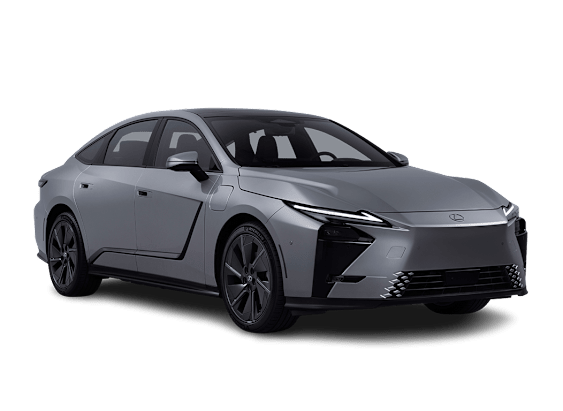
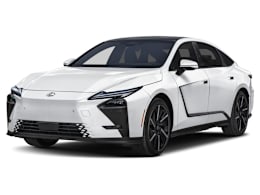
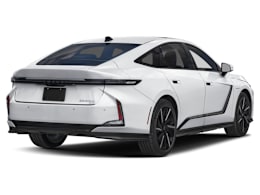
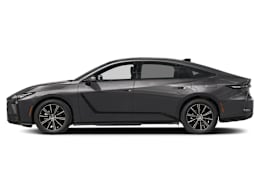
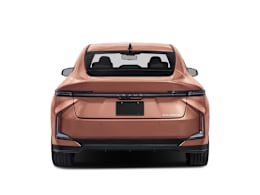
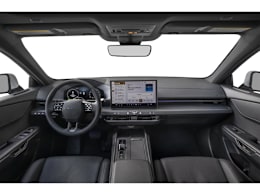
It’s true that the new ES is a major evolution for Lexus. Although it shares some of its underlying engineering with the prior-generation ES as well as the current Lexus NX, Lexus RX, Toyota Camry, and Toyota Crown, it’s about 6.5 inches longer than the 2025 ES, which helps it partly fill the gap left by the now-departed Lexus LS luxury sedan and allows for seriously impressive rear legroom. The gas-only ES is discontinued, but buyers can opt for one of three powertrains: a 244-hp, 2.5-liter, four-cylinder hybrid powertrain with front- or all-wheel drive; a 221-hp, single-motor electric powertrain with a 307-mile driving range and front-wheel drive; or a 338-hp, dual-motor electric powertrain with a 276-mile range and all-wheel drive. As with so many luxury cars, the ES lost its chrome trim and low-slung look for a more modern Tesla-like appearance, down to the large touchscreen in the center of the dashboard.

To find out what those changes mean for an owner, we purchased our own all-electric 2026 Lexus ES 500e Premium AWD anonymously at a local Lexus dealer. Our tested car has only a handful of options, including premium paint, a cold-weather package, and the dual-motor powertrain. It cost $53,990. We also borrowed an ES 350e from Lexus equipped with the more upscale Luxury package so that we could check out the more attractive interior and upgraded sound system, along with higher-cost options like heated, cooled, and massaging rear seats. It had a sticker price of around $64,000. The hybrid version starts at $48,895, and we’ll purchase and test one as soon as it’s available.

The final assembly point for the ES electric is Miyawaka, Fukuoka, Japan.

It competes with the Audi A6 E-Tron, BMW i5, Mercedes-Benz EQE, and Tesla Model 3.

Impressions

What We Like

Ride comfort

“One of the most comfortable and plush-riding cars in recent memory,” a tester wrote in our logbook. Even when equipped with the optional larger wheels, which tend to make for a harsher ride, the ES smoothed out bumps and isolated occupants. It was only occasionally unsettled by a midcorner pothole. Despite that cushiness, it doesn’t float like a 1970s land yacht, and, to use a technical term, “doesn’t get all floppy through corners when you pick up the pace.”

The sound of silence

“This is what being an EV is all about!” That comment summed up our feelings on how quiet the interior is. “This car feels so well-sealed, and the powertrain is incredibly quiet and well-controlled, as are wind and road noise,” a tester wrote. Even the slight powertrain noise isn’t as whiny and high-pitched as with most EVs. Occasionally, the suspension sounds like the rumbling of distant thunder on bumpy roads. Somewhat counterintuitively, the larger wheels and thinner tires on the borrowed 350e seem to produce slightly less road noise and are quieter over bumps than those on the tested car we purchased.

Seat comfort, front and rear

The front seats were all-day comfortable for a long drive. They’re well-padded but still have enough bolstering that you don’t sink into them. Some drivers liked that the seat bottom could be tilted with the edge downward. The rear seats benefit from a truly remarkable amount of legroom. On the car we borrowed, the optional Executive package had our test drivers moonlighting as test passengers so they could experience the passenger-side footrest and massage features.

The controls mostly

The ES gets the latest version of Toyota’s infotainment system, which responds well, has a home screen to get you out of a menu maze, and features really large icons and graphics that are easy to see and use while driving. The climate-control buttons are flush with the control panel, and we wish they were distinguishable by touch. Even though they look like they’re part of a touchscreen, there’s a real button underneath each one that registers a click when you press it.

Roominess and access

Our testers found the ES easy to get into and out of, front and rear. A high floor means you don’t have to step too far down or contort yourself to get into the vehicle. A few drivers had issues with armrest comfort, but most of them liked that the seating position felt higher than that of the average sedan but lower than that of the average SUV.

Visibility

In an era when so many new vehicles have as much visibility as an armored tank, the ES is a breath of fresh air. Thin pillars at the front and rear minimize blind spots, and reasonably sized side and rear windows offer a great view of the road. But it’s a little odd that a surround view camera costs extra on a luxury model.

Attention to detail

The ES is afflicted by the same problem as all EVs from luxury brands: Almost every electrified powertrain is smooth and quick, so the only differentiating factors are fit, finish, technology, and charging ease. The Lexus’ strong suit is elevating everyday experiences. For example, the window regulators move smoothly and slow down a little bit so the windows don’t “thunk” into place too loudly. The power seats move fluidly. The touch-sensitive climate buttons also have a nice little “plink” to them. And the dual-opening center armrest opens gently.

What We Don't Like

Connectivity issues

Why can’t Toyota build a wireless Android Auto or Apple CarPlay system that works every time? Even wired connections failed to pair sometimes and required turning the car on and off and opening and closing the driver’s door. To be fair, other automakers also suffer from the same affliction. In addition, some passengers kept accidentally activating the “Hey Lexus” voice recognition setup.

A few EV-specific quibbles

Listen up, automakers! Just because you’re building a luxury EV doesn’t mean you should include a power-operated charging door. It will probably struggle to deal with ice and snow, it’s another unnecessary part that might break, and its automatic close/open function might attempt to shut on the charge cable if you press the wrong button. And we don’t like that the ES splits charging settings between the center screen and the display behind the steering wheel. We also couldn’t get the air conditioning to cool down the borrowed ES 350e when it was plugged in.

Storage and cargo space

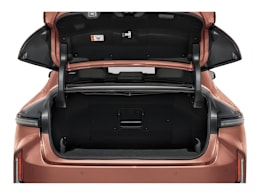
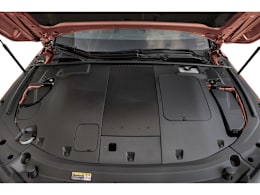
Unlike many other EVs, the ES doesn’t have a “frunk” for storage under the hood. Unlike many other sedans, the rear seats don’t fold down to increase cargo space, which has been long been a complaint about the ES. Inside the cabin, there’s precious little space for small items. An open bin under the center console is hard to access, and the tray next to the wireless charger disappears if you opt for dual wireless chargers. The front door pockets are narrow.

Annoying electronic door latches

Like most new Lexuses, the ES has “digital latch” electronic interior door handles that you press to open. Although they’re easy to get used to, carrying a new passenger for the first time requires a short tutorial. The exterior handles are also electronic. Although there’s a manual release, using it is a multistep process that’s better suited for getting inside a car with a dead battery than for an urgent emergency.

What We'll Keep an Eye On

Range and charging speeds

The ES 350e we borrowed from Lexus had an EPA-estimated range of 292 miles, although the miles dropped a little faster than expected as we drove, even though the late spring/early summer weather was ideal for EV range and efficiency. Our ES 500e with AWD has an EPA-estimated range of 276 miles. Every ES comes with a Tesla-style NACS charging port and adapters that can plug in at CCS and J1772 chargers. As with all EVs, we’ll put our ES through our highway-speed range test to see how long it can go on a road trip between battery charges. The ES can charge at speeds only up to 150 kilowatts, which is slow for a modern EV and less than half the speed that many public DC fast chargers are capable of. We’ll find out whether this matters in real-world situations when we spend more time with the car. Most EV owners do most of their charging at home, and the ES can charge at up to 11 kW on a level 2 charger, which is more competitive.

Does it feel special enough

The well-equipped ES 350e Luxury we borrowed had attractive bamboo trim and unique lighting accents, but the ES 500e Premium we purchased feels a lot less opulent. With the exception of microsuede lining behind the instrument cluster, most of the interior finishes are black plastic or white leather, with no visually interesting materials to break up the monotony. Overall, it’s not that different from a well-optioned Toyota.

This phenomenon isn’t unique to Lexus. Whether it’s due to the minimalist influence of Tesla or just automakers trying to cut costs, the fit and finish on many new luxury vehicles seems to be taking a step down every year.

Handling

Our testers universally agreed that the ES is easy to drive but that its steering feel is an odd mix of sportiness and cushiness. A numb steering feel keeps the driver isolated from the road, and in an emergency situation, they may not be able to tell whether the vehicle is at its limits or whether the tires are about to lose grip. At the same time, the steering is a little too quick, which means it takes very little effort to turn the front wheels. In the words of one tester, “It’s too easy to over-apply a steering input at higher speeds, but the quick steering does make it easy to maneuver in a parking lot.”

Passing power

The 350e’s single-motor setup is peppy around town, but “just doesn’t have much scoot starting at 50 mph, and especially above 60 mph,” a tester wrote. The dual-motor ES 500e packs more of a punch, which we’ll put to the test at our track.

One-pedal driving and regenerative braking

If you like one-pedal driving, look elsewhere, because the ES doesn’t have it. Instead, you get paddles on either side of the steering wheel that adjust the level of regenerative braking.

Safety and Driver Assistance Systems

The ES is the first model that comes with the latest Lexus Safety System+ 4.0 suite of advanced driver assistance systems (ADAS) and active safety features. We haven’t spent much time with these features yet. So far, adaptive cruise control (ACC) worked well enough on a short highway drive and did a good job modulating a smooth crawl while keeping enough distance from the car ahead. With lane centering assistance (LCA) activated, the car did seem to sway a little in its lane. The ES can now automatically make lane changes with a quick half-press of the turn signal stalk.

Change Vehicle