Your membership has expired

The payment for your account couldn't be processed or you've canceled your account with us.

Re-activate
2027

Mercedes-Benz CLA EV

EPA Range: 312 miles

Mercedes-Benz CLA EV First Drive

Summary

Introduction

2027 Mercedes-Benz CLA 350 Electric Targets the Tesla Model 3 With a Long Driving Range and Good Driving Dynamics

It has a luxurious cabin, but the controls are maddening to use and the interior is cramped

Overview

  • The CLA’s ride quality, handling, driving range, and powertrain are strengths.
  • But the touch-sensitive controls are terrible to use, and the large screens have lots of unused space.
  • The driving position is narrow and cramped, and outward visibility is significantly compromised.
  • We like having a built-in NACS port, but it’s only for DC fast charging, so home chargers won’t work.


Since its 2025 introduction, the all-electric Mercedes-Benz CLA has undergone a bit of an identity change. While Mercedes initially appended the name with “EQ Technology,” it has dropped that from its newest EVs, instead just referring to them as Electrics. This makes sense because the automaker now offers various powertrains for each model in its lineup.

There are two EV versions of the CLA: the CLA 250+ Electric and the CLA 350 4Matic Electric. A CLA hybrid is expected to go on sale in late 2026.

When it does, Consumer Reports is planning to buy one, which we expect to be the most popular. We borrowed a CLA 350 Electric from Mercedes-Benz to get a feel for the EV version.

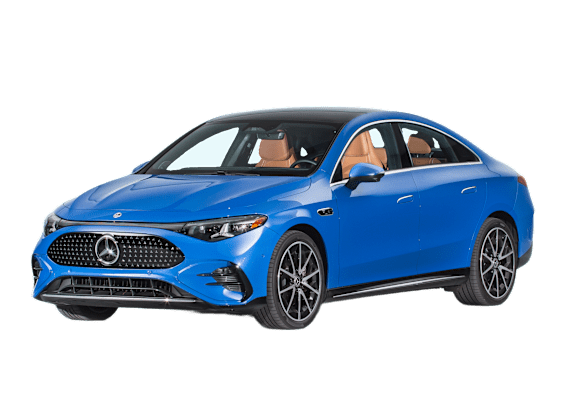
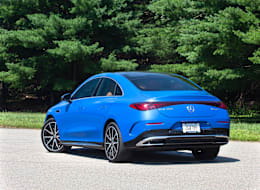
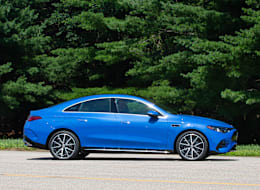
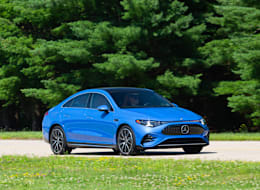
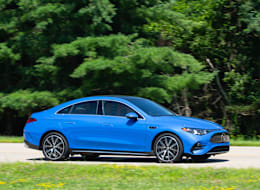
We borrowed a 2027 Mercedes-Benz CLA 350 4Matic Electric with 349 hp/260 kW dual electric motors; 85-kWh high voltage battery; and two-speed gearbox for rear motor. The base MSRP is $50,500. Adding options such as the Sky Blue metallic paint ($750), Beech brown leather ($1,450), Wood trim ($325), 19-inch AMG wheels ($600), rear side airbags ($350), Sky control roof ($1,050), Burmester sound system ($880), MB.Drive assist ($1,950), AMG line ($2,100), and the Pinnacle line digital extras ($5,850) plus the destination fee of  $1,350, the total cost came to $67,155.

The CLA EV competes with the BMW i3 and Tesla Model 3.

Impressions

Driving Experience

One of our testers asked, “How can the car be so good to drive and so terrible to use?” And it’s true, the CLA Electric really is a great car to drive. The vehicle uses two electric motors, one at each axle. The rear motor is always in use, while the front motor is activated when the system detects rear wheel slip and the car needs more power. Total combined output is 260 kilowatts, with 380 lb.-ft. of torque and up to 349 hp available.

Power delivery is smooth and well managed, with an urgency that doesn’t approach the neck-snapping, out-of-control feel of some EVs. Mercedes says the version we borrowed can run from 0 to 60 mph in 4.8 seconds and has an EPA-rated driving range of 312 miles. But a number of testers said the car estimated 340 to 373 miles of range, which would be very impressive if true.

There are two regenerative braking modes, plus a coasting/no-regen mode. The normal mode feels like driving a gas-powered vehicle, with just a bit of force slowing it, while the strong regen mode is for one-pedal driving. Given the strength of the deceleration force, those new to the feature will need some time to become acclimated to the throttle pedal’s sensitivity. A few testers found that the car seemed to gain speed when in coasting mode, and required them to repeatedly brake to avoid going too fast. It would be better if there were a few extra levels between the strong and normal modes, as Hyundai and Kia handle regenerative braking. Mercedes has an “intelligent” recuperation mode, which lets the car adjust regen force based on map data, cruise control, and other factors.

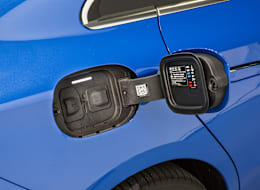
The CLA Electric is the first Mercedes-Benz EV capable of 800-volt DC fast charging and can charge at up to 320 kW when available. At 400-volt fast chargers, the car can charge at up to 100 kW. The built-in NACS port allows owners to use Tesla superchargers, and they can charge the CLA at CCS (Combined Charging System) chargers using an adapter. But the NACS port is only for DC fast charging, so people with 240-volt Tesla home chargers will need to use an adapter for the J1772 Level 2 port.

We found that the CLA 350 Electric handles well, despite being relatively heavy for its size (4,530 pounds). The steering feels natural and light at first, building up some heft as the driver turns the wheel through a corner. That makes it easy to drive in slow-speed situations like parking lots without feeling darty when speeds increase on the highway.

The ride is firm but comfortable and composed over most surfaces. Bigger bumps and impacts are soaked up by the suspension without any harshness. The car feels a little choppy over repeated bumps, but that doesn’t translate into any head toss or floaty feeling. Overall, the ride is more supple than most German sedans, and Mercedes did a very good job balancing ride comfort and handling.

Noise isolation is a mixed bag. The motors have an odd whirring sound that’s always present, and road and wind noise are elevated at highway speeds. Most testers found the digital “engine” sounds so artificial and annoying that they immediately turned them off. At lower speeds, however, the CLA is quieter, with less tire and wind noise.

Cabin Comfort

The CLA feels downright small for a compact luxury car. It’s about an inch taller, wider, and longer than the previous-generation CLA, with a 3-inch-longer wheelbase, but it’s very difficult to find that extra space once inside. The driving position is incredibly tight. Testers said the door controls ate up space for their left knee, and the wide center console cut into space for their right leg. Making matters worse, the center console isn’t padded, so it’s cramped AND uncomfortable.

A number of drivers couldn’t lower the seat enough to get comfortable, even those who like a more elevated seating position. That feeling is exacerbated by the severe rake of the windshield and roof pillars, as well as the pronounced curvature of the roofline. Finally, the left footrest, or dead pedal, isn’t symmetrical with the brake and accelerator pedals. That means the driver sits with their right leg raised off the seat, further compromising comfort.

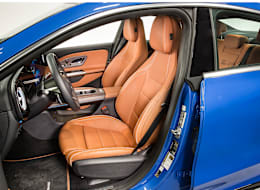
The front seats are comfortable and supportive, particularly the seatback. There are firm bolsters on the bottom cushion that get higher toward the rear. The result is that the seats are easy enough to slide into, but they still hold the driver and front passenger in place. Opinions were mixed on the level of built-in lumbar support, but there’s a wide range of adjustability. But making those adjustments is an exercise in frustration.

The rear seat is quite snug, and the seat bottom is very low to the floor, forcing passengers to sit with their knees up in the air and having little underleg support. The door and fold-down center armrest are well-positioned but thinly padded.

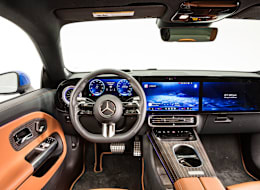
Interior fit and finish is good for a $50,000 subcompact luxury sedan—but our vehicle was optioned up to $67,000. At that price, the interior is fine but not stellar. The wood trim and turbinelike air vents are attractive (though some testers said both are a bit garish), and there’s abundant exposed stitching and padded surfaces up front. The glove box, air vents, and center console bin operate with a damped action. But the plastic bits feel out of place, particularly the steering wheel buttons and the touch-sensitive panel below the center screen.

Our testers liked the storage bin under the center console and how easy it was to reach the wireless phone charging pad. But the cup holders don’t hold taller water bottles very well, and it’s hard to reach into the door pockets because the window and mirror controls restrict access when the door is closed.

Controls and Usability

Nearly every function is handled through the 14-inch center touchscreen, with the remaining controls using touch-sensitive “buttons” or surfaces. Even the window switches, which are one of the few physical controls, are compromised. Mercedes uses just two switches on the driver’s side for the front and rear windows, with a toggle button to choose between front and rear. Let that sink in: The designers replaced four mechanical switches with three, saving the company money and adding to driver frustration. We’ve tested Volvos and Volkswagens with similar setups, and all are less convenient than the standard four-switch array.

Even adjusting the front-seat lumbar support requires the center screen. You drag your finger to adjust the bolster’s height and depth, a difficult and distracting process to do while driving. Choosing seat memory or turning the seat heat on or off is also done via the screen. Even changing the opacity of the glass roof requires diving into the center screen, rather than just having a button—or even a touch-sensitive surface!—located up on the headliner.

The head-up display has an overly large speed limit icon, yet a small text size for the set cruise-control speed. It’s also just a duplicate of what’s already at the top of the driver’s gauge/instrument screen.

The only climate functions that are always accessible are the temperature and maximum defrost. Everything else, such as fan speed or airflow mode, is on a sublevel screen that’s accessed by pressing a teeny-tiny climate icon.

It seems that Mercedes-Benz heard Consumer Reports’ past complaints about its steering wheels. Now there’s a roller wheel to adjust volume rather than a touch-sensitive slider. Yet Mercedes-Benz still doesn’t offer the ability to skip tracks via a steering-wheel control.

Even though the paddles behind the steering wheel can be used to adjust the regen level, it’s also possible to do so using the right-side stalk on the steering wheel, which doubles as the CLA’s gear selector.

Much of the left side of the center touchscreen is blocked by the steering wheel rim, even though the screen is incredibly large and much of the real estate is unused.

Not everything failing is limited to the interior: The button to release the electric charger plug from the port is hidden in such a way that it’s hard for a first-time user to find. Will an owner become familiar with its location? Of course. Could it be better designed in the first place? Definitely. But that goes for much of the CLA’s controls.

What Drives It

Mercedes says the CLA was designed from the beginning to be an electric vehicle. The all-electric CLA with EQ Technology goes on sale first, and we know the most about it so far. It’s an all-electric design that comes with both a J1772 charging port for Level 2 charging and a NACS port for DC fast charging.

The CLA 250+ with EQ Technology is a rear-wheel drive version with 268 horsepower that the automaker says can accelerate from 0 to 60 mph in 6.6 seconds. The all-wheel-drive CLA 350 4Matic with EQ Technology gets a second electric motor and is good for 349 horsepower and a 4.8-second 0-to-60-mph sprint.

Mercedes says that the CLA 250+ will get up to 492 miles on a charge and the CLA 350 4Matic will get up to 479. But those numbers come from an optimistic range test protocol that’s not used in the U.S. We expect the real-world range to be closer to 350 miles, which is still extremely impressive. The CLA is built on an 800-volt architecture, which allows for a seriously quick 320 kW maximum DC fast-charging rate. On paper, it could be among the fastest-charging EVs on the market.

Every electric CLA gets an 85-kWh lithium-ion battery and bidirectional charging capabilities. In other words, it can provide a battery backup for your house when the power goes out.

One cool feature -- Drivers will be able to reserve a spot ahead of time at Mercedes-operated EV charging stations. We can see this reservation concept rolling out across other EV charging networks. MB.OS can also plan charging stops along a navigation route using Google Maps.

Safety and Driver Assistance Systems

The CLA gets eight cameras, five radar sensors, and 12 ultrasonic sensors that power all the usual active safety features. It also comes standard with adaptive cruise control. Buyers can opt for lane centering assistance, automatic lane changing, surround-view cameras, and parking assistance. We will be sure to evaluate these features in our extensive tests of advanced driver assistance systems.

Perhaps the most interesting feature is the ability to remotely update active safety and driving assistance software, the same way that Tesla sends out software updates for its Autopilot system. That way, tomorrow’s drivers aren’t stuck with software that’s state of the art for 2026. But we would be surprised if these updates are free.

Change Vehicle