


Introduction
2026 Nissan Leaf Takes Some Steps Forward, Some Back
The SUV-ified Leaf moves into the 2020s with more range, a widely available fast-charging plug, and a sleek, modern interior with less intuitive controlsOverview
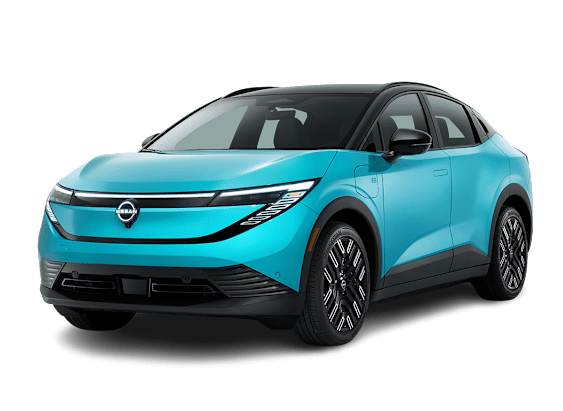
The groundbreaking Nissan Leaf electric vehicle got such a thorough makeover for 2026 that it transformed from a front-wheel drive small hatchback into a front-wheel drive subcompact SUV. It’s now a thoroughly modern crossover—for better and for worse. Gone is the hard-to-find CHAdeMO DC fast-charging port. In its place is a Tesla-style North American Charging System (NACS) port, which is the plug style that is being adopted across the auto industry. The driving range was increased as well, to 259-303 miles, depending on the trim, making it less of a commuter car and more of one you might consider for a longer trip.
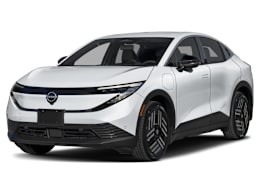
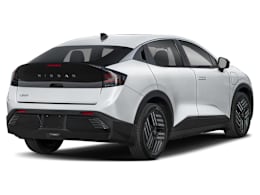
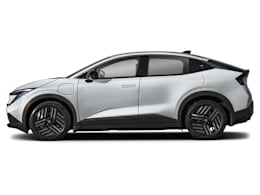
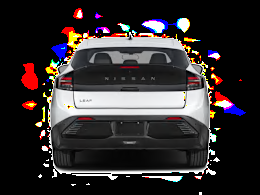
Despite its taller stance, the new third-generation Leaf carries nearly identical dimensions to the outgoing hatchback. The exterior features a fastback roofline meant to mimic the current Nissan Z sports car. Nissan went out of its way to make the new Leaf as aerodynamic as possible to help it achieve that improved range figure, with a smooth, body-colored panel for a grille, flush door handles, and a small lip spoiler.
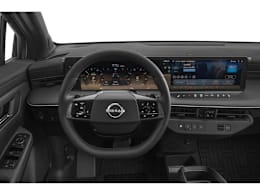
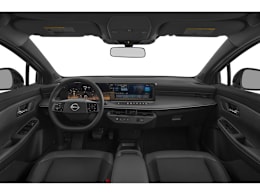
The Leaf’s interior also got a major rework, with a comfortable cabin that feels more expensive than it is. The Leaf still has a low starting price of just $29,990 (plus a $1,495 destination fee), making it a great entry point into the world of EVs. Yet the new model takes a step back in terms of usability, as its 2020s-style interior carries 2020s-style slick-panel and on-screen controls that are simply harder to use than the old Leaf’s dashboard array of physical buttons and knobs.
At launch, all Leafs come with a 214-hp electric motor paired with a 72-kWh battery, although a less expensive S trim with a smaller 52-kWh battery and a less powerful 174-hp motor is coming later. (More details on the Leaf S, including range estimates, are coming later.) The longest-range version at the time of this writing is the current base model, the S+, with an EPA-rated 303 miles. Two higher trims are available, but as with many EVs, range decreases with the extra luxuries: 288 miles in the mid-grade SV+ and 259 miles in the top Platinum+ model.
The Leaf Platinum+ loaned to us by Nissan included just three added-cost options: a floor mat package, a battery heater, and upgraded two-tone paint. Consumer Reports recently purchased its own 2026 Leaf SV+, that cost $37,760 total as well, which just entered our testing program.
Driving range has also expanded dramatically. Where the older model could go up to only 212 miles on a single charge, the new Leaf promises between 259 and 303 miles, depending on how it’s equipped. It has a Tesla-style NACS (North American Charging System) port for high-speed DC fast charging and a Level 1 and Level 2 charge port.
The Leaf comes standard with Nissan’s Safety Shield 360 package of active safety and driver assistance features, which include automatic emergency braking with pedestrian detection, AEB that works at highway speeds, blind spot warning, rear cross traffic warning, reverse automatic emergency braking, lane departure warning, and lane keeping assistance. All versions come standard with the ProPilot Assist active driving assistance system, which includes adaptive cruise control (which can work in stop-and-go traffic) and lane centering assistance.
The Leaf's final assembly point is Tochigi, Japan.
It competes with the Hyundai Kona EV, Kia Niro EV, and Chevrolet Bolt.