Dear Valued CR Supporter,
You are a vital partner with CR in keeping the marketplace honest, and I am excited to share a short video that highlights the fact that when there's more to the story, Consumer Reports is there. Your contributions make all this possible.
With gratitude,
Shar Taylor
VP, Development
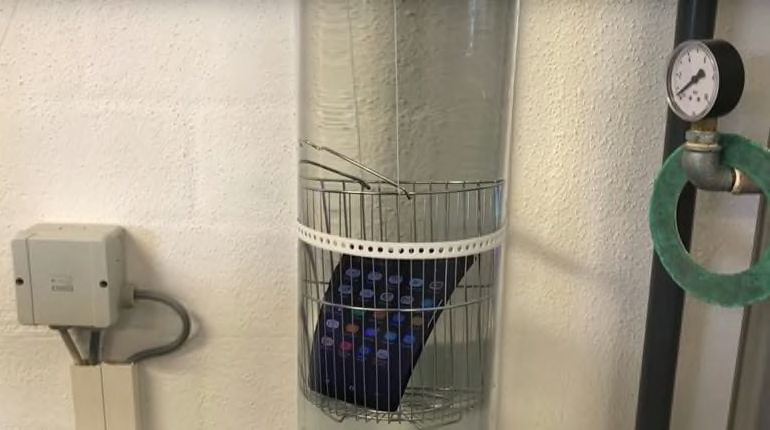
Here's What Product Testing Looks Like
We wanted you to get a behind-the scenes look at our testing, rating, and reviewing because as a contributor you help make it happen every day in our labs! The lifestyle media network, Quartzy, came to our labs for a behind-the-scenes look. Watch the video here!

Preventing Deaths and Injuries from Furniture Tip-Overs
In 2016, CR was alarmed that tip-over injuries involving dressers and other clothing storage units for children younger than 6 increased by 33 percent (2,800) from the year before (2,100), based on figures from the Consumer Product Safety Commission.
With your support, we were able to launch a year-long investigation to assess the stability of dressers. We analyzed thousands of incident reports obtained from the CPSC through a Freedom of Information Act request to better understand the circumstances of injuries and deaths. CR tested 24 dressers, representing a cross-section of the market, to see which ones would pass a series of progressively more stringent tip-over tests.
Our investigation concluded that the industry standard, which is voluntary at this point, is inadequate. However, 13 of the 24 dressers passed our most rigorous test—showing that it is possible for manufacturers to design dressers at different price-points that are safe and stable. CR is calling on regulators to introduce a strong, mandatory safety standard for furniture. And, we are urging industry to improve its voluntary standard as a matter of critical importance.
Our key message to parents is to anchor their furniture and it was widely covered by media outlets such as CBS This Morning, NPR, Chicago Tribune, People, and Romper, helping us get the word out to prevent more injuries and loss of life. Thank you for helping us get the word out about safety in the home.

The Impact of the Rampant Rise in Drug Prices on Consumers
Our nationally representative survey found that the high costs of prescription drugs are forcing some Americans to cut back on groceries, delay retirement, or take on a second job. And some told us they're rationing or even stopping their meds. The reasons for the price increases are many. Drug companies raise costs saying that the extra profit is needed to bring new drugs to market. Physicians rarely talk with patients about the affordability of the drugs they prescribe. And rising prices involve a complex web of insurers, employers, big drugstore chains, and companies called pharmacy benefit managers that act as go-betweens among them all. Each has its own interests, making the U.S. system expensive and confusing.
Our investigation and survey work didn't stop with drug affordability. We turned to consumers to ask them to share their stories about how they are coping with increasing drug prices. That input helped us provide tips on how to get better prices on prescription drugs and developed a handy card for you to ask your pharmacist about drug prices. We're also urging lawmakers to allow consumers to purchase medication approved by the Food and Drug Administration from other countries, such as Canada, where drugs are of good quality and cost significantly less. We also want consumers to have timely and straightforward ways to appeal when an insurance company denies coverage of a drug.
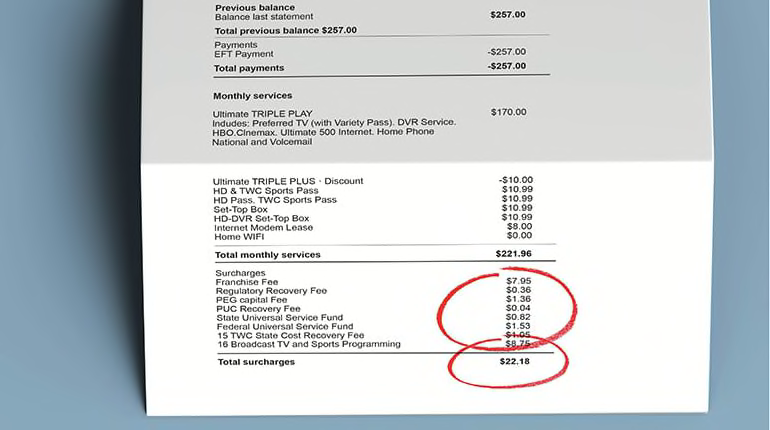
Consumers Speak Out About Hidden Fees
Have you booked a car rental online only to discover that the price option you chose on the first page has been inflated by extra fees on the last? Or have found that you have to pay a "resort fee" late in the hotel reservation process or even at checkout?
Hidden fees can drastically increase the final cost of a product or service. That's why, together with you, we want to expose these hidden fees and pressure companies to be transparent about the real cost of a product or service so consumers can shop with confidence.
We conducted a survey to find out what fees consumers like you find most frustrating, and are deciphering and analyzing the fees you find most outrageous. We have collected more than 3,000 real bills in order to compare and expose confusing practices.
And, more than 80,000 have signed our petition to stop misleading cable fees. If you agree that cable companies and other telecom providers should advertise their full rates without hiding rate increases behind numerous confusing fees like the "HD Technology Fee" or the "Broadcast TV Surcharge," please sign today.
Your support is making this important effort happen! We look forward to keeping you updated on our progress and other ways you can help.