Sign In

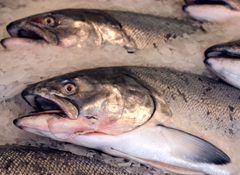
If you've long suspected that the "mahi-mahi" on your plate may really be yellowtail, you now have science on your side: Researchers with the non-profit group Oceana have harnessed the power of forensic science to confirm that as much as half of all seafood sold in the U.S. is mislabeled.
"Results from our DNA lab show that about half the time the fish you are eating is not the species listed on the menu," said DNA tester William Gergits. The group accuses the industry of "seafood fraud," and is calling on the federal government to step in to more tightly regulate fisheries and related businesses.
Oceana's announcement follows a recent report by the U.S. Government Accountability Office recommending improvements to government oversight of imported fish.
Oceana dispatched scientists to check over a thousand fish samples across the country, and found what it calls "disturbingly widespread" fraud.
"We can track organic bananas back to packing stations on farms in Central and Latin America, yet consumers are given little to no information about one of the most popular foods in the United States - seafood," said Dr. Michael Hirshfield, senior vice president for North America and chief scientist for Oceana. "With imports representing the vast majority of the seafood eaten in the United States, it's more important than ever to know what we are eating and where, when and how it was caught."Oceana also today released a new report entitled Bait and Switch: How Seafood Fraud Hurts Our Oceans, Our Wallets and Our Health. The report found that while 84 percent of the seafood eaten in the United States is imported, only two percent is currently inspected and less than 0.001 percent specifically for fraud. In fact, recent studies have found that seafood may be mislabeled as often as 25 to 70 percent of the time for fish like red snapper, wild salmon and Atlantic cod, disguising species that are less desirable, cheaper or more readily available.
Oceana recommends that consumers protect themselves by asking fishmongers and restaurateurs some of the following questions about the fish they're serving:
Oceana Launches New Campaign in U.S. to Stop Seafood Fraud [Press Release]
—Marc Perton


 Build & Buy Car Buying Service
Save thousands off MSRP with upfront dealer pricing information and a transparent car buying experience.
 Get Ratings on the go and compare
while you shop


