Sign In

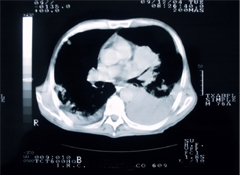
Lung cancer is a sly disease, often not picked up until it's well-entrenched and spreading, making treatment difficult. However, lung cancer screening holds the promise of earlier detection and treatment for people at high risk. And, according to new research, this could save lives.
Researchers have been looking at several screening approaches, with one of the most promising being low-dose spiral CT scans. These scans can produce detailed pictures of cross-sections of your lungs. Studies show that CT scans can detect more early-stage lung cancers than chest X-rays. But it has been unclear whether this might prevent many deaths. That's where the new study comes in.
Researchers recruited more than 50,000 current and former heavy smokers who were ages 55 to 74. They screened them annually for lung cancer for three years, with around half having CT scans and the rest having chest X-rays. The participants were then followed for an additional 3.5 years.
During the study, 1,060 lung cancers were diagnosed in the CT group, and 649 of these were detected by screening. In comparison, only 279 of the 941 cancers diagnosed in the chest X-ray group were detected by screening. The cancers spotted through CT scans were also more likely to be at an early stage than those detected through chest X-rays.
But, most strikingly, people in the CT group were 20 percent less likely to have died of lung cancer by the end of the study, compared with those in the chest X-ray group.
This is an important finding. But CT screening wasn't without drawbacks. Nearly 25 percent of people in the CT group had a positive screening test during the study, despite most not having cancer. This meant that they had to undergo further tests to find out that they did not have the disease. Some people had complications from these tests, although this wasn't common.
So where does this leave us? The study's authors say that many questions still need to be answered before regular lung cancer screening is recommended to patients. For example, how often should people at high risk of lung cancer be screened? What's the best approach for following up on positive results? When used regularly for screening, how safe is the radiation emitted by CT scans?
And then there's the question of cost. CT scans don't come cheap, and neither do follow-up tests, which can include more scans, bronchoscopies and biopsies. The researchers estimate that 320 people would need to be screened to prevent one cancer death. That's a lot of expensive tests and follow-up.
For more on weighing the risks and benefits of screening, see our earlier blog reporting on the preliminary results from this study.
Bottom line: If you are a heavy smoker, regular screening may reduce your risk of dying from lung cancer by detecting the disease earlier. But, by far, the best way to decrease your risk is to stop smoking. If you're ready to quit, there are many treatments that can boost your odds of success. Talk to your doctor about what might be best for you.
Source
National Lung Screening Trial Research Team. Reduced lung-cancer mortality with low-dose computed tomographic screening [New England Journal of Medicine]
—Sophie Ramsey, BMJ Group
ConsumerReportsHealth.org has partnered with The BMJ Group to monitor the latest medical research and assess the evidence to help you decide which news you should use.

 Build & Buy Car Buying Service
Save thousands off MSRP with upfront dealer pricing information and a transparent car buying experience.
 Get Ratings on the go and compare
while you shop

