Sign In

Tablet manufacturers have had an uphill battle since day one in their efforts to challenge Apple's iPad. Some have been thinner or lighter. Some have been more versatile with lots of input options or mashup designs that make them netbook-like. The Amazon Kindle Fire and Barnes & Noble's Nook Tablet are notable for their great price and integration with their parent companies' media offierings, and both are very good tablets. But they're smaller than the iPad and don't have the range of apps. The bottom line is, no one has been able to beat the iPad in price, quality, and technological innovation.
This year's Consumer Electronics Show presented another opportunity for Samsung, Toshiba, Sony, and others to strut their iPad-challenging stuff. We'll see how their entries stack up when we fully test them, but there were certainly some intriguing additions.
Here's a look at what each came up with.
Samsung Galaxy Tab 7.7. Samsung slightly enlarged the display size of its 7-inch Galaxy Tab, made it thinner, and added a Super AMOLED Plus display, which should provide a wider viewing angle and brighter screen. We got a preview and our first impression was that it looked great. But pricing hasn't been announced and we don't yet know how using AMOLED technology affects the Galaxy Tab's battery life.
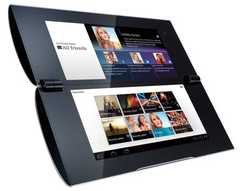
Sony Tablet P. What sets this off from others is its dual 5.5-inch screens. You can use them as one large display, in tandem, for things like video-viewing/controller, or vertically to read a two-paged book. We liked the display and touch response on Sony's earlier Tablet S, as well as the tie-ins with Sony's media and PlayStation content. But will a screen this size fly in a tablet? Pricing isn't yet available.
Toshiba Excite X10. Toshiba lightened the load on its tablet compared to its earlier model, the Thrive. This 10-inch device is lighter than the iPad 2 and about as thin. Yet, as with the Thrive, Toshiba managed to cram a variety of ports into the Excite. Portability was one of the qualities that held the Thrive back somewhat. Toshiba may have eliminated that roadblock with its latest effort.
Lenovo IdeaTab S2. Not surprisingly, Lenovo also went thinner and lighter with its new tablet. It runs on Android 4.0, also known as Ice Cream Sandwich, the latest version of Google's operating system, which melds the features of Android 2.3, developed for smartphones, and Android 3.0, developed for tablets.
Vizio VTAB3010. At last year's CES, Vizio showed the innovative ways it could tie in its tablets to content on its TVs. We've been waiting for that feature to be fully implemented, and it looks like that's about to happen with Vizio Internet Apps Plus, which allows enhanced search, multi-screen TV access, and more. The new tablet and Vizio's current VTAB1008 tablet are both compatible with this new ecosystem.
Intel. With netbook demand decreasing, it should be no surprise that Intel announced it will be bringing its Atom processor, mostly used in netbooks, to more tablets this year. A key point in making this successful: Intel's ability to build increasingly smaller Atom processors. The smaller the die, the less power the battery uses. Current Atom processors are 45nm (nanometers). Intel said it would launch 32nm Atoms this year, 22nm in 2013, and 14nm in 2014.
Microsoft Windows 8 tablets. Microsoft has already ported the new look of Windows, called Metro, to its Xbox 360 interface. Look for more focus from Microsoft on getting Windows 8 onto tablets. But as far as news from CES goes regarding Microsoft and tablets: There was none.
—Donna L. Tapellini


 Build & Buy Car Buying Service
Save thousands off MSRP with upfront dealer pricing information and a transparent car buying experience.
 Get Ratings on the go and compare
while you shop


