Sign In

Menu
Suggested Searches
Recent Searches
Suggested Searches
Product Ratings
Resources
Chat With AskCR
Resources
All Products A-ZThe payment for your account couldn't be processed or you've canceled your account with us.
Re-activateMy account
Sign In
My account
Sign In
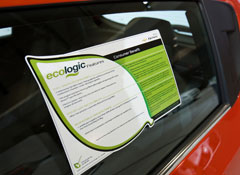
Consumers are well aware of fuel economy and concerned about tailpipe pollution. But it's much harder to get information on the whole lifecycle environmental impact of cars: how much energy it takes to produce a car, the pollution generated, and recyclability. Now Chevrolet is taking a step toward making this information more readily available.
Starting with the 2012 Sonic, Chevrolet will begin putting what it is calling EcoLogic labels on the windows of all its models.
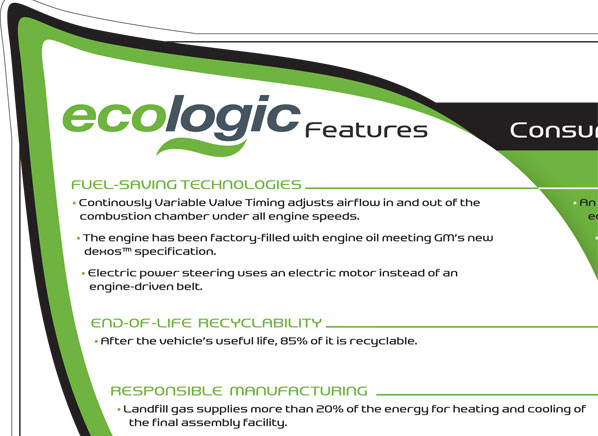
So far the label is more self-serving and less useful than it could be, listing some minor fuel-saving features on the car, such as variable-valve timing (which other automakers have had for about 20 years) and electric power steering (not exactly uncommon these days). What it doesn't highlight is what's left out, such as the makeup of the paint used to spray the car.
This label also lists the estimated percentage of the car's content that is recyclable (85 percent) and special processes at the factory that reduce its environmental footprint. In this case, the Sonic's engine and transmission are built in a landfill-free facility, and the final assembly factory is cooled and heated 20 percent by landfill gas. (Some other automakers, such as Subaru's Indiana plant, produce all their cars at 100-percent landfill-free facilities.)
Most cars today are highly recyclable. The bigger question may be, how much of cars are actually recycled?
To be more meaningful, the label would have to be tied to industry standards that could, for example, rate the car's and the factory's environmental qualifications against its peers. Still, as long as consumers view it with a critical eye on Chevrolet's marketing claims, it seems like the label could be a good first step toward developing such standards to make all cars' lifecycle environmental costs more transparent.
Already, the revised EPA window stickers now used on all new cars contain much more information than in years' past, further empowering consumers to make informed decisions.
Related:
Video: Transportation Secretary Ray LaHood explains the new fuel-economy labels
—Eric Evarts

 Build & Buy Car Buying Service
Save thousands off MSRP with upfront dealer pricing information and a transparent car buying experience.
 Get Ratings on the go and compare
while you shop

