Sign In

Menu
Suggested Searches
Recent Searches
Suggested Searches
Product Ratings
Resources
Chat With AskCR
Resources
All Products A-ZThe payment for your account couldn't be processed or you've canceled your account with us.
Re-activateMy account
Sign In
My account
Sign In
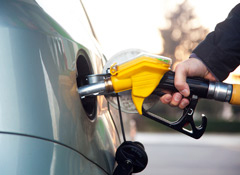
Among consumers who expect their next vehicle to have better fuel economy, nine out of 10 car owners are motivated by the prospect of lower fuel costs. Even so, car buyers generally acknowledge that there can be downsides to buying fuel-efficient and alternative-fuel cars. They feel the leading disadvantages are high purchase price, inadequate refueling or recharging infrastructure, and cost of battery replacement, according to a recent Consumer Reports survey.
The Consumer Reports National Research Center conducted the random, nationwide telephone in April, interviewing 1,702 adults about the impact of rising fuel prices.
Consumers were attracted to alternative fuel vehicles for a variety of reasons. We found that consumers are willing to accept compromises in size, comfort, and amenities to achieve their desired reduction in operating costs, but there are strong perceived disadvantages in buying a fuel-efficient or alternative-fuel car.
The responses point to consumers wanting the benefits offered by hybrid and electric vehicles, yet in different configurations and at an attainable price. The high purchase price is the chief disadvantage reported by about three-quarters of interviewees. Indeed, the highly publicized Chevrolet Volt and Nissan Leaf do command significant premiums for their alternative powertrains, even after purchase incentives. And many of the other cited disadvantages could apply to these models, such as inadequate charging infrastructure and battery replacement cost.
| Disadvantage | Percentage |
| High purchase price | 74 |
| Inadequate refueling/recharging infrastructure | 69 |
| Battery replacement cost for hybrid/electric | 64 |
| Limited driving range | 63 |
| Few choices available | 63 |
| Not enough room for passengers/cargo | 57 |
| Unproven reliability | 56 |
| Underpowered | 54 |
| Safety concerns | 47 |
Many of consumer concerns may be exaggerated. For instance, most plug-in car owners recharge at home, minimizing much of the need for public charging for routine use. The driving range may be limited with the Leaf, but it still provides adequate range for most daily trips. Models such as the Volt and Toyota Prius plug-in have every bit the range of a conventional gasoline-fueled car. Drivers aged 35 and older express greater concern about range.
The unproven reliability is a natural concern for new, high-tech automobiles, but the proof will come quickly. In fact, the initial reliability data we collected in our last annual auto survey showed the Volt had above-average reliability. And historically, Toyota Prius reliability has been exemplary, with relatively few batteries replaced.
Although ranked low on this list, safety concerned almost half the interviewees, potentially sparked by a couple of widely reported fire incidents. However, all mass-produced cars must meet specific federal standards for crash and rollover safety, and there have not been any widespread issues. In fact, the Leaf, Volt, Prius, Prius C, and Prius V all meet the more-stringent standards of the Insurance Institute for Highway Safety (IIHS) to be named Top Safety Picks.
Alternative powertrain vehicles do often carry disadvantages, but they are not as widespread as responses suggest. And, many current owners of alternative vehicles consider the trade-offs to be worthwhile, given their reduced energy costs and both the environmental and national benefits.
The bottom line: If attracted to an alternative powertrain vehicle, do your research, rather than turn away based on assumptions. Otherwise, you might miss out on a compelling, potentially money-saving car.
For more insights from this survey, read: "High gas prices motivate drivers to change direction".
Related:
Survey shows high fuel costs cause downsizing, less driving
Consumers are willing to compromise to achieve better fuel economy
Consumers still favor gasoline-fueled cars, but most are open to options
Consumers name their leading disadvantages of buying a fuel-efficient or alternative-fuel car
—Jeff Bartlett

 Build & Buy Car Buying Service
Save thousands off MSRP with upfront dealer pricing information and a transparent car buying experience.
 Get Ratings on the go and compare
while you shop

