Sign In

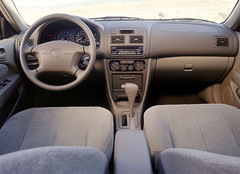
Six automakers have seen front air bags from supplier Takata blow up in their face, as 3.4 million cars will be recalled worldwide from BMW, General Motors, Honda, Mazda, Nissan, and Toyota. From the headlines, it sounds frightening, with fire and shrapnel being among the risks, but what does it mean to you? We'll explain.
Despite that headline writers love big numbers, the reality is that this impacts about a million cars in the United States, and most are at least a decade old. This is not a problem on late-model cars, so new-car shoppers can breathe easy.
The other key number is the total incidents, which by various reports count about a half dozen. So, even among the identified cars that use the suspect front passenger air bags, the risk for injury is minute.
Read our October 2014 update on this recall. And visit our guide to car safety.
According to Toyota, the problem lies with an improperly manufactured propellant wafers that can produce an abnormal air bag deployment, causing the bag to potentially inflate too rapidly.
The scale of the recall highlights the risks associated with parts sharing, not only within a brand but across the industry. When things go wrong, they go wrong in a big way. On the other hand, this does allow for significant cost savings and shared engineering resources.
Included within the associated recalls:
The automakers will notify affected customers. It is recommended that owners wait for notifications, which are timed with parts availability and dealership training.
Ultimately, almost all cars face a recall at some point. While recalls do point to a flaw that impacts safety, a recall at least means that a problem has been found and a solution identified.
—Jeff Bartlett
Updated on October 24, 2014.

 Build & Buy Car Buying Service
Save thousands off MSRP with upfront dealer pricing information and a transparent car buying experience.
 Get Ratings on the go and compare
while you shop

