Sign In

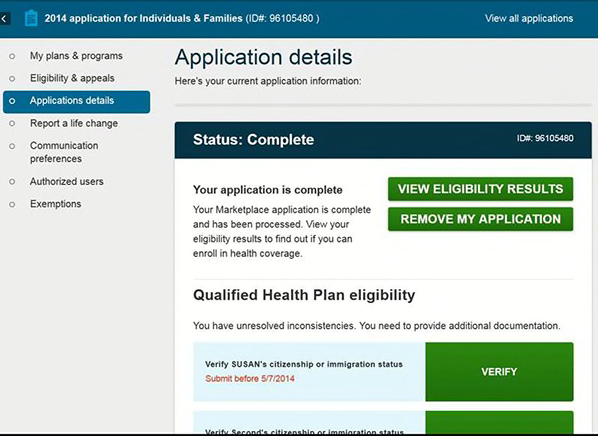
Of the 5.5 million people who bought private health insurance plans through HealthCare.gov, 40 percent may end up either having their coverage canceled or their premium subsidies reduced or eliminated, unless they provide missing information about their income or immigration status within the next 90 days. The Department of Health and Human Services says it is now reaching out to those people by phone, e-mail, and regular mail, asking for missing information. If you are one of them, here's what you need to know.
The missing information falls into two basic categories:
In order to figure out what applicants were eligible for, HealthCare.gov needed lots of information about their incomes, citizenship, and immigration status. In most cases (as it turned out, about 60 percent of them) the website could automatically double-check and verify the information the applicants supplied against various government databases such as tax and Homeland Security records.
But when HealthCare.gov couldn't match up applicants with the databases, or found inconsistencies between the government's records and the information the applicants supplied, the applicants were, in most cases, cleared to go ahead and get health coverage but given 90 days to supply the missing information, such as pay stubs, visas, and citizenship papers. (Here's a complete list of the types of documentation the government wants.)
That is where the process broke down almost immediately. When HealthCare.gov opened for business in the fall, among the many missing pieces of planned functionality was a way for applicants to electronically upload copies of requested documents. Instead, they were instructed to mail paper copies to a service center in Kentucky operated by Serco, a government contractor. All those documents had to be manually processed and in many cases, those familiar with the process have told me, documents came in with no identifying information, making it difficult if not impossible to attach them to the correct application.
At some point during open enrollment, HealthCare.gov got its upload feature but, conceded an Health and Human Services Dept. spokeswoman, "In some cases, it was difficult for people to use, or they couldn't verify the upload once they had done it." According to Serco documents released recently by the House Energy & Commerce Committee, by the time open enrollment ended on March 31, consumers had managed to upload only about 90,000 documents.
If you bought health insurance through HealthCare.gov and received an e-mail, letter, or call asking for additional information, here's what to do.
Got a question for our health insurance expert? Ask it here; be sure to include the state you live in. And if you can't get enough health insurance news here, follow me on Twitter @NancyMetcalf.
—Nancy Metcalf

 Build & Buy Car Buying Service
Save thousands off MSRP with upfront dealer pricing information and a transparent car buying experience.
 Get Ratings on the go and compare
while you shop

