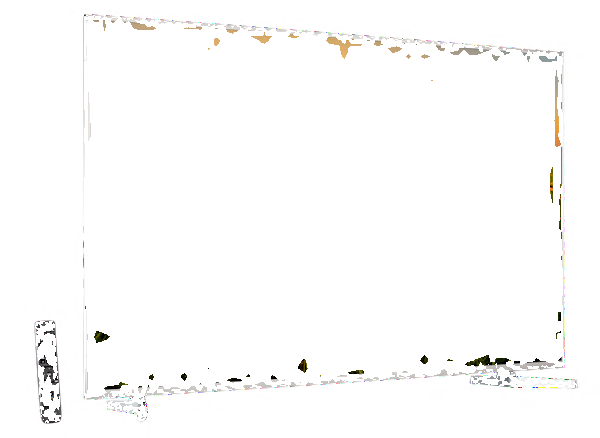
HD PICTURE QUALITY. HD picture quality was very good. It did an excellent job displaying the finest detail of HD content. Color accuracy was excellent, so colors, especially flesh tones, looked very natural and lifelike. Contrast--the difference between the darkest blacks and brightest whites--was good, so images had depth and dimension, typical of most models we test. The brightness level was good, making it a suitable choice for most rooms. Black level was generally good, though not as dark as better performers on the darkest scenes (though quality does degrade as you move to the sides - see viewing angle). In scenes with subtly shaded light-to-dark areas, such as a sky during sunset, the model did a very good job producing a smooth transition without distinct, coarse bands. There was slight display non-uniformity that created brighter cloudy areas most noticeable on very dark scenes (or in the black bars of a letterboxed movie). We routinely see this issue with LCDs and severity can vary from model to model. The deinterlacing and film mode operations were excellent on HD content; there was little or no trace of jaggies on the edges of objects for video and film-based 1080i video content, such as from cable.
VIEWING ANGLE. This Sharp has a moderate viewing angle overall, decent, but not quite as good as the better-performing TVs we've tested. The optimal seating position for best picture quality is directly in front of this model. When we viewed the TV from the sides, image quality got worse. The picture showed a slight loss of color, along with a slight color shift. Black levels visibly brightened, reducing contrast especially on dark scenes. When viewing the image from above or below eye level to the screen, the vertical viewing angle was very good. The picture showed minimal change in color, contrast, and black level.
ULTRA HD PERFORMANCE. Overall UHD performance was very good and showed very good HD-to-UHD upconversion. All native 4K content (non HDR) we played on this model, including movies and test videos, was presented in full 4K detail with excellent fidelity when played back via the TV's HDMI input. This TV can stream 4K programs from Netflix and YouTube. Images were clean and finely detailed. High-resolution photos were displayed in full 4K detail. With regular HD content, the TV's HD-to-UHD up-conversion processing was very good, with edges along diagonals of image content showing slight jaggies, just short of the best we've seen.
HIGH DYNAMIC RANGE (HDR) PERFORMANCE. HDR performance was generally effective, but short of the best we've seen. The display's lack of high brightness capability (by HDR standards) limited its ability to show the benefits of HDR to full effect on our test videos, while revealing excellent contrast between moderately bright and very bright highlights within a scene. It did a good job reproducing a greater range of nuanced shadow detail from black to white, with no obvious banding on areas of the image that have subtle shade variations. There was no visible loss of near-white shadow detail in the brightest areas. Very bright, colored objects remained nicely saturated, and an extended range of color capability was not apparent from our test patterns.
MOTION BLUR. This Sharp TV has good motion performance, with some blurring on our motion tests. This is better than average for LCD displays with the basic 60Hz frame rate. Though this model includes Sharp's "AquoMotion Enhancement", a feature designed to reduce motion blur, it also activates the so-called "soap opera" effect that removes film judder (the slightly jerky motion visible during camera pans on film-based content). This gives movies a less film-like appearance that some may not prefer. We turned the "AquoMotion Enhancement" feature off.
SCREEN REFLECTIVITY. The screen surface on this model has one of the shinier mirror-like surfaces we've seen, which makes it very susceptible to reflections from a nearby lamp or window. It does a good job reducing glare from ambient light and maintains contrast in a brighter room environment.
SOUND QUALITY. This model has fair sound quality with below average performance. It's acceptable for typical programming, but shortcomings become obvious with movie soundtracks and music. Bass was lacking in depth and definition, and treble lacked detail, while the overall sound was notably closed in. The speakers could play at a fairly loud volume level and without obvious distortion. If sound quality matters to you, you might want to add a soundbar or other external speaker system.
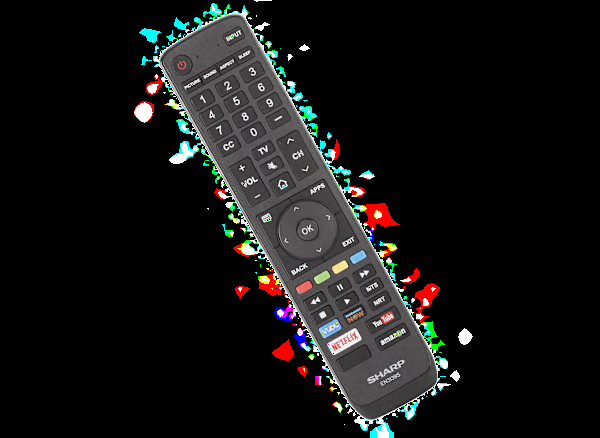
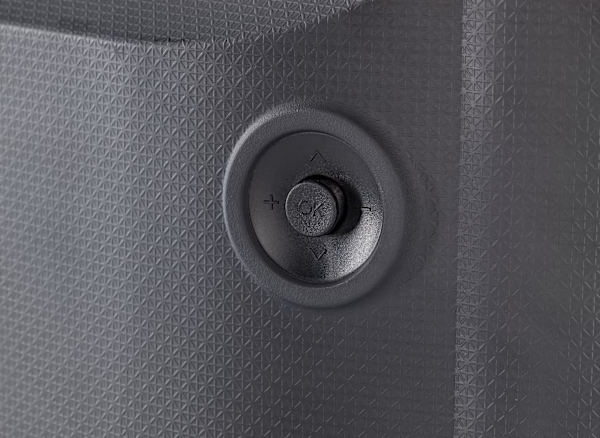
EASE OF USE. On first power up there is an on-screen guide that helps you through setting up the TV. Sharp includes a basic remote that has traditional button navigation controls and number keypad. It includes direct button access to Netflix, Vudu, Amazon, YouTube, and Fandango NOW streaming services. The high contrast labels on the buttons make them easier to read in a dimmer viewing environment.
INTERNET FEATURES. This TV provides advanced Internet capabilities with access to a library of applications, and a full Web browser. Movie streaming services include Netflix, YouTube and Amazon Prime Video.
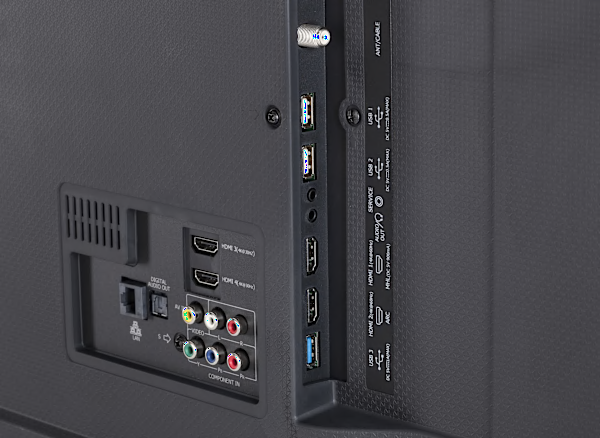
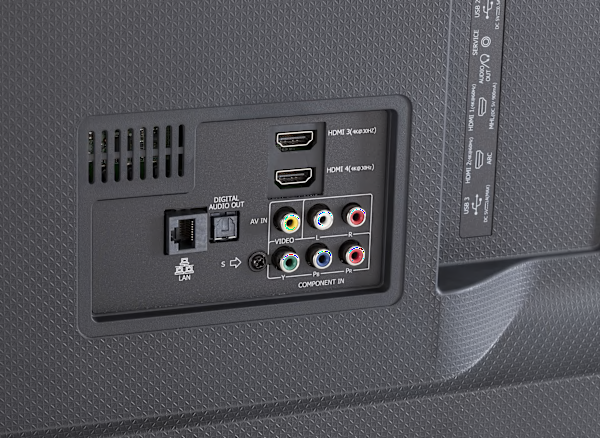
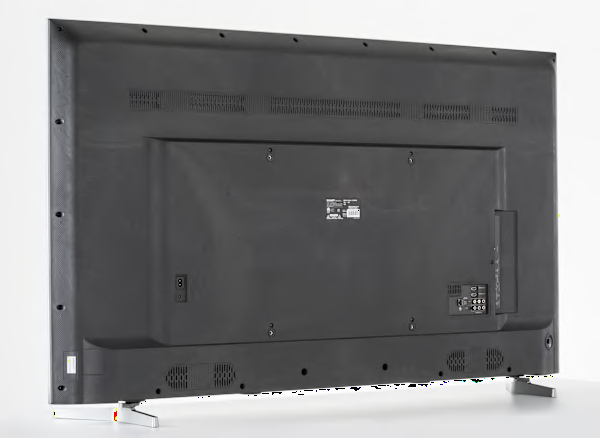
CONNECTIONS. This model has four HDMI inputs-- one supports ARC (Audio Return Channel), one "component/composite shared" input (which means you can only use one type or the other at a time). It also has three USB ports, an optical digital audio out, a headphone out, an Ethernet port, WiFi wireless networking; DLNA, to access files within your home network; Casting, which allows you to send streaming content from your mobile device to the TV via your home network; Screen mirroring, where the image on your smartphone or other compatible device can also appear on the TV. Note: HDMI and other cable connections made to the rear-facing panel will protrude beyond the panel's slim depth.
INCLUDED IN THE BOX. A quick start guide. A remote control with batteries. No printed manual is included.
ABOUT ULTRA HD TESTING: We test UHD picture quality using 4K movies, videos, photos, and test patterns to confirm these displays deliver performance to this format's full potential. We check the TV's ability to reproduce 4K image detail, as well as high dynamic range (HDR) for TVs that support this capability. Image quality is tested using a 4K movie player connected to the TV's HDMI input, as well as from files stored on flash drive plugged into the TV's USB port. We also check the quality of 4K streaming from Netflix or YouTube (if the service is supported by the TV), and how well the TV can upscale HD movies to the display's higher UHD resolution while keeping artifacts such as "jaggies" along the edges of image content to a minimum. The best UHD TVs, and HDTVs, present high fidelity images that reveal the full quality of the best source content without degradation.