These Popular Snacks Contain High Levels of Additives and Contaminants
A new investigation from Consumer Reports and Yuka reveals that some of America’s most ubiquitous foods—from brands like Cheetos, Hostess, and Jell-O—contain concerning substances. How did we get here?


Nobody, not even the Food and Drug Administration, knows exactly how many additives are in the U.S. food supply. One of the most commonly cited figures—roughly 10,000—comes from an estimate published 15 years ago. Many of these are effectively unknown to federal regulators, thanks to a decades-old legal loophole that allows companies to introduce new substances into food without notifying the FDA or undergoing federal safety review.
Among the substances that regulators are aware of, there is a separate problem: The U.S. routinely permits them at levels far higher than what other public health authorities consider safe. In some cases, the FDA either sets no limit at all or relies on thresholds established decades ago that have since been challenged by new research suggesting harm may occur at lower levels.
A new investigation from Consumer Reports and Yuka underscores the risks of this approach. We tested 40 popular grocery products for eight additives and two contaminants where U.S. standards diverge from European authorities or where research suggests current limits may not be protective enough.
One-quarter contained concerning levels of additives—enough that a single serving had more than the amount some public health agencies have identified as safe for adults or children to consume daily. That tally grew to over a third when factoring in the presence of contaminants, harmful substances that can end up in food unintentionally as a result of certain manufacturing processes. And nearly two-thirds of the 40 products tested contained enough of at least one additive to exceed a broader group of reference levels associated with an increased risk of developing cancer, heart disease, or diabetes.
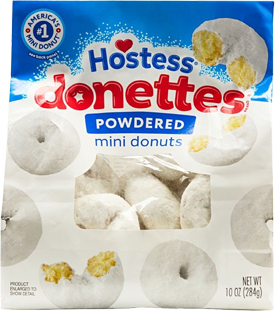
Some exceeded thresholds by sizable margins. A single serving of Hostess Donettes Powdered Mini Donuts contained nearly 19 times the amount of a carcinogenic contaminant that public health officials have said is safe to consume daily. The amount in a serving of Little Debbie Oatmeal Creme Pies was over nine times that same threshold, which is designed to reduce lifetime cancer risk. Those two products were also among the four we tested that contained titanium dioxide, a synthetic pigment banned as a food additive in Europe over its potential to induce breaks in DNA strands and cause chromosomal damage. The Hostess Donettes contained 261 mg of titanium dioxide per serving—over 760 times the amount detected in the other three products combined.
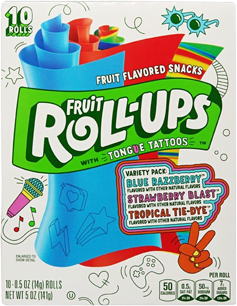
Several popular children’s snacks also had levels of additives or contaminants that exceeded safe daily intake levels, some by five times or more. Notably, Crunchy Flamin’ Hot Cheetos, Gushers, Fruit Roll-Ups, Takis Fuego, and grape-flavored liquid Kool-Aid all contained elevated amounts of substances associated with either neurobehavioral issues or DNA damage at certain levels of exposure.
CR and Yuka’s investigation comes at a critical juncture for the future of U.S. food additive safety.
The pervasiveness of additives and contaminants in U.S. food is the byproduct of a nearly 70-year-old regulatory system that makes it far easier for companies to introduce potentially harmful substances than it is for the FDA to remove them. Manufacturers are theoretically required to demonstrate a reasonable certainty of no harm before introducing a new additive, but they also select the studies used to demonstrate safety and can rely on unpublished self-funded research to do so. And many elect to skip even this process by taking advantage of a giant loophole—the so-called secret GRAS route—that allows them to introduce new substances into the food supply without notifying the FDA at all.
Compounding these problems is that the FDA is not required to reevaluate the safety of substances already in the food supply, including those that never underwent a formal safety review. As a result, most of the additives we tested have not been meaningfully reassessed by the FDA in decades, if at all. This is par for the course in the U.S., which operates under a regulatory framework that FDA officials have described as limited in scope, “not always prioritized towards issues of the greatest public health impact,” and ultimately “several decades behind Europeans and our Canadian counterparts.”
But all that may be beginning to change.
Four weeks ago, after years of criticism from food safety advocates, the FDA announced a new framework for reevaluating the safety of chemicals in the food supply. It also launched reassessments of two additives: azodicarbonamide (ADA) and butylated hydroxytoluene (BHT), the latter of which was among the substances we tested.
The effort to bring the FDA’s oversight of food additives into the 21st century began under the Biden administration but has moved to the center of the national conversation in the second Trump administration, propelled by Robert F. Kennedy Jr.’s Make America Healthy Again movement and bipartisan concerns over so-called ultraprocessed foods—a category traditionally defined by the presence of many of the very additives we analyzed.
Researchers and consumer advocates describe the current momentum around such issues as unprecedented in recent political history. “We haven’t seen this type of uprising since, not exaggerating, like 1906, when they passed the Pure Food and Drug Act,” says Jennifer Pomeranz, MPH, a lawyer and associate professor who oversees New York University’s public health policy research lab. In recent years, several states have enacted legislation restricting the use of additives linked to health issues, and experts say the U.S. appears closer to addressing the issue on a federal level than ever before.
“We’re living in a world where the food industry completely self-regulates, and they are not doing a good job of it when it comes to our safety, and people finally know that,” Pomeranz says. “It would be a real political loss for action not to take place.”
The Additives and Contaminants Lurking in Your Food
For this investigation, we anonymously purchased and analyzed over 120 samples of 40 popular processed foods to determine the average amount of eight additives and two process contaminants present across multiple product lots.
We then compared the amounts detected against safe daily intake levels set by U.S. and European public health agencies—including the FDA, the European Food Safety Authority (EFSA), and California’s Office of Environmental Health Hazard Assessment—and adverse effect levels identified in peer-reviewed scientific studies. Finally, a team of scientists analyzed the resulting data to calculate a “hazard quotient,” or the level below which no adverse health effects would be expected to occur, for each of the 10 substances, taking into account a lifetime of chronic exposure.
In all, 11 products exceeded this level of concern for adults, and 14 for children. These products contained enough of at least one concerning substance that consuming a single serving daily would pose an increased health risk over a lifetime. “These foods shouldn’t be part of a regular diet,” says Eric Boring, PhD, the CR chemist who oversaw this testing project. “Based on our findings, they should only be consumed occasionally, if at all.”
Snack Cakes
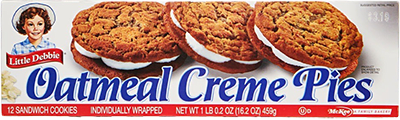
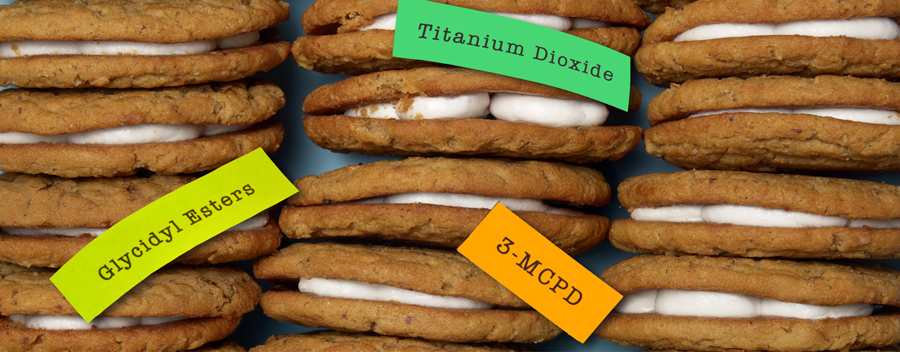
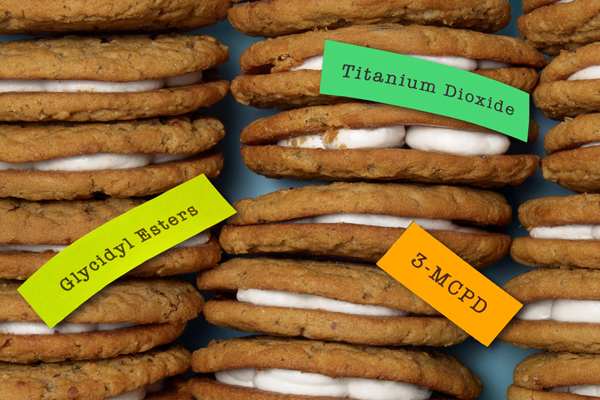
One serving of Little Debbie Oatmeal Creme Pies contained 5.2 micrograms of glycidyl esters, a carcinogenic contaminant, and 0.03 milligrams of titanium dioxide, a synthetic pigment banned in Europe over its potential to damage DNA.
All the additives and contaminants we analyzed have been linked to negative health effects at certain levels of exposure. However, it’s difficult for regulators and consumers to know precisely how much of a given substance the average person is exposed to daily, because companies are not required to disclose the specific amounts present in their products.
FDA officials have bemoaned this information gap for years. At a 2024 congressional hearing, then-FDA commissioner Robert Califf, MD, repeatedly stressed the importance of obtaining updated exposure and safety data from food manufacturers. “When the medical products industry does research, by law, if it’s done on human beings, it is made public and we have access to it. We look at the raw data and analyze it ourselves at the FDA,” he explained. “The food industry does massive amounts of research that we have no access to. We don’t know what they’re doing. We don’t know what’s guiding their decisions.”
Under the Food Additives Amendment of 1958, companies are required to submit safety data to the FDA before introducing new additives, which the landmark legislation broadly prohibited from being used in food unless “adequately tested to establish their safety.” However, the law did not define safety or specify how precisely companies should go about determining it. In recent decades, the FDA has recommended that industry use certain types of toxicological testing, like animal studies that measure a substance’s genotoxicity, carcinogenicity, or potential to cause reproductive harm. But that guidance is purely voluntary.
A 2013 analysis of 3,941 approved additives found that nearly two-thirds appear to have been declared safe for use in food without ever being fed to an animal in a controlled toxicology study. Researchers analyzed records from the FDA’s own database, which included the published and unpublished studies the agency used in its safety determinations, and found that most were missing the basic forms of toxicological data used to estimate safe exposure levels and calculate the acute lethal dose of a chemical.
The study’s findings were even more stark for the most potentially harmful substances. The FDA has established three levels of concern for additives and generally recommends that manufacturers conduct additional research, including reproductive and developmental toxicity testing, for the more concerning ones. However, only 12 percent of additives that met this description had the recommended safety data, the analysis found.
Experts say this isn’t unusual. “The FDA really hasn’t even done its own research to figure out if these are safe or not,” says Jim Krieger, MD, MPH, a food policy researcher and executive director of Healthy Food America, a nonprofit organization that advocates for easier access to nutritious food. “They’ve relied on the research that’s been provided to them by industry, if industry even bothers to provide it to them.”
To understand the potential health risks for consumers in the absence of consistent federal standards, CR and Yuka selected scientifically based health protective limits for each additive and contaminant we tested, based on thresholds identified by public health agencies. Where U.S. and European limits differed, we chose the lower of the two to provide greater protection for public health. Most of the limits we used were established by the EFSA, two were set by California officials, and one by the FDA.


Chocolate Pudding
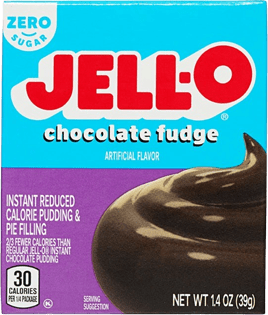
A serving of Jell-O Zero Instant Pudding contained 14.2 milligrams of Red 40, nearly nine times an acceptable daily intake level identified by California officials for children and three times the level for adults.
The one notable exception is the limit we used to assess the risk of exposure to Red Dye No. 40, a synthetic food color first approved by the FDA in 1971. In recent decades, a growing body of research has linked the dye to neurobehavioral effects, gastrointestinal harm, and DNA damage, leading some scientists and public health advocates to call for a reevaluation of the agency’s current acceptable daily intake level, which is based on an unpublished study of rats submitted to the FDA in 1970 by the manufacturer of Red 40.
In one peer-reviewed 2018 study, adult rats given Red 40 at a dose equal to the FDA’s acceptable daily intake showed impaired performance on learning and memory tests and signs of neurological damage; the damage was significantly more severe in rats given 10 times that dose. A 2021 assessment by California’s Office of Environmental Health Hazard Assessment (OEHHA) used this study to recalculate what the FDA’s acceptable daily intake of Red 40 would be if it incorporated modern research on neurobehavioral effects. The answer? Between 1/1000 and 1/100 the current threshold, depending on the safety margin applied.
We used the more permissive end of that range—0.07 mg per kg of body weight per day, or 1/100 the current acceptable daily intake—to assess the risks of Red 40 consumption. We selected this threshold for risk assessment because the OEHHA concluded that the acceptable daily intakes currently used by U.S. and European authorities “may not protect against neurobehavioral effects.” These findings also informed California lawmakers’ decision to ban Red 40 in food served in the state’s public schools beginning Dec. 31, 2027.
The chart below shows the average amount of each additive and contaminant detected across multiple samples of the products we tested. Because the products were purchased over a two-month period beginning last November, the results may not mirror current levels in every product on shelves today. Even so, our findings highlight why consumers should carefully consider the role of these products in their diet.
It’s important to note that neither Consumer Reports nor Yuka is a compliance or regulatory body. We offer information for consumers to make informed decisions. No legal judgments can be made from our findings. For more information about how we tested, see our methodology.
Additives and Contaminants in Everyday Products
Glycidyl Esters


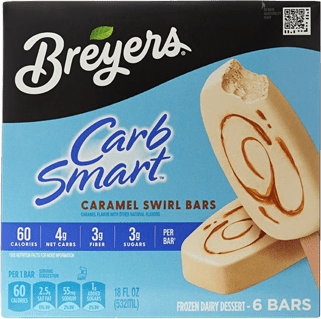
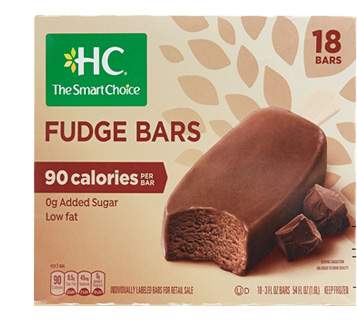
A team of CR scientists also calculated specific per-serving consumption limits for all of the concerning products we tested.
Before publication, we contacted the manufacturers of all the products flagged in the chart above to share our findings and methodology. Only five responded to our multiple requests for comment, including McKee Foods, maker of Little Debbie Oatmeal Creme Pies, which declined to comment. Kraft Heinz, Ocean Spray, Amos, and Smithfield Foods spokespeople said the amount of additives in their products meets U.S. regulatory standards.
Representatives for Kraft Heinz, Ocean Spray, and Amos also said that the companies are working to remove artificial colors from their products in response to changing consumer expectations. Ocean Spray plans to relaunch its Diet Cran-Grape Juice, and the other products in its diet beverage line, “with a new formula using only natural colors” in early 2027, said spokesperson Kate Leonard. Similarly, an Amos spokesperson said the company expects to transition away from using titanium dioxide in its Peelerz products by the end of 2026. Kraft Heinz plans to remove Red 40 (and six other synthetic dyes) from its U.S. portfolio by the end of 2027, said spokesperson Chelsea Slaggert, who also requested that we remove the company’s Kool-Aid and Jell-O Zero products from this story after reviewing our findings. “The implication that these products present a safety concern is not supported by scientific or regulatory evidence,” said Slaggert.
Lagging Standards
To be clear: There is no reason to panic if you’ve been consuming any of the products we tested. Though many exceeded the selected safety thresholds, none contained enough of a particular substance to cause immediate, severe harm, says James E. Rogers, PhD, director of food safety at CR. That’s because policymakers generally design these limits conservatively, starting from the highest dose found to have no negative effects in animal studies, and then applying a safety cushion to account for variation across the population and minimize the risks of long-term exposure.
The result is what regulators call an acceptable daily intake—the amount of a substance a person can consume daily over a lifetime without an increased health risk. But that protective logic depends on the limits keeping pace with the science. In the U.S., by and large, they have not.
The issue dates back to the Food Additives Amendment of 1958, which was enacted in response to rising public concern over untested chemicals in the food supply. It shifted the burden of proof from the FDA to industry by declaring all additives unsafe unless manufacturers demonstrated to the agency’s satisfaction that they were reasonably certain to cause no harm. But the law did not require the FDA to revisit those determinations as the science evolved.
As a result, once a substance enters the U.S. food supply, the FDA rarely reconsiders its safety. Take butylated hydroxyanisole (BHA), a preservative used to keep foods containing fats from going rancid: The FDA has permitted BHA in food since 1958, when it was added to the agency’s list of substances generally recognized as safe, or GRAS. But it has never established a formal acceptable daily intake for the substance, even as new evidence of harm has emerged.
After a 1986 study reported that BHA caused tumors in the forestomachs of rats, mice, and hamsters, some U.S. and European agencies took action. But not the FDA. The findings prompted the National Toxicology Program, a U.S. agency that tests chemicals of public health concern, to classify it as reasonably anticipated to be carcinogenic; California regulators to add it to their list of substances known to cause cancer; and European authorities to establish a daily intake limit.
In 1990, a doctor petitioned the FDA to revoke BHA’s approval as a food additive, citing the 1986 study and others that found it caused gastrointestinal bleeding in Japanese house musk shrews and cellular changes in pigs and monkeys. Though the agency is legally required to respond to such petitions, its next move would not come for 36 years: In February, the FDA announced it was beginning a reassessment of BHA’s safety in food.
This laggard pace is far from unusual, experts say. The agency’s 2024 decision to ban the use of brominated vegetable oil in food came 54 years after it had initially concluded the substance could not be generally recognized as safe due to toxicity concerns. The following year, it revoked its authorization for Red Dye No. 3, a synthetic colorant the agency had originally concluded was unsafe 35 years prior, after studies found it caused cancer in rats.
The FDA has the authority to remove from the food supply any substance that does not meet the reasonable certainty of no harm standard, experts say. But it rarely does so. The agency has “historically been very reticent to do anything where they could get sued or they can anger the food industry,” says Pomeranz, the health policy professor.
The EFSA, by contrast, is legally required to reevaluate the safety of all substances in the European food supply, and has published reassessments of more than 240 additives since 2009. This mandate is one of several key differences that experts say explains the gap between the number of additives permitted in the U.S. and Europe.
The logic underlying much of European food regulation is that uncertainty about the safety of a substance is a reason to act, not to wait. The FDA generally takes an opposite view, requiring conclusive evidence of harm before restricting use. But “the law doesn’t create this burden,” says Tom Neltner, a researcher and consumer advocate who has studied the agency’s regulation of food chemicals for over a decade. “FDA’s attorneys create this burden.”
These different lines of thinking informed each agency’s response to titanium dioxide, a synthetically produced pigment used to whiten food and add brightness to other colors. The FDA first permitted its use in foods in 1960. Since then, research has shown that very small particles of titanium dioxide may accumulate in the body and damage DNA.
In 2021, an EFSA panel affirmed that these particles do have the potential to induce DNA strand breaks and damage chromosomes, but it couldn’t determine precisely how this happens or at what threshold. Rather than wait for more definitive evidence, the panel concluded that the unresolved questions were themselves reason enough to declare the additive unsafe for use in food. The European Union banned titanium dioxide from the food supply the following year.
According to the Titanium Dioxide Manufacturers Association, the FDA in January 2023 stated that it had reviewed the EFSA’s findings and concluded that the “available safety studies do not demonstrate safety concerns connected to the use of titanium dioxide as a color additive.” The agency continues to permit titanium dioxide in food at levels of up to 1 percent of a product’s weight to this day.
Powdered Donuts
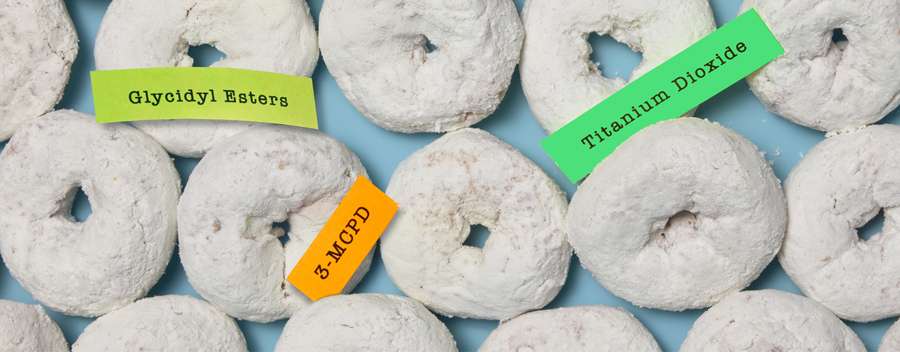
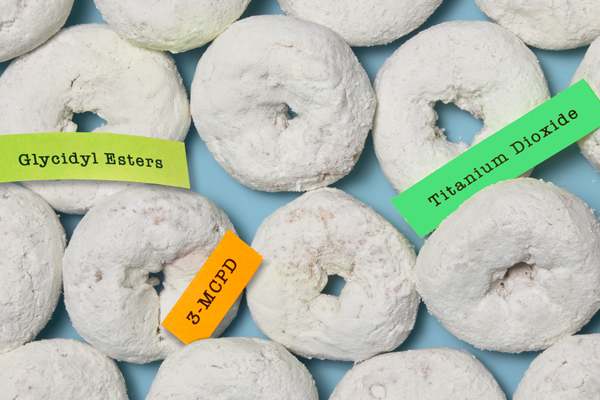
A serving of Hostess Donettes contained 261 milligrams of titanium dioxide, a synthetic pigment banned in Europe over its potential to break DNA strands and cause chromosomal damage.
In March 2023, Neltner and several consumer advocacy groups petitioned the FDA to revoke its approval of the color additive, citing evidence from the EFSA and others indicating that titanium dioxide may be linked to health effects like immunotoxicity, inflammation, and neurotoxicity. More than three years later, the petition is still under review.
“If you can’t make the decision on titanium dioxide, where we know it’s bioaccumulating in the body, then there’s a fundamental problem,” said Neltner.
Former FDA commissioner David Kessler, MD, who led the agency from 1990 to 1997 and oversaw aspects of the government’s COVID-19 response under the Biden administration, says the food industry is ultimately to blame for the difference between U.S. and European standards. “We industrialized food and turned over regulation to the industry itself,” he says.
In response to a summary of our findings, Consumer Brands Association spokesperson Natalie Rubino said that “America has one of the safest and most highly regulated food systems in the world.”
The Consumer Brands Association is a trade group representing the interests of the packaged food and beverage industries. Seven of the 12 companies behind the products with the highest levels of additives and contaminants in our tests have executives on its board, and last year the group spent $6.9 million lobbying lawmakers and the FDA, including on the agency’s regulation of chemicals in the food supply.
“The claims in this report are misleading and undermine public confidence in the food supply,” Rubino said.
Defining Harm
In recent years, some researchers have begun to question whether the thresholds that undergird our regulatory system are capable of protecting consumers from the broader spectrum of harms identified by modern science.
The acceptable daily intakes established by the FDA and other regulators are typically derived from studies designed to identify the dose at which a substance causes no observable adverse effects in animals. This approach has produced safety thresholds that protect against the kinds of acute harms detectable in animal studies, like organ damage, cancer, and reproductive issues. But it cannot as easily detect the kinds of effects that can emerge over years of habitual consumption at low doses—the kind that are thought to lead to chronic conditions such as heart disease and diabetes.
“Just because something doesn’t meet the threshold for being harmful or toxic to human health in a traditional sense doesn’t mean that it’s healthy,” says Allison Sylvetsky, PhD, a professor at the University of Rhode Island in Kingston who studies artificial sweeteners.
This disconnect is reflected in our tests of products for the artificial sweeteners acesulfame K, aspartame, and sucralose. None of the 21 products we tested contained enough of any sweetener to exceed the acceptable daily intakes established by the FDA or EFSA, even for children.
But in a series of large-scale studies published between 2022 and 2023, researchers analyzing the dietary habits of more than 100,000 French adults over 12 years found that consumption of these sweeteners at levels well below the current acceptable daily intake was associated with increased risks of cancer, cardiovascular disease, and type 2 diabetes. (These findings were generally more statistically significant for acesulfame K and aspartame than sucralose.)
The studies were observational, so they can only identify associations rather than prove causation, but because the size of the cohort was so large, and the time period over which participants were monitored was so long, many researchers feel they provide valuable evidence on the long-term effects of artificial sweetener consumption, particularly when considered alongside similar research published over the last decade.
“The big population studies really are showing pretty clear signals of association of these products with adverse health outcomes,” says Krieger, of Healthy Food America. “The evidence is worrisome to me at this point, and it keeps accumulating.”
When we compared the amounts we detected against levels associated with health risks in these studies, the picture shifted. Of the 21 products tested, 19 contained enough of at least one sweetener in a single serving to exceed the levels associated with an increased risk of developing cancer, heart disease, or diabetes in the French cohort study. (After we contacted the companies responsible for several of these products, a representative of the Calorie Control Council, a trade group representing manufacturers and suppliers of artificial sweeteners, sent an email objecting to the use of data from the French cohort study to draw conclusions about the risks posed by artificial sweeteners.)
Both Neltner and Krieger say that the FDA does not always factor this kind of research—epidemiological studies that observe outcomes across a population—into its safety reassessments, or give it as much weight as other types of studies. “For chronic hazards, they don’t believe in epidemiology,” Neltner says. “They want to see animal studies.”
The fact that multiple large-scale epidemiological studies have connected low-level consumption of artificial sweeteners to a wide range of health risks is an argument in favor of the FDA rethinking that approach, Krieger says.
Regulators are “saying these products are safe for the food supply without, in my mind, sufficient evidence to be making that kind of statement,” he says. “We’re not asking them to have definitive evidence of harm, just a reasonable certainty we haven’t proven that these things don’t have harm.”
Inflection Point
Many of these issues have been quietly compounding over the course of decades. “The joke has long been that the F in FDA was silent,” Neltner says. “It’s only recently that the food side is getting attention.”
Indeed, a recent groundswell of public concern has transformed food additive policy from a long-sidelined corner of regulation into a kitchen table issue that is capturing the attention of policymakers on both sides of the aisle.
At least 10 states have enacted legislation restricting additives linked to health issues since 2023. Most merely prohibit foods with certain additives from being sold in schools, but laws taking effect in Arkansas, California, and West Virginia over the next two years will ban the general sale of such products statewide.
“It is so exciting for those of us working for 20 years or more in this field to finally have this bipartisan engagement,” says Pomeranz, who described the California ban, which was passed in 2023, as an inciting incident. “People finally started to get it that the FDA wasn’t actually fulfilling its mission.”
Experts who have spent their careers calling for more stringent, health-protective regulations have found unlikely political allies in Kennedy’s coalition. “Some of what they aspire towards and want to see happen has been what the more traditional or mainstream public health advocates and academics have also been saying for years,” Krieger says. “There’s a window of opportunity that’s open right now.”
Multiple bills currently before the House and Senate would require the FDA to reevaluate the safety of at least 10 substances in the food supply every three years. The push for new federal regulations comes as the agency has begun to take its first steps toward building out the sort of systemic processes it has long lacked—the kind that might have surfaced concerns about substances like BHA decades ago. Earlier this year, the FDA unveiled a legislative proposal that would require food additive manufacturers to conduct “post-market safety evaluations and reassessments” and provide the agency with additional data. It also debuted a new framework for reassessing the safety of substances currently in the food supply, and launched reevaluations of the additives BHA, BHT, and ADA.
In a statement, U.S. Department of Health and Human Services press secretary Emily Hilliard said the new reassessment program will help “to ensure the Agency’s limited resources are focused on the most significant public health risks” and “that chemicals in the U.S. food supply continue to meet safety standards as scientific knowledge evolves.” Hilliard and other FDA spokespeople declined to comment on our specific findings and did not respond to a detailed list of questions about the agency’s regulation of food additives.
Whether the new political attention can translate into meaningful regulatory change, however, remains uncertain. Curbing the use of synthetic dyes like Red 40 has become a signature issue for the FDA under Kennedy, but the agency’s approach so far has relied entirely on voluntary industry commitments. Last April, the FDA announced an initiative to phase certain dyes out of the American food supply by the end of 2026. That deadline, which depends on manufacturers following through on their pledges rather than any regulatory enforcement, has since been extended to the end of 2027. By comparison, West Virginia’s law, which bans the sale of foods containing Red 40 and eight other additives the state has deemed harmful to health, takes effect Jan. 1, 2028, regardless of what industry chooses to do.
The gap between the agency’s aspirations and reality may soon force a reckoning within the administration, Krieger says. “In the first year, it seemed like Kennedy, HHS, and the new FDA thought they would be able to make a lot of progress through voluntary agreements with industry,” he says. “I think they’re realizing that that period is maybe coming to an end, and if they really do want to make progress, they’re going to have to use regulatory tools.”
Such a shift would still have to confront the limits of a regulatory apparatus that some of the country’s most experienced food safety officials say is no longer fit for purpose. The system is not built to do what the American people currently expect, says Kessler, the former FDA commissioner. “To deliver what increasingly the American public wants with regard to toxic substances would take a transformation of the food program as we know it,” he says.
The Partnership Behind This Investigation


Consumer Reports partnered with Yuka to produce this investigation. Yuka is a mission-driven company that helps consumers decipher food and cosmetic labels, and advocates for regulatory and industry changes to improve the safety and quality of food and cosmetics. Together, the organizations decided on the products and substances to test, and compared the amounts detected against safe daily intake levels established by U.S. and European public health agencies, and levels of concern identified in peer-reviewed scientific studies. The story was written and reported by Consumer Reports with Yuka’s collaboration. Yuka contributed its deep toxicological expertise, large database, and wide experience working on ultraprocessed foods and additives. The organization also helped cover the cost of testing.


