Media Room
Media Room
Media Room
Release date 12/03/2007
Tips to avoid fake products
YONKERS, NY — Consumer Reports’ latest investigation of counterfeit goods found that today’s fakes are not just the usual knockoffs like bogus Prada handbags: Some surprising counterfeits include phony golf balls, oil filters, and diabetic strips that give erratic readings.
And fakes include truly unsafe merchandise which means consumers need to take special precautions when they shop: Investigators have seized brake pads made of kitty litter, sawdust, and dried grass; power strips, extension cords, and smoke alarms with phony Underwriters Laboratories (UL) marks; medical test kits that give faulty readings; toothpaste made with a chemical found in antifreeze; and cell-phone batteries that could explode.
In addition, fakes are estimated to cost legitimate businesses up to $250 billion in yearly sales. And while it’s not against the law to buy phony goods, it’s not a victimless crime.
“Counterfeiting helps to bankroll organized crime and the people involved in it don’t adhere to any sound labor or environmental practices,” said Tod Marks, senior editor, Consumer Reports. “Goods are showing up in different outlets other than the guy on the street corner, so more people could be exposed to products that pose a danger to their health and safety.”
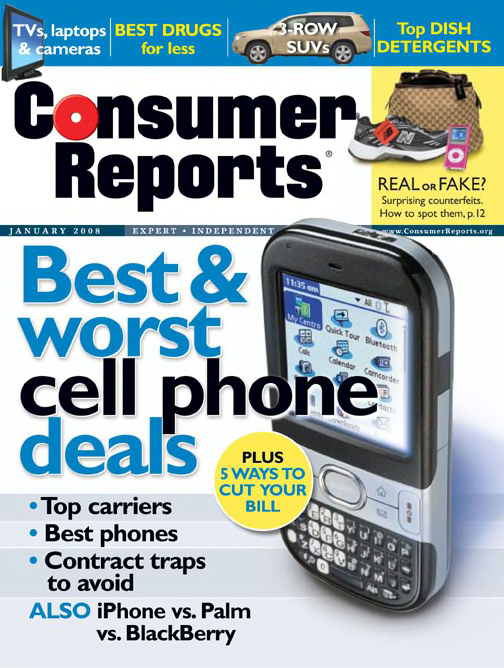
The full report on counterfeit goods appears in the January issue of Consumer Reports, on sale now. The complete report is also available to subscribers at www.ConsumerReports.org.
A widespread problem
In 2006, a record year for seizures, 14,000 shipments of counterfeits were confiscated. Figures for 2007 were high as well.
Vendors still peddle fakes on city streets, but they are also sold at flea markets, salons, swap meets, and college campuses.
The Internet lets counterfeiters find partners to make, market and distribute fakes to an even wider audience. A recent Yahoo search for “cheap Gucci handbags” returned almost 1 million results, including ads touting prices too good to be true. The truth is that Gucci discounts its products only at its factory outlets and rarely at regular stores.
Like the making of legitimate goods, the making of fakes has been outsourced, which makes oversight harder for U.S. agencies. Some 81 percent of all counterfeits in the U.S. come from mainland China; Hong Kong is second, accounting for 5 percent.
The level of sophistication is eye-opening. Some Chinese factories conduct “split-runs” churning out legitimate products by day and black-market goods after hours.
How to tell the bogus from the bona fide
The easiest way to avoid counterfeits is to deal with reputable dealers authorized to sell a manufacturer’s products. Consumers should be suspicious of third-party Web sites that offer deep discounts for products that are usually pricey. EBay has been the target of lawsuits and threatened lawsuits from the likes of Rolex, Louis Vuitton, and Christian Dior, in part, for not doing enough to banish fakes.
Consumer Reports offers additional tips to avoid getting bogus merchandise:
Think twice before buying at deep-discount and dollar stores, which have been sources of fake holiday lights, extension cords, toothpaste, and batteries.
Avoid no-name products. A manufacturer’s name and address is no guarantee of safety, but at least it lets you contact the company to try to remedy problems.
Inspect labels and packaging. Missing or expired “use by” dates, broken or missing safety seals, misspellings, or unfamiliar or flimsy packaging for big-name brands should send up a warning flag.
For electrical goods, look for the UL safety mark. A silver holographic seal is required on decorative lighting made worldwide and on fans, other lighting and the like made in China.
It’s especially hard to tell whether car parts are authentic. Use a mechanic who has been reliable, or a new one that comes with a recommendation.