Menu
Suggested Searches
Recent Searches
Suggested Searches
Product Ratings
Resources
Chat With AskCR
Resources
All Products A-ZThe payment for your account couldn't be processed or you've canceled your account with us.
Re-activateMy account
Sign In
My account
Sign In
Media Room
Release date 11/30/2009
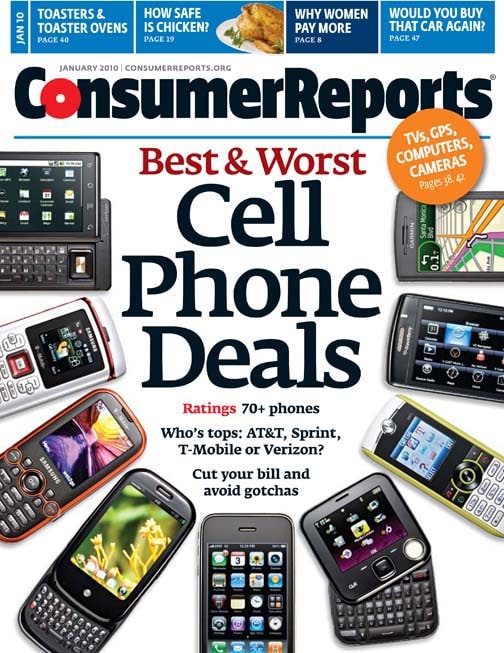
YONKERS, NY — Consumer Reports’ latest test of fresh, whole broilers bought in 22 states reveals that two-thirds of birds tested harbored salmonella and/or campylobacter, the leading bacterial causes of food-borne disease. The story appears in the January 2010 issue of Consumer Reports and is also available free online at www.ConsumerReports.org.
Consumer Reports has been measuring contamination in store-bought chickens since 1998. The recent test shows a modest improvement since January 2007, when the magazine found these pathogens in 8 of 10 broilers, but the numbers are still far too high. The findings suggest that most companies’ safeguards are inadequate. Consumer Reports also found that most disease-causing bacteria sampled from the contaminated chicken were resistant to at least one antibiotic, potentially making any resulting illness more difficult to treat.
“Consumers still need to be very careful in handling chicken, which is routinely contaminated with disease-causing bacteria,” said Dr. Urvashi Rangan, Director of Technical Policy at Consumers Union, nonprofit publisher of Consumer Reports. “Our tests show that campylobacter is widespread in chicken, even in brands that control for salmonella. While one name brand, Perdue, and most air-chilled chickens, were less contaminated than others, this is still a very dirty industry that needs better practices and tighter government oversight.”
For its latest analysis, Consumer Reports had an outside lab test 382 chickens bought last spring from more than 100 supermarkets, gourmet- and natural-food stores, and mass merchandisers in 22 states. Among the findings:
Although Perdue chickens were cleaner than other big brands in our tests, and most “air-chilled” organic birds were especially clean, Consumer Reports’ tests are a snapshot in time and no type has been consistently low enough in pathogens to recommend over all others. Buying cleaner chicken may improve consumers’ odds if they fail to prepare chicken carefully.
Each year, salmonella and campylobacter from chicken and other food sources infect at least 3.4 million Americans, send 25,500 to hospitals, and kill about 500, according to estimates by the national Centers for Disease Control and Prevention. While both salmonella and campylobacter are known to cause intestinal distress, campylobacter can lead to meningitis, arthritis, and Guillain-Barré syndrome, a severe neurological condition.
The U.S. Department of Agriculture (USDA) requires Hazard Analysis and Critical Control Point (HACCP) a consumer’s primary protection against chicken contamination. HACCP requires companies to identify potential points of contamination and take measures to eliminate them. The USDA has a standard that requires chicken producers to test for salmonella but it has yet to set a standard for campylobacter.
Consumers Union has long called for the USDA to set limits on both the percentage of chicken samples that can be contaminated with campylobacter and the levels of it that they can contain. The USDA has said that a risk assessment for campylobacter and draft performance standards would be ready by the year’s end. It could take months to a year or more, however, for a proposed standard to become a final regulation and take effect.
“USDA has been pondering new standards to cut the prevalence of bacteria in chicken for more than 5 years but has yet to act,” said Jean Halloran, Director of Food Policy Initiatives at Consumers Union. “Consumers shouldn’t have to play roulette with poultry; the USDA must make chicken less risky to eat.”
Until chicken becomes cleaner, consumers’ best line of defense involves following these procedures in stores and kitchens:
For more ways to help ensure that your food is safe, go to www.BuySafeEatWell.org. The January issue of Consumer Reports goes on sale December 1 wherever magazines are sold.
Consumer Reports is a nonprofit membership organization that works side by side with consumers to create a fairer, safer, and healthier world. For 80 years, CR has provided evidence-based product testing and ratings, rigorous research, hard-hitting investigative journalism, public education, and steadfast policy action on behalf of consumers’ interests. Unconstrained by advertising or other commercial influences, CR has exposed landmark public health and safety issues and strives to be a catalyst for pro-consumer changes in the marketplace. From championing responsible auto safety standards, to winning food and water protections, to enhancing healthcare quality, to fighting back against predatory lenders in the financial markets, Consumer Reports has always been on the front lines, raising the voices of consumers.
© 2009 Consumer Reports. The material above is intended for legitimate news entities only; it may not be used for advertising or promotional purposes. Consumer Reports® is an expert, independent, nonprofit organization whose mission is to work side by side with consumers to create a fairer, safer, and healthier world. We accept no advertising and pay for all the products we test. We are not beholden to any commercial interest. Our income is derived from the sale of Consumer Reports® magazine, ConsumerReports.org® and our other publications and information products, services, fees, and noncommercial contributions and grants. Our Ratings and reports are intended solely for the use of our readers. Neither the Ratings nor the reports may be used in advertising or for any other commercial purpose without our prior written permission. Consumer Reports will take all steps open to it to prevent unauthorized commercial use of its content and trademarks.
Consumer Reports is a nonprofit membership organization that works side by side with consumers to create a fairer, safer, and healthier world. For 80 years, CR has provided evidence-based product testing and ratings, rigorous research, hard-hitting investigative journalism, public education, and steadfast policy action on behalf of consumers’ interests. Unconstrained by advertising or other commercial influences, CR has exposed landmark public health and safety issues and strives to be a catalyst for pro-consumer changes in the marketplace. From championing responsible auto safety standards, to winning food and water protections, to enhancing healthcare quality, to fighting back against predatory lenders in the financial markets, Consumer Reports has always been on the front lines, raising the voices of consumers.
© 2009 Consumer Reports. The material above is intended for legitimate news entities only; it may not be used for advertising or promotional purposes. Consumer Reports® is an expert, independent, nonprofit organization whose mission is to work side by side with consumers to create a fairer, safer, and healthier world. We accept no advertising and pay for all the products we test. We are not beholden to any commercial interest. Our income is derived from the sale of Consumer Reports® magazine, ConsumerReports.org® and our other publications and information products, services, fees, and noncommercial contributions and grants. Our Ratings and reports are intended solely for the use of our readers. Neither the Ratings nor the reports may be used in advertising or for any other commercial purpose without our prior written permission. Consumer Reports will take all steps open to it to prevent unauthorized commercial use of its content and trademarks.