Menu
Suggested Searches
Recent Searches
Suggested Searches
Product Ratings
Resources
Chat With AskCR
Resources
All Products A-ZThe payment for your account couldn't be processed or you've canceled your account with us.
Re-activateMy account
Sign In
My account
Sign In
Media Room
Release date 12/01/2009
YONKERS, NY — Did you ever wonder why some packaged products in the grocery store have so much empty space in them? Consumer Reports’ recent investigation turned up several products with packages that are as much as half empty. Those include One A Day Men’s 50 + Advantage vitamins, where the plastic 50-tablet bottle looks about 40 percent empty, and Lay’s Potato chip bags that are half-filled.
Over the years, Consumer Reports has tackled various issues related to product packaging — over-packaging (the so-called “golden cocoon”), hard-to-open packaging (bestowing offenders with an “oyster award”), and now bags, boxes, and bottles with what seems like lots of excess or dead space, which CR dubbed “black-hole” packaging.
Other products with ample wiggle room include Mrs. Paul’s Lightly Breaded Tilapia Fillets, Pasta Roni Garlic & Olive Oil Vermicelli, and Quaker Oatmeal to Go Brown Sugar Cinnamon bars.
Relying mostly on nominations from readers, Consumer Reports rounded up a handful of products and asked the companies behind them for an explanation of all that air-to-spare. Packages CR looked at are examples of what is likely to be found on store shelves, and don’t necessarily represent the worst offenders out there.
“We get a lot of questions from frustrated readers asking why such packages are often so large relative to the amount of product inside,” said Tod Marks, senior project editor, Consumer Reports. “But even when extra space is perfectly legal, it’s natural to wonder whether you’re getting the amount of product you paid for.”
The federal Fair Packaging and Labeling Act is supposed to prevent the public from being misled by packages containing excessive “slack fill,” nonfunctional or empty space that creates an illusion of more product, often through underfilling, indented bottoms, or extra walls. But slack fill is allowed if it keeps a product from breaking, if the package does double-duty (as a dispenser, or a tray, for example) to accommodate machinery on the assembly line, or to discourage theft in the store.
According to Consumer Reports’ investigation, the law gives manufacturers plenty of wiggle room. The FDA hasn’t acted against a slack-fill violation in five years.
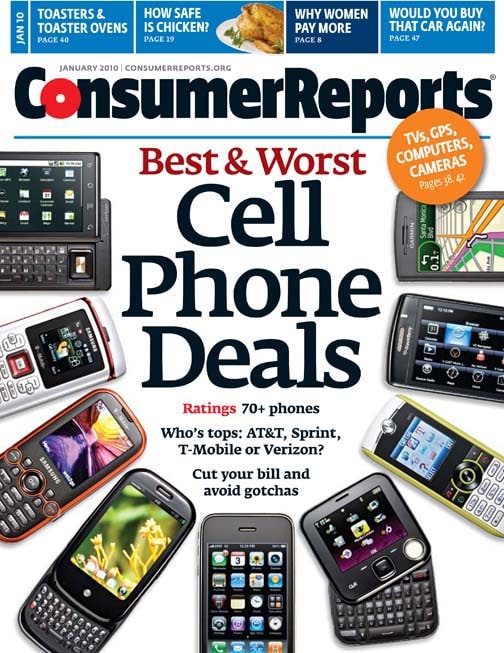
The full results of CR’s investigation is available in the January 2010 issue of Consumer Reports on sale at newsstands December 2 or online at www.ConsumerReports.org.
A Frito-Lay customer rep confirmed that Lay’s potato chip bags are half-filled. Delicate items pose several challenges. Chips can be broken by rollers on the packing line or pressure from machinery that seals the bags. A Post rep who responded to the question why Shredded Wheat boxes have extra air said that the company can’t overfill because cereal can get caught near the top of the bag, resulting in an improper seal.
In the examples of slack-fill cited in Consumer Reports, net weights were labeled correctly. But how many consumers know what 6.7 ounces of rice looks like?
What you can do
Realize that you’re not getting short-changed. But if you want to avoid being annoyed, look at the net weight of the product you’re considering and compare weights and box sizes of nearby products. Rattle the box of a food such as pasta or rice. It was easy to tell that some of the products in CR’s investigation were far from full. To file a complaint, contact an FDA district complaint coordinator in your state. A list is available at www.fda.gov/safety/reportaproblem/consumercomplaintcoordinators/default.htm.
Consumer Reports is a nonprofit membership organization that works side by side with consumers to create a fairer, safer, and healthier world. For 80 years, CR has provided evidence-based product testing and ratings, rigorous research, hard-hitting investigative journalism, public education, and steadfast policy action on behalf of consumers’ interests. Unconstrained by advertising or other commercial influences, CR has exposed landmark public health and safety issues and strives to be a catalyst for pro-consumer changes in the marketplace. From championing responsible auto safety standards, to winning food and water protections, to enhancing healthcare quality, to fighting back against predatory lenders in the financial markets, Consumer Reports has always been on the front lines, raising the voices of consumers.
© 2009 Consumer Reports. The material above is intended for legitimate news entities only; it may not be used for advertising or promotional purposes. Consumer Reports® is an expert, independent, nonprofit organization whose mission is to work side by side with consumers to create a fairer, safer, and healthier world. We accept no advertising and pay for all the products we test. We are not beholden to any commercial interest. Our income is derived from the sale of Consumer Reports® magazine, ConsumerReports.org® and our other publications and information products, services, fees, and noncommercial contributions and grants. Our Ratings and reports are intended solely for the use of our readers. Neither the Ratings nor the reports may be used in advertising or for any other commercial purpose without our prior written permission. Consumer Reports will take all steps open to it to prevent unauthorized commercial use of its content and trademarks.
Consumer Reports is a nonprofit membership organization that works side by side with consumers to create a fairer, safer, and healthier world. For 80 years, CR has provided evidence-based product testing and ratings, rigorous research, hard-hitting investigative journalism, public education, and steadfast policy action on behalf of consumers’ interests. Unconstrained by advertising or other commercial influences, CR has exposed landmark public health and safety issues and strives to be a catalyst for pro-consumer changes in the marketplace. From championing responsible auto safety standards, to winning food and water protections, to enhancing healthcare quality, to fighting back against predatory lenders in the financial markets, Consumer Reports has always been on the front lines, raising the voices of consumers.
© 2009 Consumer Reports. The material above is intended for legitimate news entities only; it may not be used for advertising or promotional purposes. Consumer Reports® is an expert, independent, nonprofit organization whose mission is to work side by side with consumers to create a fairer, safer, and healthier world. We accept no advertising and pay for all the products we test. We are not beholden to any commercial interest. Our income is derived from the sale of Consumer Reports® magazine, ConsumerReports.org® and our other publications and information products, services, fees, and noncommercial contributions and grants. Our Ratings and reports are intended solely for the use of our readers. Neither the Ratings nor the reports may be used in advertising or for any other commercial purpose without our prior written permission. Consumer Reports will take all steps open to it to prevent unauthorized commercial use of its content and trademarks.