 Yonkers, NY — Reflecting the tremendous growth in the use of antidepressants, nearly 80 percent of people seeking treatment for depression or anxiety were prescribed antidepressants according to a recent survey of Consumer Reports (CR) subscribers. The report also finds that anxiety is on the rise. Of the 1,500 subscribers seeking treatment, 58 percent had experienced anxiety, up from 41 percent in 2004 when CR last surveyed subscribers about these conditions. The report is available in the July issue of Consumer Reports and online at www.ConsumerReportsHealth.org.
The 2009 survey provides a window into how mental-health treatment is practiced in the real world, plus ratings of drugs readers found effective. The survey found that older, often less expensive antidepressants known as SSRIs (selective serotonin reuptake inhibitors) like Lexapro, Celexa, Prozac and Zoloft work just as well, and with fewer side effects, than newer, more costly drugs known as SNRIs (serotonin and norepinephrin reuptake inhibitors) like Cymbalta and Effexor. SSRIs and SNRIs address depression by altering the levels of certain brain chemicals.
Some good news: sexual side effects appear less common than in the 2004 survey, possibly because people are taking drugs like bupropion (Wellbutrin and generic) which has fewer sexual side effects than SSRIs and SNRIs, or they’re adding another medication such as sildenafil (Viagra) as an antidote to sexual side effects.
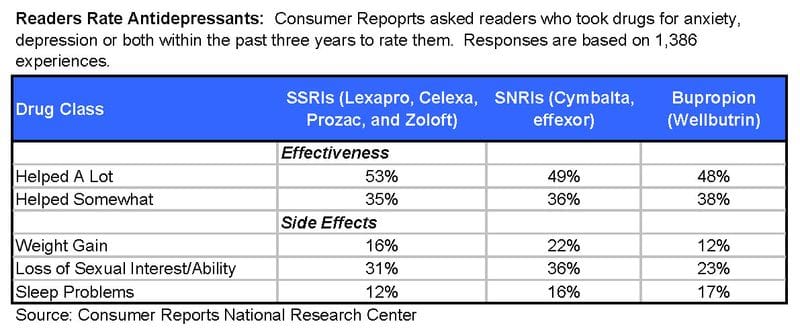 When asked to rate antidepressants, 53 percent of respondents taking SSRIs said they helped “a lot.” SNRIs fared no better, with only 49 percent of respondents reporting they helped “a lot.” When it comes to side effects, SSRIs performed better than SNRIs with 31 percent of respondents reporting sexual side effects, 16 percent reporting weight gain, and 12 percent reporting sleep problems. Of those taking SNRIs, 36 percent reported sexual side effects, 22 percent reported weight gain, and 16 percent reported sleep problems. Bupropion, which is neither an SSRI nor an SNRI, helped 48 percent of respondents “a lot.” In terms of sexual side effects and weight gain, it was tolerated better than the SSRIs and SNRIs.
Drugmakers spent almost $300 million in 2009 on ads for two newer antidepressants: duloxetine (Cymbalta: “When you’re depressed, where do you want to go? Nowhere.”) and desvenlafaxine (Pristiq: “I feel like I have to wind myself up just to get out of bed.”) “Pharmaceutical companies stand to profit most from convincing consumers that drugs are the only answer to depression and anxiety, and that newer, more expensive drugs are a better alternative to older drugs and their generic counterparts,” said Nancy Metcalf, senior program editor, Consumer Reports Health. “Our survey shows that a combination of therapy and medication works best, and that despite the intense marketing push consumers are subjected to, there is no evidence that newer drugs like Pristiq and Cymbalta work any better than older medications in their class.”
Talk therapy offers two advantages over medication: no drug side effects and tools you can use for the long term. It received high marks from CR’s survey participants—91 percent said therapy made things “a lot” or “somewhat” better. People who stuck with talk therapy for at least seven sessions had significantly better outcomes that those who went to six or fewer sessions. What’s more, they scored as high as people treated mostly with medication on an overall outcome scale.
However, the type of therapist was less important: those who saw Psychologists (Ph.Ds), social workers (M.S.W.s), or licensed professional counselors (L.P.C.s) all reported equal levels of satisfaction.
Tips for managing anxiety and/or depression:
- Invest in talk therapy: Depending on the severity of your symptoms, therapy may be a good first step. And, you can always talk to your therapist about adding medication later.
- One-size doesn’t fit all when it comes to antidepressants: According to survey respondents, the median number of drugs tried was three, so it is important to expect some trial and error on the road to finding the right treatment for you.
- What to try first: According to Consumer Reports Best Buy Drugs, generic bupropion, citalopram, fluoxetine, and sertraline are among the best initial options to consider. Consult with your doctor about beginning with the lowest dose possible and if you’re not seeing progress in 6 to 8 weeks, talk to your doctor about a higher dose or different medication.
- Expect some side effects: The survey shows that side effects are much more common than what is reported in the package inserts consumers get when they fill their prescriptions. For example, the rates of sexual side effects reported for the SSRIs and SNRIs (see chart above), were more than double those reported by the drug companies, which can carefully choose participants who might be less inclined to experience adverse effects.
The report also provides tips on how to pay for treatment for your depression and/or anxiety:
- Take advantage of a flexible spending account if you have one.
- If you have to pay out of pocket and have a limited income, ask if your therapist will give a discount off the regular fee.
- Be on the lookout for a new law that is scheduled to into effect on July 1, 2010. It will require group health plans that offer mental-health coverage to treat it the same way they do other types of medical care. That means they can’t charge different co-pays and deductibles for mental-health treatment, or cut you off after 20 therapy visits if they allow unlimited doctor visits for other conditions.
 Media Room